
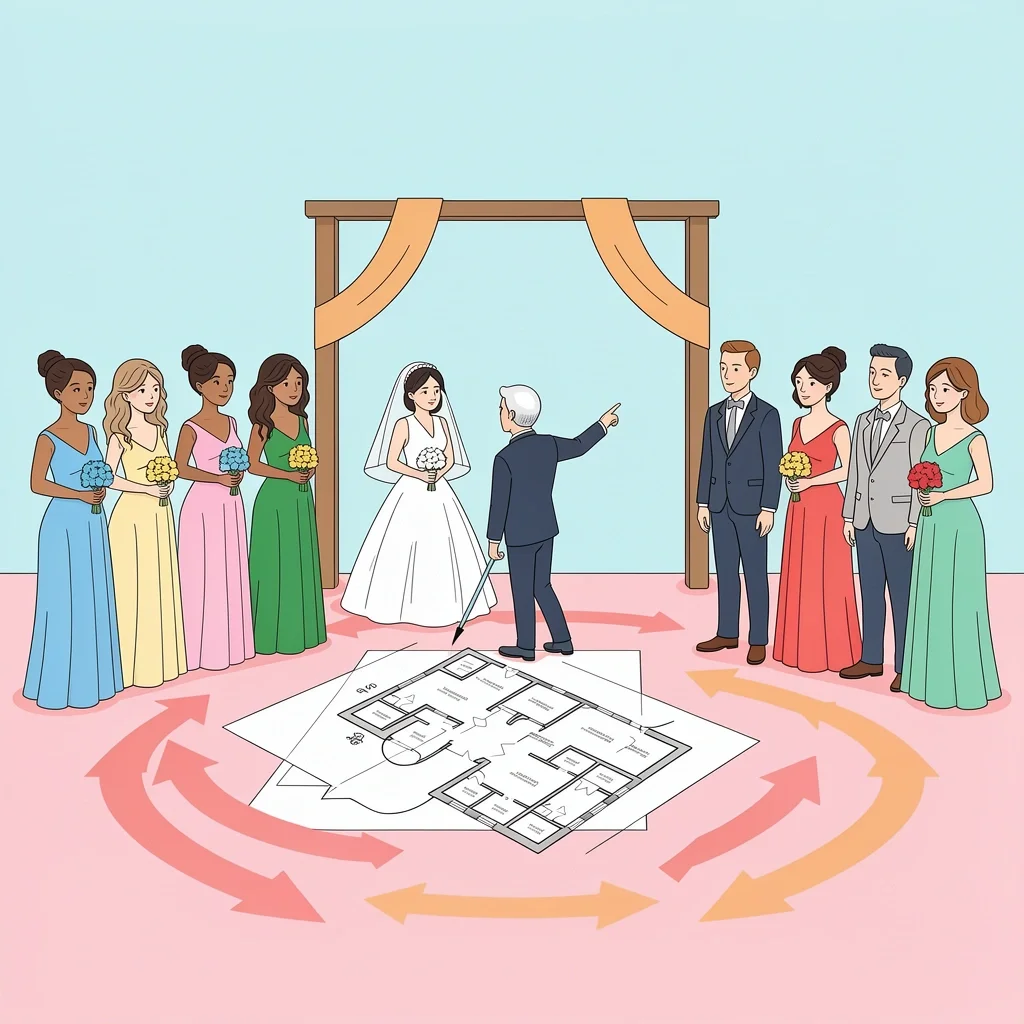
You have a venue, a dress, and a caterer. But the one thing that can make or break your big day is whether everyone knows where to stand and when to walk. That is what a wedding ceremony rehearsal is for. I have been a wedding planner for over a decade and have run hundreds of these. The good news: a rehearsal is not a full dress run of your vows. It is a 20‑minute logistics drill. You practice entrances, exits, and positioning. Nothing else. This guide walks you through everything — from scheduling to handling a crying flower girl — so your ceremony runs without a hitch.
Pre‑Rehearsal Planning
Most couples skip this part and end up wasting time at the venue. Here is what you need to do before anyone steps into the space.
Schedule the Rehearsal Right

Book the venue for at least 45 minutes before the rehearsal dinner starts. Do not rush. If you have a 6 PM dinner, aim for a 4:30 PM rehearsal. That gives you half an hour to run through everything plus 15 minutes for questions and troubleshooting.
Communicate with the Wedding Party
Send a group text or email three days ahead. Include the date, time, exact venue address, and what to wear (comfortable shoes, no heels that sink into grass). Ask everyone to arrive 10 minutes early so no one is late.
Gather Your Materials
You need a printed copy of your ceremony script, a diagram of where people stand (I provide one below), and a list of music cues. Also bring a small bag with safety pins, water bottles, and a backup bouquet if you have one. Your rehearsal director — the person calling the shots — should hold the script and this guide.
Assign Roles
The best person to run your rehearsal is someone a little bossy but kind. Think of a teacher or a friend who can keep a group focused without making anyone feel bad. Give them this guide and your script a few days early so they can study it.
The Rehearsal Itself
Follow these steps in order. Do not skip any. Each step builds on the last.
Step 1: Start in the Middle

Do not begin with the processional (the entrance). Instead, place everyone where they will stand during the ceremony. Use the diagram below. Bridesmaids and groomsmen should stand at a slight angle to the guests, not straight on. This makes photos look better. Bridesmaids hold bouquets with both hands in front. Groomsmen decide whether to clasp hands in front or behind — everyone must do the same.
Step 2: Walk Through the Ceremony Headings
Read the script headings aloud so everyone knows the order: welcome, readings, vows, ring exchange, kiss. Do not read the vows or the full text. That stays fresh for the big day. Note where unity ceremonies or readings happen, and make sure the items (candles, sand, microphone) are in the right spots.
Step 3: Practice the Recessional (Exit)
Now that everyone is in place, start from the kiss. The bride takes her bouquet from the maid of honor and exits with the groom. Next, the wedding party exits in pairs — even if they entered separately. Flower girl and ring bearer go next, then parents. Leave about 20 feet between each pair so photographers can capture everyone.
Step 4: Practice the Processional (Entrance)
Line everyone up in the correct order. Typically the officiant, groom, and groomsmen enter first from the side. Then grandparents, groom’s parents, mother of the bride. Then bridesmaids, maid of honor, flower girl. Finally, the bride and her escort. Space each group 20–30 feet apart. The bride enters on her own music cue — usually after the officiant says “Please rise.”
Step 5: The Hand‑Off
When the bride and her escort reach the front, the escort (often the father) gives her a kiss, shakes the groom’s hand, and moves to his seat. The bride hands her bouquet to the maid of honor and steps next to the groom. The maid of honor can adjust the bride’s train if needed.
Step 6: Run It Again
Practice the entire sequence — exit and entrance — one more time. That is it. Total time: 20–30 minutes.
Variations and Customizations
Not every wedding looks the same. Here is how to adapt the rehearsal for different situations.
And as you decide what feels right, you might also wonder how late is too late for a wedding ceremony—especially if the timing shifts after rehearsal.
Midwest Processional
If you are in the Midwest, the bridesmaids and groomsmen often enter in pairs instead of separately. The maid of honor and best man are the last pair before the flower girl. Adjust your rehearsal order accordingly.
Multi‑Parent Escort
Some brides (or grooms) walk in with both parents, or a parent and a stepparent. The escort party stands together at the front, then each parent takes a seat. Practice where each parent will sit so there is no confusion.
Jewish Traditional Entrance
In a Jewish ceremony under the chuppah, both sets of parents stand with the couple. The groom enters with his parents, then the bride with hers. Parents remain standing throughout. Rehearse the positions carefully because space under the chuppah is tight.
Printable Rehearsal Checklist
Here is a simple checklist you can give to your rehearsal director. Print it out and bring it to the venue.
| Task | Done? |
|---|---|
| Send schedule to wedding party 3 days ahead | ☐ |
| Print script, diagram, music cues | ☐ |
| Pack emergency kit (pins, water, backup bouquet) | ☐ |
| Assign rehearsal director and give them materials | ☐ |
| Start rehearsal by placing everyone in position | ☐ |
| Read ceremony headings aloud | ☐ |
| Practice recessional (exit) | ☐ |
| Practice processional (entrance) | ☐ |
| Practice hand‑off | ☐ |
| Run one full practice round | ☐ |
| Confirm call time for ceremony day | ☐ |
Troubleshooting Common Problems
Even with a perfect plan, things go wrong. Here is how to handle the five most common rehearsal disasters.
Missing Wedding Party Member
If someone is late, start without them. Place a stand‑in (any willing guest) in their spot. The latecomer can watch from the side and learn their position. Do not wait.
Crying Flower Girl or Ring Bearer
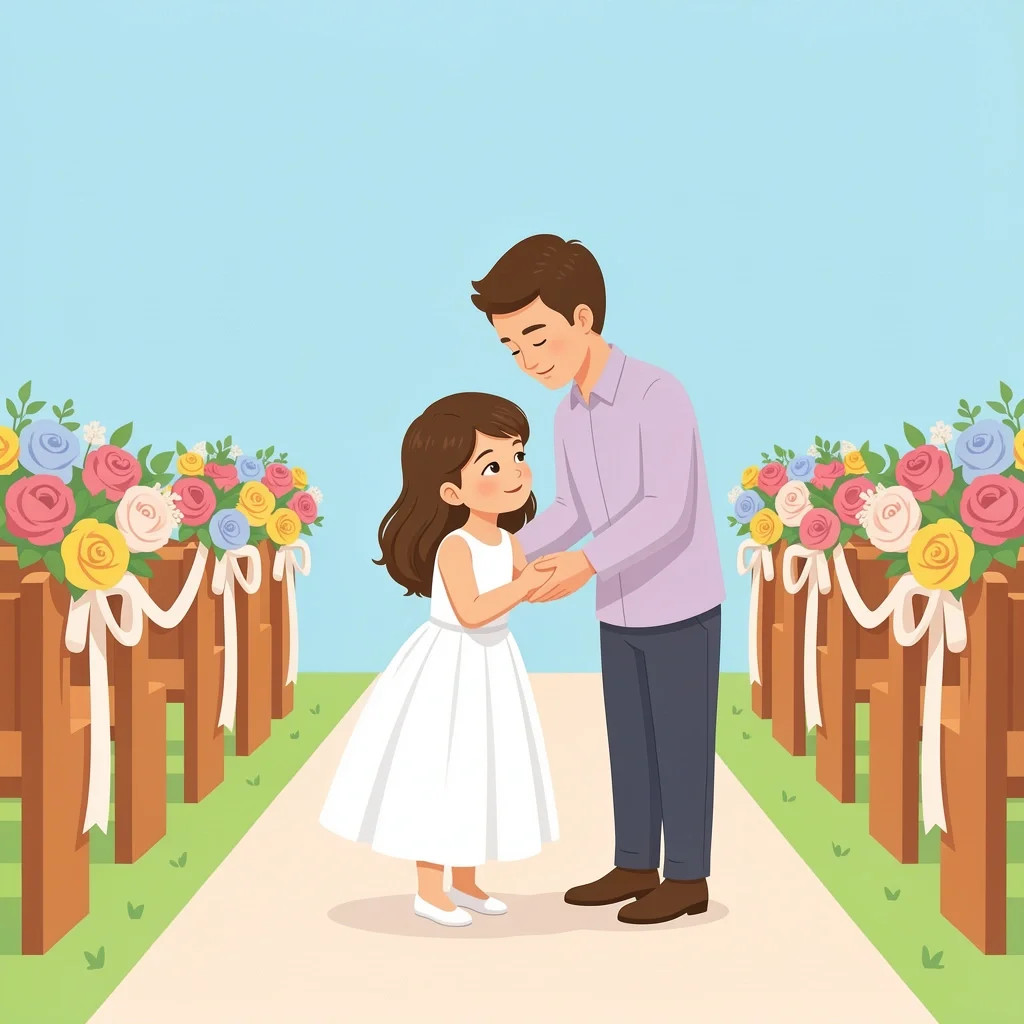
Young children often get overwhelmed. Have a parent or friend walk with them. If the child refuses to walk, let them sit with a family member. Do not force it — it only takes 10 seconds to skip that part.
Microphone or Sound Failure
Always test the microphone during the rehearsal. If it does not work, have the officiant project their voice. Place a backup microphone near the front. For a livestreamed wedding, check camera angles and sound levels too.
Family Conflict (e.g., Divorced Parents)
If parents do not want to sit together, assign them to opposite sides of the aisle. Tell them politely: “This is not about seating; it is about supporting the couple.” Keep the rehearsal professional and avoid taking sides.
Nervous or Forgetful Participants
If someone forgets their cue, do not call them out. Simply say, “Let’s try again from this point.” Keep the energy positive. A little laughter is fine, but keep the group focused.
After the Rehearsal
Once everyone knows their positions, debrief with the rehearsal director. Write down any changes (e.g., “Mother of the bride will sit in the front row on the left”). Confirm the exact call time for the ceremony day — usually 45 minutes before guests arrive. Then go enjoy your rehearsal dinner. You have earned it.
Frequently Asked Questions
How long should a wedding ceremony rehearsal last?
A standard rehearsal for a straight, non‑denominational ceremony takes 20 to 30 minutes. Add 10 minutes if you have a unity ceremony, readings, or a special music cue. Keep it short so everyone stays attentive.
Should the officiant attend the rehearsal?
Many officiants charge extra for rehearsal attendance. It is often unnecessary — the rehearsal director can handle cueing. If your ceremony has complex elements (like a multi‑cultural ritual), it may be worth paying the fee. Ask your officiant in advance.
What if the wedding party cannot all attend the rehearsal?
If a few people cannot come, record a short video of the processional order and send it to them. You can also do a mini‑rehearsal via video call the night before. Assign a buddy to walk them through their position when they arrive on the day.
Do we need to practice our vows?
No. The rehearsal is for movement, not words. Vows should feel fresh and personal on the day. Practicing them can make the moment feel staged.
How do we rehearse for a hybrid or livestreamed wedding?
Check camera angles during the rehearsal. Make sure the officiant and couple face the camera during key moments. Test audio levels for online guests. A simple rule: if you cannot be heard online, the ceremony loses half its audience.
It’s a good thing my friends didn’t have to miss the wedding rehearsal last year because it went a lot faster. It’s comforting to know that Victory North Savannah ) has people on staff who are willing to help, especially if there are any last-minute concerns.
That’s such a great point. When everyone is present at the wedding rehearsal the whole wedding goes more smoothly!