
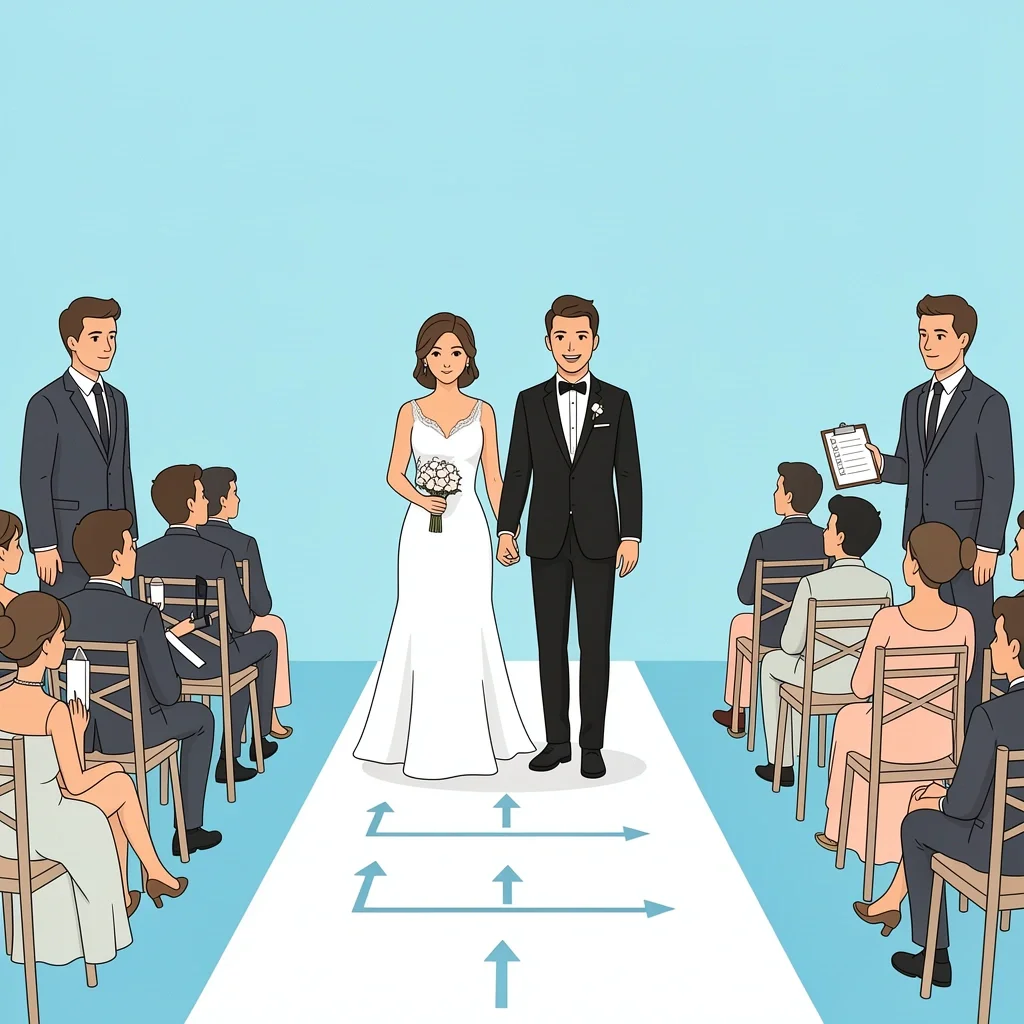
I have officiated over 200 weddings and attended more rehearsals than I can count. The ones that work share one thing: they treat the rehearsal as a mechanical drill, not a practice for the vows. The goal is simple: eliminate uncertainty about who walks where, when, and how. Everything else is noise.
Here is the system I use. It takes 45 minutes flat. It works in a banquet hall, a back yard, or a hotel lobby. It handles the drunk groomsman, the over-eager mother, and the flower girl who wants to run.
The one goal that changes everything
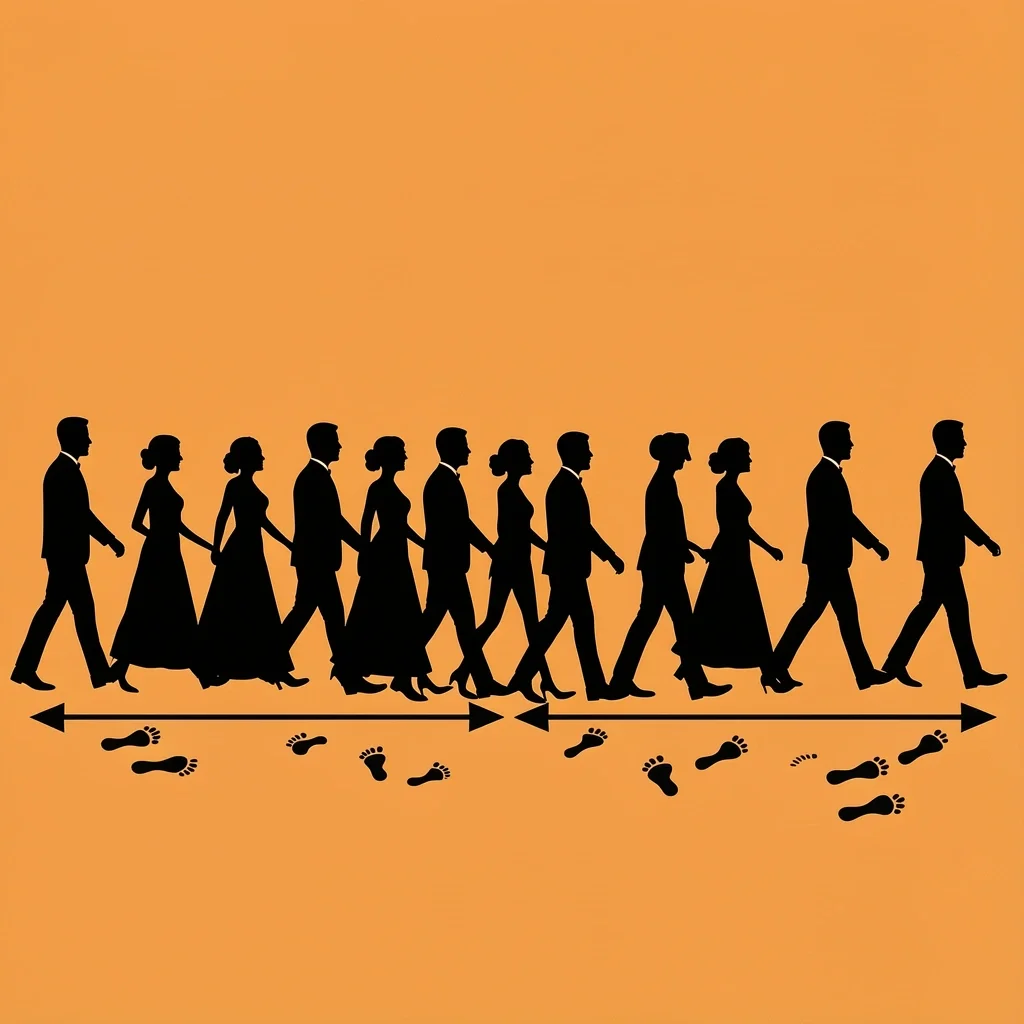
Most people think the rehearsal is about practicing the ceremony. It is not. The rehearsal is about building muscle memory for movement. If everyone can get from point A to point B without verbal instruction by the third attempt, you have succeeded.
Here is the rule: do not practice the words. Do not rehearse the vows. Do not read the script. The words are homework. The rehearsal is for the feet and the hands.
I tell every group this in the first 30 seconds: “We are not here to practice what you say. We are here to practice where you stand and how you walk. That is it.” This clears the room. People relax because they realize the stakes are low.
Phase 1: The pre-flight briefing (5 minutes)
Every successful rehearsal starts with a clear verbal plan. People arrive nervous. They do not know what is expected. Your first job is to kill that anxiety with a short, direct speech.
Here is what I say, word for word:
“Hi everyone. I am the air traffic controller for the next 45 minutes. Here is how this works. We have three parts. First, I walk you through the big picture. Second, we practice the walking. Third, we do a quick speed run to prove you know it. We start in 60 seconds. We finish in 45 minutes. No one leaves until we have done a perfect run. Any questions?”
That speech does three things. It establishes authority. It sets a time boundary. It tells people exactly what to expect. No guessing. No awkward waiting.
I also tell them to put their phones away. Not because I am a tyrant, but because the rehearsal takes 45 minutes and the dinner is waiting. Respect their time and they will respect your direction.
What to do if the venue is not the actual ceremony space

This happens more than you think. The venue is booked for an event, the weather is bad, or the space is too small. Do not cancel. Do not panic.
Use painter tape to mark a six-foot-wide aisle on the floor. That is your ceremony space. Practice the entrance and exit from a single chair at the front. The key is to practice the processional and recessional only. Skip the middle part. The muscle memory for walking and stopping is what matters.
Phase 2: The mechanical walkthrough (30 minutes)
This is where most rehearsals fail. People get caught up in details that do not matter, like whether the bride holds her bouquet with her left hand or her right. Focus on the moving parts. Everything else is cosmetic.
Break the walkthrough into three sub-phases.
Sub-phase A: The processional choreography
Line everyone up at the back in the order they will walk. This takes two minutes. Then practice each entrance one at a time.
I teach three things: spacing, speed, and eye contact.
- Spacing: Each person should be one arm length behind the person in front. If they are closer, they look cramped. If they are farther, they look disconnected.
- Speed: Most people walk too fast. I tell them to walk slightly slower than they think is natural. The music will fill the space.
- Eye contact: Everyone should look at the couple. Not the floor. Not the officiant. The couple.
I run each person through once. Then I run the whole group through twice. By the second run, they know the rhythm.
Sub-phase B: The bottleneck handling
The moment people stop walking is where confusion lives. This is where you practice the hand-offs and the standing positions.
The reader or performer: Who holds the microphone? Where do they stand? I tell the couple to decide this before the rehearsal. The reader should stand at the front center or at a podium to the side. They should practice walking to that spot, taking the mic, and handing it back.
The ring bearer and flower girl: The biggest risk is a runner. Here is the technique that works every time: the parent walks the child to the front, then hands them off to a grandparent or usher in the front row. The child then walks back to the parent after the processional. This prevents the child from running down the aisle or freezing at the front.
The unity candle or sand ceremony: Practice the slow walk to the table. Practice the hand movement. Most awkward silences happen because the couple does not know how to handle the vase or the candle. Teach them to do it slowly and deliberately. Rushing looks like a mistake.
Sub-phase C: The recessional
This is the part that everyone rushes. Do not rush it. The recessional is the escape hatch. People need to know where to go immediately after the kiss.
I practice this: the couple holds hands and walks down the aisle. The wedding party follows in reverse order. The officiant tells everyone: “When you reach the back, turn left and wait for photos. Do not stop at the end of the aisle.”
I also tell the photographer to be at the back of the space. If the photographer is not there, the recessional looks like a group of confused people wandering into a lobby.
Phase 3: The stress test speed run (5 minutes)

After the walkthrough, people are tired. They have done two full runs. They think they are ready. They are not. You need to prove it.
I call this the stress test. I go silent. I stand at the front. I say only the cues: “Music starts. Processional begins. Now the bride. Now the groom. Now the ring exchange. Now the kiss. Now the recessional.”
If the pressure of the rehearsal is getting to you, remember that there are real ways to feel better before the big day that can help you stay calm and focused.
I do not prompt anyone. If someone stops or looks confused, I do not stop the run. I note it. We fix it in 30 seconds afterward. The pressure of a continuous run reveals the real problems.
The first time I do this, it is usually messy. Someone walks too fast. Someone stands in the wrong spot. That is fine. We fix it. Then we do it again. The second run is almost always perfect.
When they finish the perfect run, I clap. Everyone claps. They feel confident. That is the point.
The herd of cats protocol: Managing the people
No rehearsal is perfect. Someone will be difficult. Here is how to handle the three most common types.
The over-eager parent: They want to help. They stand up during the processional. They whisper directions to the flower girl. They try to fix the bride hair. Here is the script: “Mom, your job is to sit and look proud. If you stand or whisper directions, you will confuse everyone. Your job is to be seen, not heard. Please sit.” Say it calmly. Mean it.
The drunk groomsman: This happens. Do not yell. Do not embarrass them. Walk over, put a hand on their shoulder, and say quietly: “If you cannot stand still without swaying, please move to the back. We will adjust. Your job is to be a support, not a hazard.” If they cannot handle it, assign them a role that does not involve walking: holding the rings or standing at the back.
The nervous couple: They are overwhelmed. Everyone is looking at them. I pull them aside for 20 seconds. I say: “Look at each other. That is it. The rest of us will disappear. Your only job is to smile at each other.” This reduces the pressure. They relax.
The plan B crisis management card
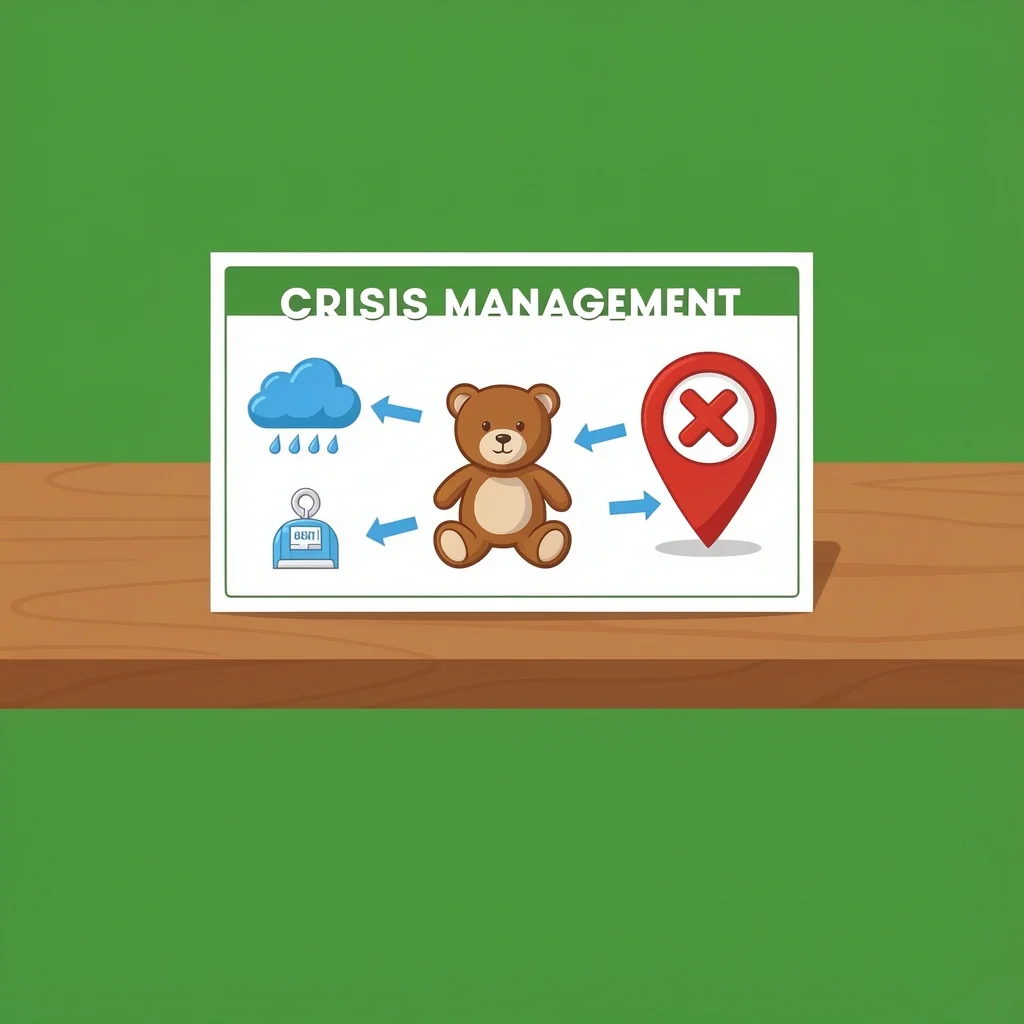
Three disasters happen often. Here is the fix for each.
Disaster 1: The venue is unavailable
You cannot walk the actual aisle. Use a living room or a hallway. Mark the aisle with tape. Practice only the entrance and exit. Skip the middle. The couple can practice the vows at home.
Disaster 2: A key participant is a no-show
Use a placeholder. A teddy bear. A chair. Someone from the wedding party steps in. Never let a missing person stop the run. The show goes on.
Disaster 3: It is raining and the processional is outdoors
Huddle everyone in the foyer. Tell them: “When the door opens, count to five in your head, then walk. There is no music. We will clap when you arrive.” This works every time.
Frequently Asked Questions
Do wedding photographers need to be at the rehearsal?
Yes, but only for group-shot logistics. They do not need to practice the ceremony. They should see the space and know where to stand during the processional. That is all.
How long should a rehearsal actually take?
Forty-five minutes maximum. If you hit an hour, you are over-choreographing. The sweet spot is 30 to 40 minutes.
Do we practice the readings during the rehearsal?
No. Only practice the physical movement involved in bringing the reader to the front. The words are their homework. They should practice at home.
What if the rehearsal dinner is 30 minutes away from the venue?
Do the rehearsal first at the venue. The dinner is a social reward, not a replacement for the physical space. Driving to the dinner after the rehearsal is fine. Do not skip the venue practice.
Now, get your people in line. You have 45 minutes. Go.