If you are planning a wedding right now, you have probably felt it. That tightness in your chest when you open another email from a vendor. The knot in your stomach when your mom calls with “just one more idea.” The quiet panic when you realize you have to choose between three shades of white for the tablecloths.
You are not broken. You are not bad at planning. You are experiencing a predictable psychological response to a unique situation. Wedding planning combines a major life transition, hundreds of decisions, financial pressure, and public scrutiny all at once. No wonder 94 percent of couples describe it as stressful.
The good news is that wedding stress is manageable. But not by trying harder to relax. You need a system. This guide walks you through six phases: understanding what is really happening, building your foundation, managing decisions, protecting your relationship, handling crisis moments, and recovering when things get hard.
Understanding why wedding day stress happens is the first step to preventing it, and our comprehensive guide breaks down the causes and solutions.
Why Wedding Planning Creates a Perfect Storm of Stress

Most advice assumes you can just choose to be less stressed. That does not work because wedding planning hits three specific triggers that normal stress advice ignores.
Identity Disruption. You are not just planning a party. You are losing your identity as a fiance and gaining the identity of a spouse. Your parents see you differently. Your friends treat you differently. You may feel grief for the person you used to be, even while you are excited for who you are becoming. That emotional whiplash creates stress that no amount of bubble baths can fix.
Decision Density. A typical wedding involves 300 to 500 separate decisions. Many of them have no right answer. Should the napkins be linen or cotton? Should the font be serif or sans-serif? Each decision drains a little bit of your mental energy. By the time you reach decision 200, your brain is exhausted. That is why small choices feel impossible.
Social Visibility. When you buy a new couch, no one judges your choice. When you plan a wedding, everyone has an opinion. Your mom wants one thing. Your partner’s mom wants another. Your friends on Instagram show you what they think a perfect wedding looks like. This public scrutiny adds a layer of stress that private decisions do not have.
These three factors combine to create stress that feels personal but is actually structural. Once you understand that, you can build systems to handle it.
The Pre-Planning Audit That Prevents 80 Percent of Stress
Before you make a single decision, take 30 minutes to audit your personal stress triggers. This step alone can prevent most of the stress you would otherwise face.
Your Decision-Making Style. Some people are maximizers. They need to find the best possible option. Others are satisficers. They are happy with something that is good enough. If you are a maximizer, you will need strict limits on how many options you look at. If you are a satisficer, you can move faster. Know which one you are before you start shopping for vendors.
Your Conflict Patterns. When you and your partner disagree under pressure, what happens? Do you avoid the issue until it explodes? Do you escalate quickly? Do you give in to keep the peace? Write down your default pattern. Then write down your partner’s. This awareness alone prevents many arguments.
Your External Pressure Points. Which relationships are most likely to create friction? Is it your mom who wants a traditional wedding? Your partner’s dad who is paying and expects control? Your best friend who keeps comparing your wedding to hers? Name the specific people and the specific dynamics. You cannot set boundaries until you know where they are needed.
The Three Hidden Stressors No One Talks About

Most articles tell you to prioritize and communicate. That advice is fine, but it misses the deeper sources of wedding stress. Here are three that rarely get discussed.
The Grief of Letting Go. Wedding planning involves loss. You lose your identity as a single person. You lose the relationship you had with your parents before you became a married adult. You may lose friendships that cannot survive the transition. This grief is real, but it is rarely named. If you feel sad for no reason during planning, you may be grieving. Give yourself permission to feel that. Write about it. Talk to your partner about it. Name the loss so it stops masquerading as random stress.
The Comparison Trap. Social media shows you a curated version of everyone else’s wedding. You see the perfect lighting, the flawless dress, the happy couple. You do not see the arguments, the budget overruns, or the stress. This comparison creates a feeling that your wedding is not good enough. The fix is simple but hard: unfollow any account that makes you feel bad about your own plans. Create a folder of real weddings, not styled shoots. Limit your browsing to 15 minutes per day.
The Financial Shame Spiral. Many couples feel embarrassed about their budget. They do not want to admit they cannot afford something. This shame leads to secrecy, which leads to stress. The solution is a values-based budget. Sit down with your partner and rank your top three priorities for the wedding. Put your money there. Give yourself explicit permission to spend less on everything else. No shame. No judgment. Just honest priorities.
The Decision Hierarchy That Eliminates Analysis Paralysis
You cannot make 500 decisions the same way. Your brain does not have that much energy. Instead, sort every decision into one of three tiers.
Tier 1: Non-Negotiable. These decisions directly impact your core values. The venue. The officiant. The guest list size. These deserve your full attention. Spend time here. Research three to five options. Discuss with your partner. Sleep on it. Then decide.
Tier 2: Important But Flexible. These decisions matter but have multiple acceptable options. Flowers. Colors. Menu. Set a time limit of 30 minutes. Look at two to three options. Then decide. Do not look for the perfect choice. Look for a good enough choice.
Tier 3: Decorative. These decisions are things guests will not notice or remember. Napkin fold style. Favor packaging. Escort card design. Pick the first acceptable option. Or delegate it to someone you trust. Or skip it entirely.
Here is a simple table to help you sort any decision:
| Tier | Examples | Time to Spend | Decision Rule |
|---|---|---|---|
| 1. Non-Negotiable | Venue, officiant, guest list | Days to weeks | Research 3-5 options, discuss, sleep on it |
| 2. Important But Flexible | Flowers, colors, menu | 30 minutes | Research 2-3 options, set a timer, decide |
| 3. Decorative | Napkin folds, favors, escort cards | 5 minutes | Pick the first acceptable option or delegate |
The Weekly Check-In That Prevents Resentment
Wedding planning can pull you and your partner apart. You are both busy. You both have opinions. You both feel pressure. Without a system, resentment builds silently.
Create a weekly check-in that takes exactly 10 minutes. Schedule it at the same time every week. No phones. No distractions.
Each person shares three things:
- Your current stress level on a scale of 1 to 10
- Your top concern for the week
- One thing you need from your partner
That is it. No problem-solving during the check-in. Just sharing. If something needs to be solved, schedule a separate time to solve it.
Also create a “No Wedding Talk” zone. Pick two times per week where wedding discussion is banned. Mealtimes. Date nights. The hour before bed. This gives your brain a break and reminds you why you are getting married in the first place.
End each check-in with appreciation. Each person says one thing they appreciate about the other’s contribution to planning. This small practice prevents the feeling that you are doing all the work.
The 15-Minute Stress Reset Protocol
Sometimes stress hits hard despite your best systems. You are in the middle of a panic attack. You cannot think clearly. You need an emergency procedure.
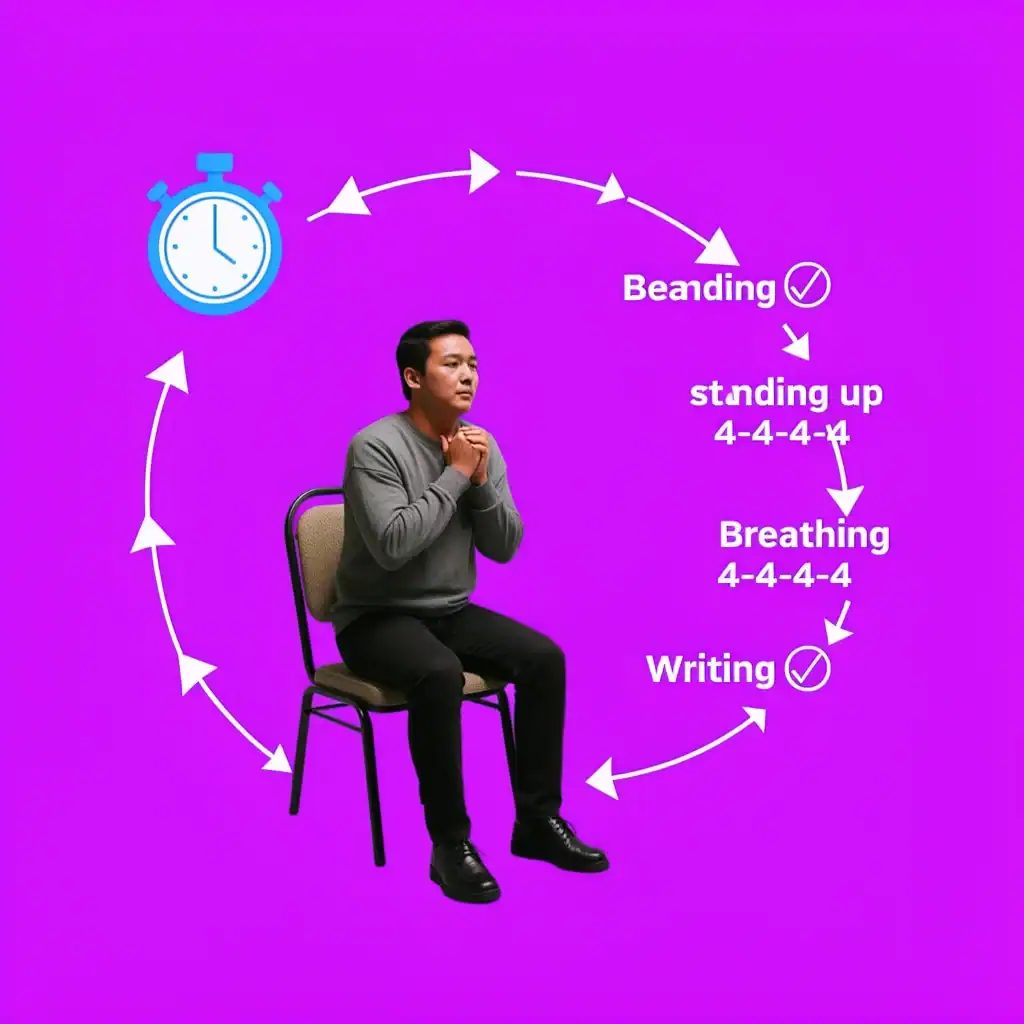
Step 1: Physical Reset (5 minutes). Stop what you are doing. Stand up. Walk to a different room. Then do box breathing: breathe in for 4 counts, hold for 4 counts, breathe out for 4 counts, hold for 4 counts. Repeat four times. This forces your nervous system to calm down.
Step 2: Cognitive Reframe (5 minutes). Take a piece of paper. Write down the specific thing that is stressing you. Then write three possible outcomes: the best case, the worst case, and the most likely case. Most of the time, the most likely case is somewhere in the middle. This exercise shrinks the stressor down to its real size.
Step 3: Action Decision (5 minutes). Based on your reframe, choose one of three paths. Delegate the stressor to someone else. Delay the decision until next week. Or decide immediately with the information you have. Pick one and act.
When to Delegate, When to Delay, and When to Drop
Every stress-inducing wedding element falls into one of three categories. Use this matrix to decide what to do with each one.
Delegate. If someone else can do it 80 percent as well as you, give it away. Your mom wants to help? Give her the favors. Your friend offered to handle the playlist? Let them. Your partner is good at spreadsheets? Give them the budget. Letting go of control is hard, but it is better than burnout.
Delay. If the decision does not need to be made this week, put it in a folder labeled “Future Decisions.” Set a reminder to look at it when the deadline is closer. Most decisions feel urgent but are not. Give yourself permission to wait.
Drop. If the element does not align with your core priorities and no one will notice its absence, eliminate it entirely. Do you really need a photo booth? Do you really need welcome bags? Do you really need a second dress for the reception? If the answer is no, drop it. You will not miss it.
The Wedding Stress Recovery Protocol
Even with good systems, you will have bad weeks. You will have arguments. You will feel overwhelmed. The key is knowing how to recover.
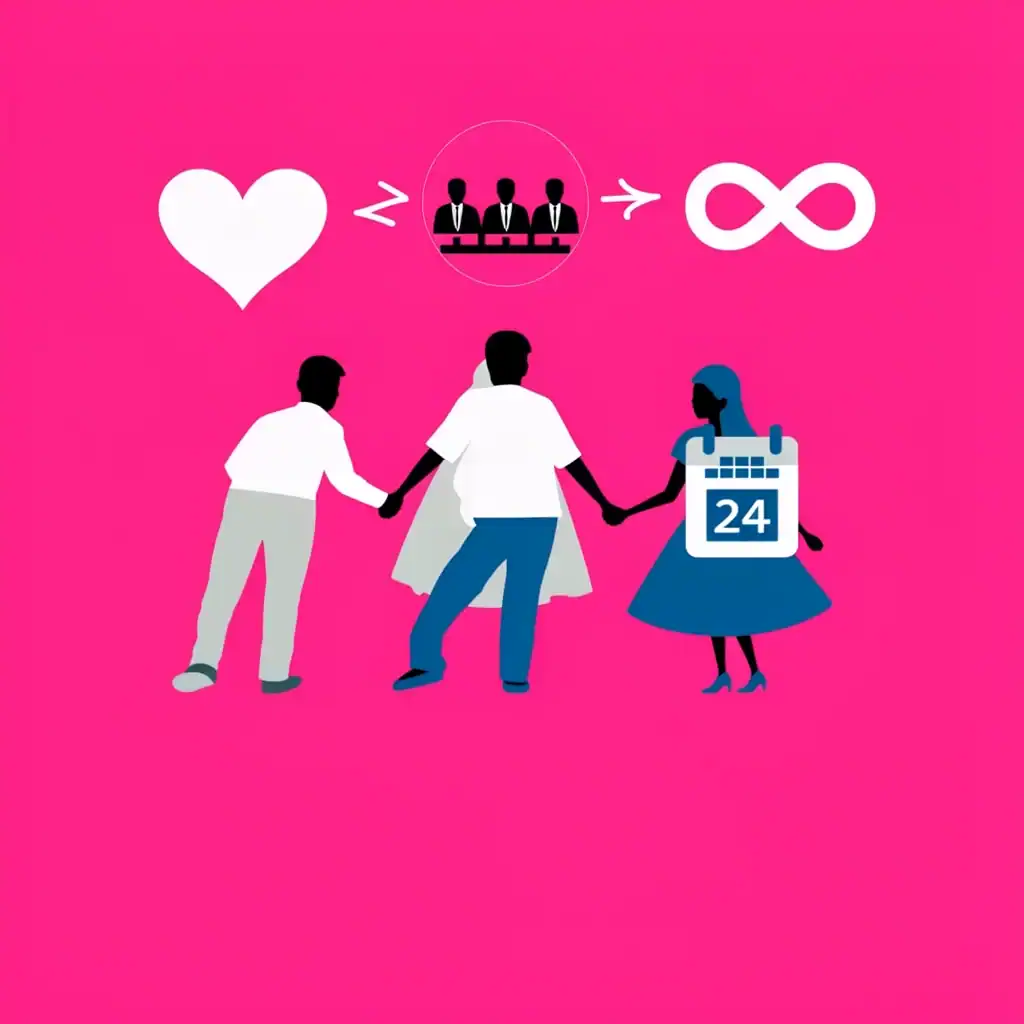
The 24-Hour Rule. After a major stress event, take 24 hours off from all wedding decisions and discussions. No emails. No vendor calls. No planning conversations. Give your brain time to reset.
The Partnership Reset. After the 24 hours, have a structured conversation. Each person shares three things: what went wrong from their perspective, what they need from the other person, and one thing they will do differently next time. No blame. Just facts and requests.
The Perspective Exercise. Write down three things that will still matter one year after the wedding. The cake flavor? Probably not. The way you felt when you saw your partner at the altar? Yes. The people who showed up to celebrate you? Yes. The way you treated each other during the hard parts? Yes. Keep this list somewhere you can see it.
Frequently Asked Questions
How do I handle wedding stress when my partner is not helping?
Start with a calm conversation outside of planning time. Use “I” statements. Say something like, “I feel overwhelmed when I handle the vendor emails alone. Can we split the tasks so each of us owns specific categories?” If that does not work, suggest a weekly planning meeting where you both show up with your assigned tasks done. If your partner still does not help, consider hiring a wedding planner to take the load off both of you.
What if my parents are paying and using it to control decisions?
Have a clear conversation at the start. Say, “We are so grateful for your support. Here are our top three priorities for the wedding. We want to honor your input, but we need the final say on these core elements.” If they push back, offer compromises on things that matter less to you. For example, let them choose the menu if you get to choose the venue. If the control becomes unbearable, consider whether you can fund the wedding yourselves to regain full autonomy.
How do I handle wedding stress at work without breaking down?
Set boundaries around wedding planning during work hours. Do not check vendor emails at your desk. Do not take wedding calls during lunch. Use your lunch break for a walk instead of planning. If you need to step away, take a 5-minute breathing break in the bathroom. If the stress is affecting your performance, consider telling your manager you have a major life event coming up and ask for flexibility.
Is it normal to regret getting engaged because of the stress?
Yes. This is more common than people admit. Wedding stress can make you question everything. The key is distinguishing between stress-induced doubt and genuine relationship concerns. Stress-induced doubt goes away when the stressor is removed. Genuine concerns persist even when things are calm. If you are unsure, talk to a therapist who specializes in premarital counseling. Do not make big decisions during a stress spike.
How do I handle wedding stress when I have anxiety or depression?
Your existing mental health condition will likely be amplified during wedding planning. That is normal. Work with your therapist or doctor to create a plan before you start planning. Set realistic expectations for what you can handle. Give yourself permission to skip traditions that trigger your anxiety. Consider hiring a wedding planner to handle the parts that are hardest for you. And remember: your mental health is more important than any wedding detail.
What should I do the week before the wedding when stress peaks?
Follow the “nothing new” rule. Do not add any new tasks, decisions, or ideas in the final week. Everything that is not done stays undone. Delegate all remaining tasks to your wedding planner, coordinator, or a trusted friend. Focus on rest, hydration, and time with your partner. The week before the wedding is for showing up, not for finishing projects.
Your article helped me a lot, is there any more related content? Thanks!
Thank you! Please feel free to check more articles.