
Oval cut diamonds offer the brilliance of a round brilliant in an elongated silhouette that can make fingers look longer and the diamond appear larger for the carat weight. But unlike a round cut, the oval shape introduces variables like the bow-tie effect, length-to-width ratio, and prong security that can make or break the final look. This guide walks you through every factor that matters – from diamond selection to setting choice – so you can buy with confidence.
What Defines an Oval Cut Diamond – And Why It’s Different
An oval cut diamond has 58 facets arranged in the same brilliant pattern as a round brilliant. The difference is the outline. Instead of a circle, the diamond is an elongated ellipse. This shape changes how light moves through the stone.
The elongation creates two optical effects you won’t see in a round diamond. First, the diamond looks larger than its carat weight because the surface area is spread out. A 1-carat oval can look as big as a 1.2-carat round. Second, the elongated shape can create a dark shadow across the center called the bow-tie effect. This happens because the facets at the ends reflect light differently than the facets in the middle.
Compared to other shapes: an oval has the same fire and brilliance as a round cut but with a longer silhouette. An emerald cut has a hall-of-mirrors effect with less sparkle. A pear cut is similar but has a single point instead of two. The oval is the most versatile elongated shape because it works with almost any setting style.
The Four Cs Applied to Oval Cut Diamonds
The standard Four Cs apply to oval diamonds, but each one has a twist that matters more for this shape.
Cut Grade
A round diamond’s cut grade is strict because the proportions are standardized. Oval diamonds have more variation. A “Very Good” or even “Good” cut grade can still produce a beautiful oval because the elongated shape hides some imperfections in light return. What matters more is symmetry. If the two halves of the oval are not mirror images, the diamond will look lopsided. Always check the symmetry grade on the certificate. It should be at least “Very Good.”
Clarity
The longer shape of an oval diamond makes inclusions more visible near the center. A small black crystal in the middle of a round diamond might be hidden by the brilliant faceting. In an oval, that same inclusion sits in a wider area and catches the eye. Stick with SI1 clarity or higher. If you go lower, the inclusion must be near the edge or under a prong.
Color
Oval diamonds show color more than round diamonds because the elongated shape has larger flat areas. For a white metal setting like platinum or white gold, choose a diamond with a color grade of G or better. For yellow or rose gold, you can go down to J or K because the warm metal masks the yellow tint. This is one place where you can save money without sacrificing appearance.
Carat Weight
An oval diamond looks larger than a round diamond of the same carat weight. A 1-carat oval has a face-up area roughly equal to a 1.2-carat round. This is because the oval spreads the weight over a longer surface. If you want a big look on a budget, oval is the smart choice.
Length-to-Width Ratio
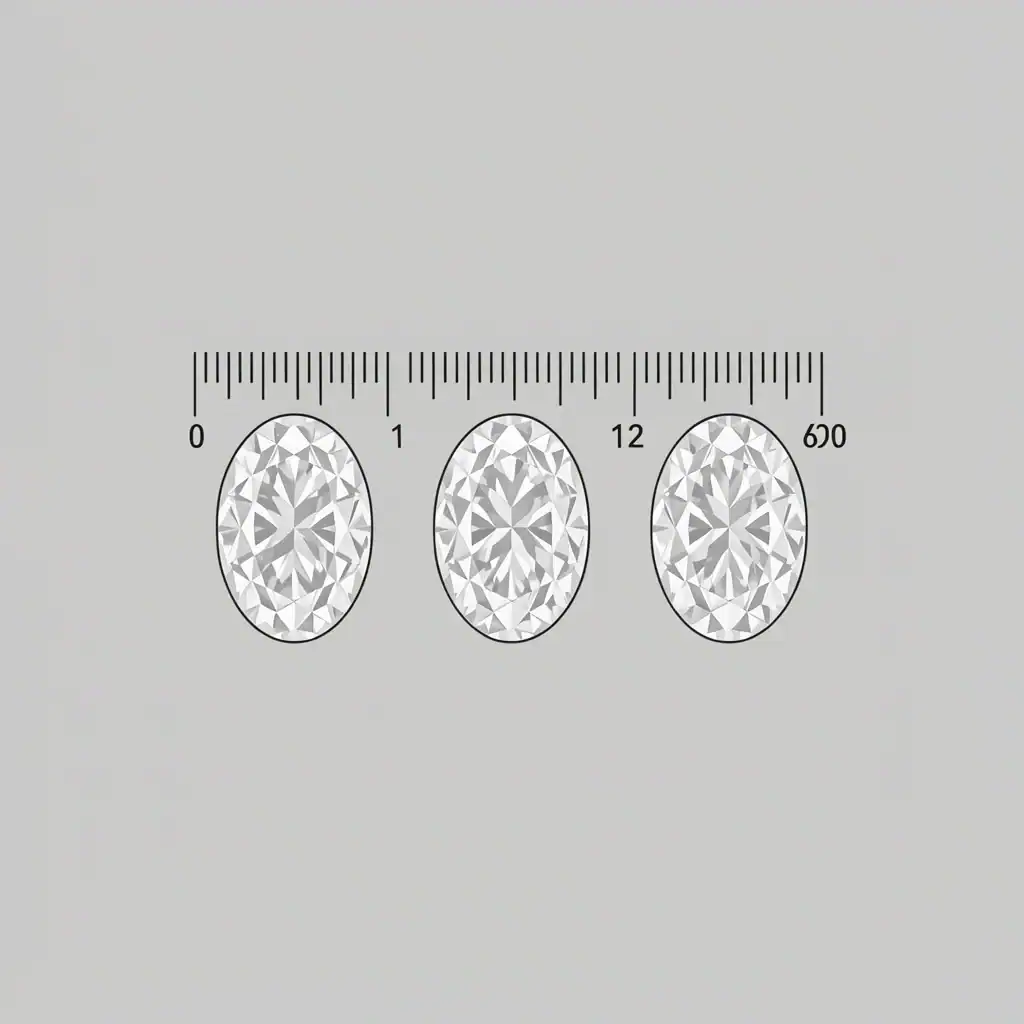
This is the most overlooked factor in oval diamond buying. The length-to-width ratio (L/W) describes how elongated the diamond is. A ratio of 1.0 would be a perfect circle. A ratio of 2.0 would be very long and narrow.
The sweet spot for most buyers is between 1.35 and 1.45. Here is how different ratios look:
| L/W Ratio | Appearance | Best For |
|---|---|---|
| 1.30 – 1.35 | Short and wide, almost round | Buyers who want a round look with a slight elongation |
| 1.35 – 1.45 | Classic oval, balanced | Most buyers – flattering on the finger, not too skinny |
| 1.45 – 1.55 | Long and slender | Buyers who want maximum elongation and finger lengthening |
| 1.55+ | Very skinny, almost marquise-like | Niche look – can look fragile or costume-like |
The Bow-Tie Effect – What to Look For and How to Avoid It
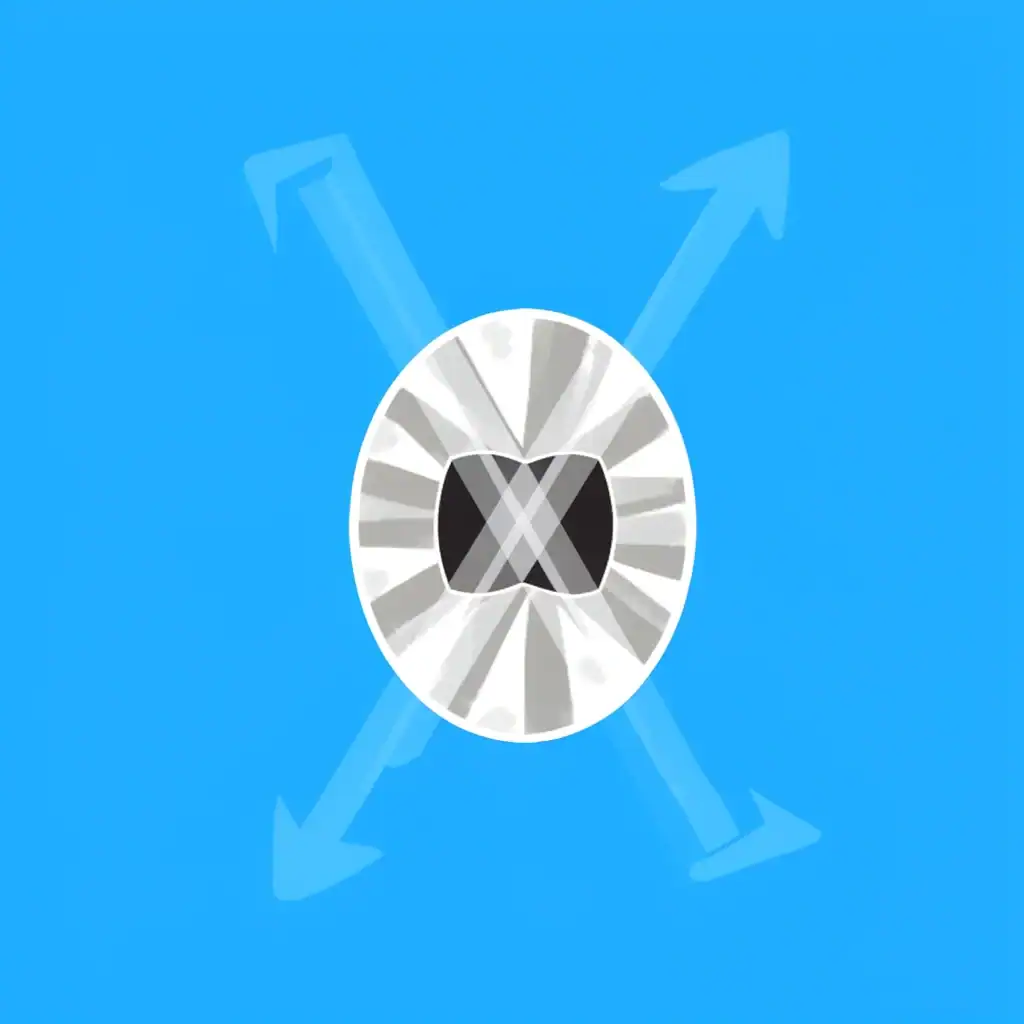
The bow-tie effect is a dark shadow that appears across the center of an oval diamond. It looks like a black bow tie. It happens because the facets at the two ends of the oval reflect light differently than the facets in the middle. When the angles are not perfectly aligned, the center area does not return light to your eye.
Every oval diamond has some bow-tie. The question is how much. A minimal bow-tie adds contrast and depth. A large, dark stripe makes the diamond look dull and lifeless.
How to Spot a Bad Bow-Tie
Ask the jeweler for a video of the diamond in natural light. Turn the diamond over in the video. If the dark area covers more than 20% of the diamond’s width, it is a problem. If the shadow moves as the diamond tilts, that is normal. If the shadow stays dark in every position, the cut is poor.
Proportions That Reduce the Bow-Tie
The crown angle and pavilion depth control the bow-tie. Look for these numbers on the certificate:
- Crown angle: 33 to 35 degrees
- Pavilion depth: 42 to 44 percent
- Table size: 55 to 62 percent
Diamonds with these proportions have the best chance of a minimal bow-tie. If the jeweler cannot provide these numbers, move on to another stone.
Choosing the Best Setting for an Oval Cut Diamond
The setting you choose affects both the look and the security of the diamond. Oval diamonds have two pointed ends that are vulnerable to chipping. The setting must protect those points.
Prong Settings
A four-prong setting is risky for an oval diamond. The prongs usually sit at the four cardinal points – top, bottom, left, right. This leaves the two pointed ends exposed. If a prong bends or breaks, the tip can chip.
A six-prong setting adds two prongs at the corners, giving better protection. A V-prong setting wraps each pointed end in a V-shaped prong. This is the most secure option for a prong setting.
Bezel and Half-Bezel Settings
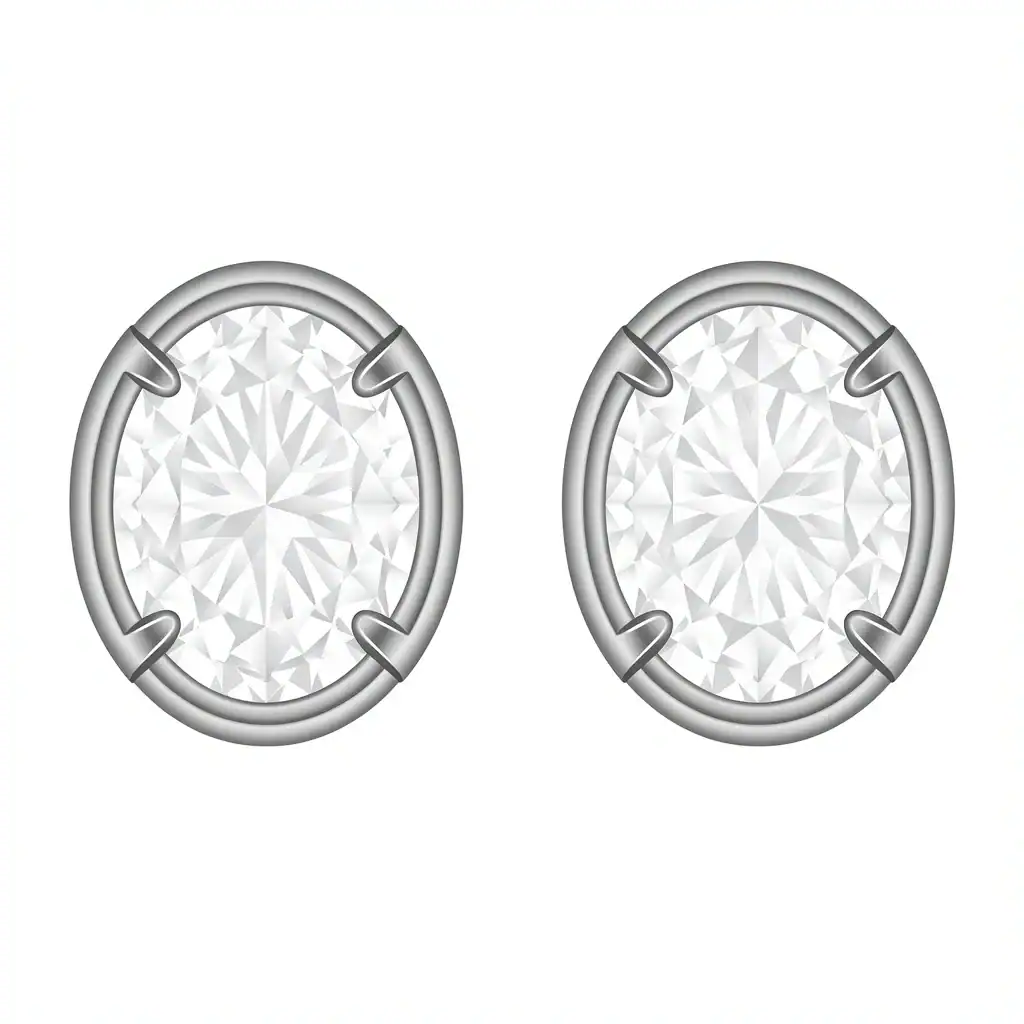
A bezel setting surrounds the entire diamond with a metal rim. This is the safest option for an oval diamond. The metal protects both pointed ends completely. The trade-off is that the metal covers the edges of the diamond, which can make the diamond look slightly smaller and reduce light entry by a small amount.
A half-bezel covers only the two pointed ends. This protects the vulnerable tips while leaving the sides open for maximum light. It is a good compromise between security and brilliance.
Halo Settings
A halo of smaller diamonds around the oval can make the center diamond look larger. But a full halo can also make the oval look round. If you want to preserve the elongated look, choose a hidden halo – a ring of small diamonds set below the center stone, visible only from the side. This adds sparkle without changing the silhouette.
Three-Stone Settings
A three-stone setting with an oval center and two smaller side stones is a classic choice. The side stones should be smaller rounds or tapered baguettes. Tapered baguettes that angle inward toward the center stone emphasize the oval’s shape. Round side stones add sparkle but can compete with the center.
Tension Settings
Tension settings hold the diamond by pressure from the band. This is rare for oval diamonds because the pressure points sit on the pointed ends. The risk of chipping is high. Avoid tension settings for oval diamonds unless the jeweler specifically designs the setting to distribute pressure along the sides.
The Prison of Poor Prong Placement – How to Protect the Points
Oval diamonds have two vulnerable tips. If a prong bends or breaks, the tip can chip. This is not a rare problem. It happens when the prongs are not positioned correctly.
A four-prong setting on an oval diamond places prongs at the 12, 3, 6, and 9 o’clock positions. The 12 and 6 positions are at the pointed ends. But a single prong on a point does not wrap around it. If the prong gets snagged on clothing, it can bend away from the diamond, leaving the tip exposed.
A six-prong setting adds prongs at the 1:30, 4:30, 7:30, and 10:30 positions. These corner prongs catch the diamond’s shoulders, not the tips. The tips are still protected by the 12 and 6 prongs, but now there is backup.
A V-prong setting is the best solution. Each pointed end sits inside a V-shaped prong that wraps around the tip. This distributes pressure across the entire tip, not just one point.
Pro tip: Ask the jeweler to show you the prongs from the side. If the prong does not cover the tip completely, it is a risk. The metal should extend past the tip by at least 0.5 mm.
Metal Choices and Their Effect on the Diamond’s Appearance
The metal color changes how the diamond looks. This is not just about style. It affects the perceived color of the diamond.
Yellow Gold
Yellow gold warms the diamond. A diamond with a J or K color grade looks intentional in yellow gold because the warm metal masks the yellow tint. Yellow gold also gives a vintage feel. It works best with lower color grades.
Rose Gold
Rose gold has a similar warming effect. It adds a pinkish hue that complements the diamond’s fire. Rose gold is popular for vintage and romantic styles. It also works well with lower color grades.
White Gold and Platinum
White gold and platinum are neutral. They do not add any color to the diamond. This makes them the best choice for D, E, and F color diamonds. The diamond looks as white as possible. White gold is slightly less expensive than platinum. Platinum is denser and more durable, which is important for prongs that hold the diamond.
Shank Width and Proportion
The width of the band changes how the oval looks. A thin band of 1.5 mm makes the oval appear longer and more elegant. A thick band of 3 mm makes the oval look shorter and wider. If you want the diamond to look as large as possible, choose a thin band. If you want a substantial ring that feels heavy, choose a thicker band.
For milestone anniversaries, the band width can also be chosen to reflect the traditional anniversary gifts by year themes. It’s a personal touch that ties the ring to the celebration’s significance.
Wedding Bands That Pair With an Oval Engagement Ring
The pointed ends of an oval diamond create a gap between the engagement ring and a straight wedding band. A traditional straight band will not sit flush against the engagement ring. You have three options.
Curved or Chevron Band
A curved band has a dip that wraps around the oval diamond. A chevron band has a V-shape that fits around the point. Both sit flush against the engagement ring. This is the most common solution. The curved band follows the shape of the oval, creating a seamless stack.
Straight Band With Offset Stacking
You can wear a straight band on the other side of the engagement ring, or stack it with a spacer band in between. The spacer band fills the gap. This works if you want a straight band but do not mind the extra width on your finger.
Diamond Band That Follows the Oval’s Curve
Some jewelers make diamond bands that are curved to match the oval’s shape. These bands have diamonds set in a curve that mirrors the engagement ring. This creates a continuous line of sparkle. It is the most expensive option but also the most seamless.
Oval Cut vs. Other Diamond Shapes – When to Choose Which
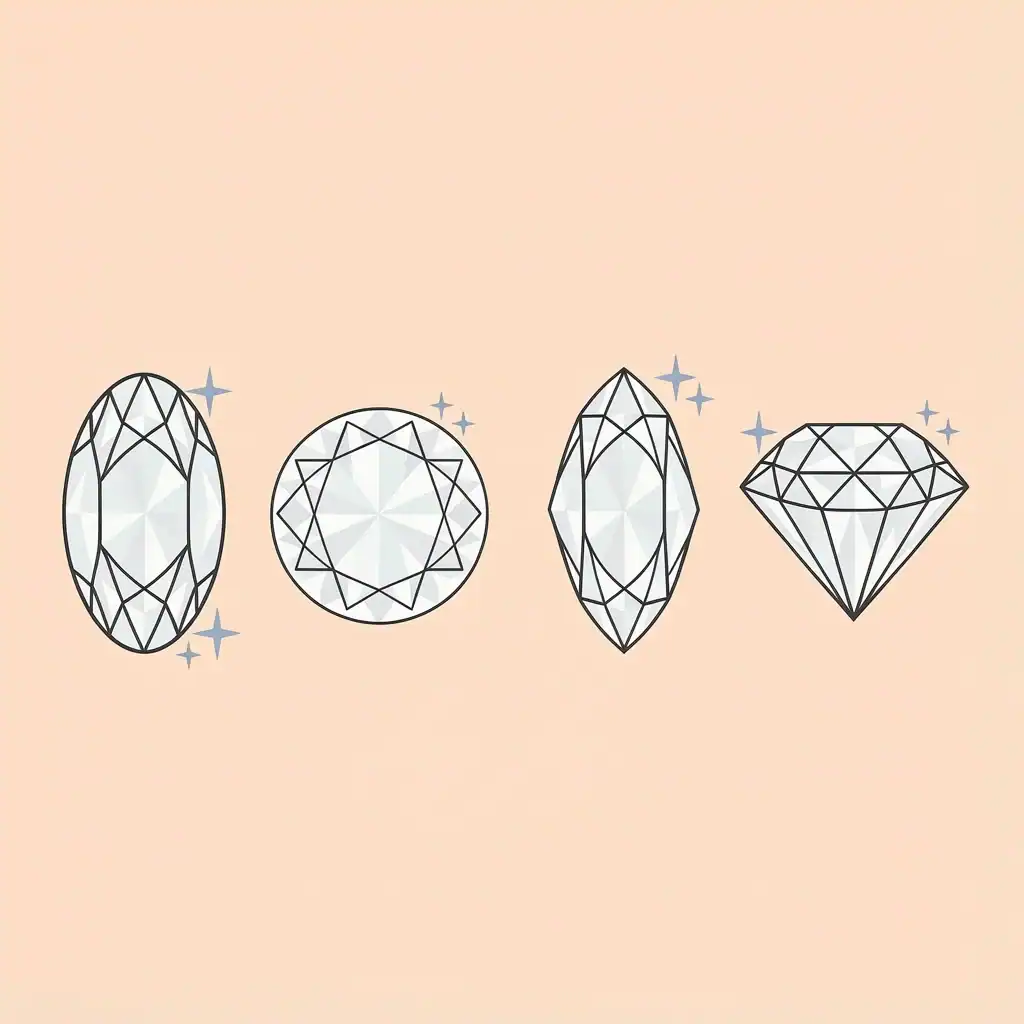
If you are still deciding between oval and another shape, here is a direct comparison.
Oval vs. Round
Round diamonds have the most sparkle. They are the standard for brilliance. Oval diamonds have nearly the same sparkle but with a larger face-up size for the same carat weight. Choose round if you want maximum fire. Choose oval if you want a larger look and a longer silhouette.
Oval vs. Emerald
Emerald cuts have a step-cut faceting that creates a hall-of-mirrors effect. They show inclusions more clearly. They also have less sparkle. Oval diamonds have more brilliance and hide inclusions better. Choose emerald if you want a clean, geometric look. Choose oval if you want sparkle and a softer shape.
Oval vs. Radiant
Radiant cuts are rectangular with trimmed corners. They have brilliant faceting like an oval but with a more angular outline. Radiant cuts show more color than oval cuts. They also have a higher risk of a bow-tie effect. Choose radiant if you want a square or rectangular shape with sparkle. Choose oval if you want a softer, more traditional silhouette.
Frequently Asked Questions
Are oval diamonds more expensive than round diamonds?
Per carat, oval diamonds are often 20 to 30 percent less expensive than round diamonds of the same quality. This is because demand for round diamonds is higher. The price difference varies by quality. A high-quality oval with excellent cut and low color can still be expensive.
Do oval diamonds sparkle less than round diamonds?
A well-cut oval diamond has the same brilliant fire as a round diamond. The faceting pattern is identical. The difference is that the elongated shape can create areas of dead light or bow-tie. A poorly cut oval will sparkle less. A well-cut oval sparkles nearly as much as a round.
Can I get an oval cut lab-grown diamond?
Yes. Lab-grown oval diamonds have the same optical properties as natural diamonds. The same considerations for ratio, bow-tie, and prong placement apply. Lab-grown diamonds are typically 40 to 60 percent less expensive than natural diamonds of the same quality.
What is the best way to clean an oval cut engagement ring?
Avoid ultrasonic cleaners for bezel settings because the vibration can loosen the metal. Use warm water, mild dish soap, and a soft brush. Scrub gently around the pointed ends. Rinse and dry with a lint-free cloth. For prong settings, an ultrasonic cleaner is safe as long as the prongs are tight.
Do oval cut engagement rings look dated?
No. The oval cut is a classic shape that has been popular for decades. It had a resurgence in the 2010s and remains a top choice. Unlike the marquise trend of the 1980s, the oval cut has a timeless silhouette that works with modern and vintage settings. It is not a trend that will fade.
Thanks for sharing such a useful blog.
Thank you that means so much! Please share with someone!
Thanks for sharing. I read many of your blog posts, cool, your blog is very good.
Thank you so much!
Your point of view caught my eye and was very interesting. Thanks. I have a question for you.
Sure, thanks for your comment!