

I have been a bride, a bridesmaid, a guest, and a photographer at more than two hundred weddings. One thing I know for sure: nearly every couple feels some stress on their wedding day. That does not mean something is wrong with you or your planning. Stress comes from three overlapping places: logistics (things that go wrong), people (family and friend tensions), and mindset (the pressure to feel perfect). Once you see the pattern, you can fix each part. This article walks you through every layer, from practical fixes to mental tricks that actually work.
Wedding Day Stress Is Normal – Here’s Why It Happens
You are not broken if you feel anxious. A wedding is a high-stakes event with a timeline, a crowd, and big emotions. Your brain treats it like a performance, and performance anxiety is real. The good news is that most stress is predictable. When you know what causes it, you can prepare. The three domains—logistics, people, and mindset—are where we will focus. Each section below gives you a tool to reduce that specific kind of pressure.
The 7 Most Common Logistical Stressors and How to Neutralize Them

Logistical stress is the easiest to fix because it comes from specific, repeatable mistakes. Here are the seven biggest ones I have seen, with a fix and a backup plan for each.
- No first look. Doing all photos after the ceremony forces you to miss cocktail hour and rush through family lineups. Fix: schedule a first look before the ceremony. Backup: if you want the aisle reveal, hire a coordinator to wrangle family groups so photos take fifteen minutes, not an hour.
- Replacing vendors with family. Uncle Bob may be handy, but he does not know how long a setup takes or that the parking lot needs a professional attendant. Fix: hire a day‑of coordinator. Backup: if you truly cannot afford one, assign one non‑family friend as the single point of contact for all vendor questions.
- Too many location changes. Getting ready at a hotel, then driving to a park for photos, then to a separate ceremony venue, then to a reception hall—each move eats time and sanity. Fix: choose a venue that covers getting ready, ceremony, and reception in one place. Backup: if you must go separate, block two full hours just for travel and buffer.
- Writing vows on the day. I once saw a groom say “it will take five minutes” and disappear for fifty‑five minutes. Fix: handwrite your vows into your vow book at least two nights before. Backup: if you genuinely need to edit, do it on your phone and print them at a local print shop the day before.
- Cramming the timeline. Weddings run late. Every time. Fix: add ten minutes of buffer after every thirty minutes of scheduled time. Backup: accept that the schedule is a suggestion, not a law. The only hard stop is the ceremony start time.
- Not hiring a dream vendor team. Vendors who do not communicate with each other create confusion. Fix: ask your photographer and coordinator to share a timeline and introduce themselves to the caterer and DJ before the day. Backup: at minimum, give every vendor a contact list with each other’s phone numbers.
- Too much DIY. You are creative and capable, but on the day you need to be a bride or groom, not a florist or baker. Fix: outsource setup and cleanup to someone who is not you or your immediate family. Backup: if you must DIY, prep everything in full the week before and hand a checklist and a box of supplies to a trusted friend the night before.
The Invisible Stressors – Perfectionism, Expectation, and Social Pressure

Logistics you can budget for. The invisible stressors are harder because they live inside your head. The biggest one is perfectionism. You have seen hundreds of Pinterest boards and Instagram reels, and now your brain believes that a perfect wedding exists. It does not. Real weddings have spilled wine, wrinkled linens, and a bridesmaid who cries at the wrong moment. That is not failure. That is life.
Part of the logistics puzzle includes tradition, so planning where the bride should stay the night before the wedding can help reduce pre-wedding stress.
Social pressure is another quiet killer. You are the host of the party, but you also want to be a guest. The trick is to let go of the host role for one hour. Schedule a ten‑minute alone time with your partner after the ceremony—no phones, no family, just the two of you. That small pocket of quiet resets your mindset.
If you feel anxious about being the center of attention, try this exercise: write a “good enough” mantra on your hand. Something like, “I am here to marry the person I love. Everything else is extra.” Read it when you feel shaky. It works because it reminds you of the only real goal.
People Management – Handling Family, Friends, and Difficult Personalities

Other people can be the biggest source of wedding day stress. A micromanaging parent, a divided family, a well‑meaning friend who keeps adding chaos. The solution is boundaries set before the day.
Have a short conversation with each key person two weeks before the wedding. Say something like: “I love that you want to help. On the day, the only job I need you to do is enjoy yourself and follow the timeline. If something goes wrong, please direct questions to [coordinator’s name]. That lets me stay present.”
If a specific family member tends to cause drama, assign a calm friend to be their “buddy” for the day. That friend’s job is to gently steer them away from conflict and toward the dance floor. Scripts help: “Mom, the photographer needs you over by the arch right now.” Keeps them busy and out of trouble.
Day‑Of Crisis Toolkit – What to Do When Plans Fall Apart

No matter how well you plan, something will go wrong. The rain will come, the caterer will be late, or your dress button will pop. Here is what to do in three common crisis scenarios, ranked by urgency.
| Crisis | Immediate response | Longer fix |
|---|---|---|
| Bad weather (outdoor ceremony) | Move to plan B immediately. Do not wait to decide. | Have a clear rain backup location chosen at booking. Confirm it with venue two days before. |
| Vendor no‑show (photographer, caterer, DJ) | Call your day‑of coordinator. They have backup contacts. | If no coordinator, call the vendor’s emergency number from their contract. Have a list of local alternatives saved in your phone. |
| Emotional meltdown (yours or your partner’s) | Step away to a private space for five minutes. Breathe slowly. Hold each other. | Keep a small “calm‑down card” in your pocket with one breathing exercise (inhale for four, hold for four, exhale for six). The card is your permission to pause. |
Pro tip: write the calm‑down card on a piece of cardstock and tuck it into your shoe or suit pocket. You never know when you will need it.
Myth vs. Reality – What “The Best Day of Your Life” Actually Feels Like
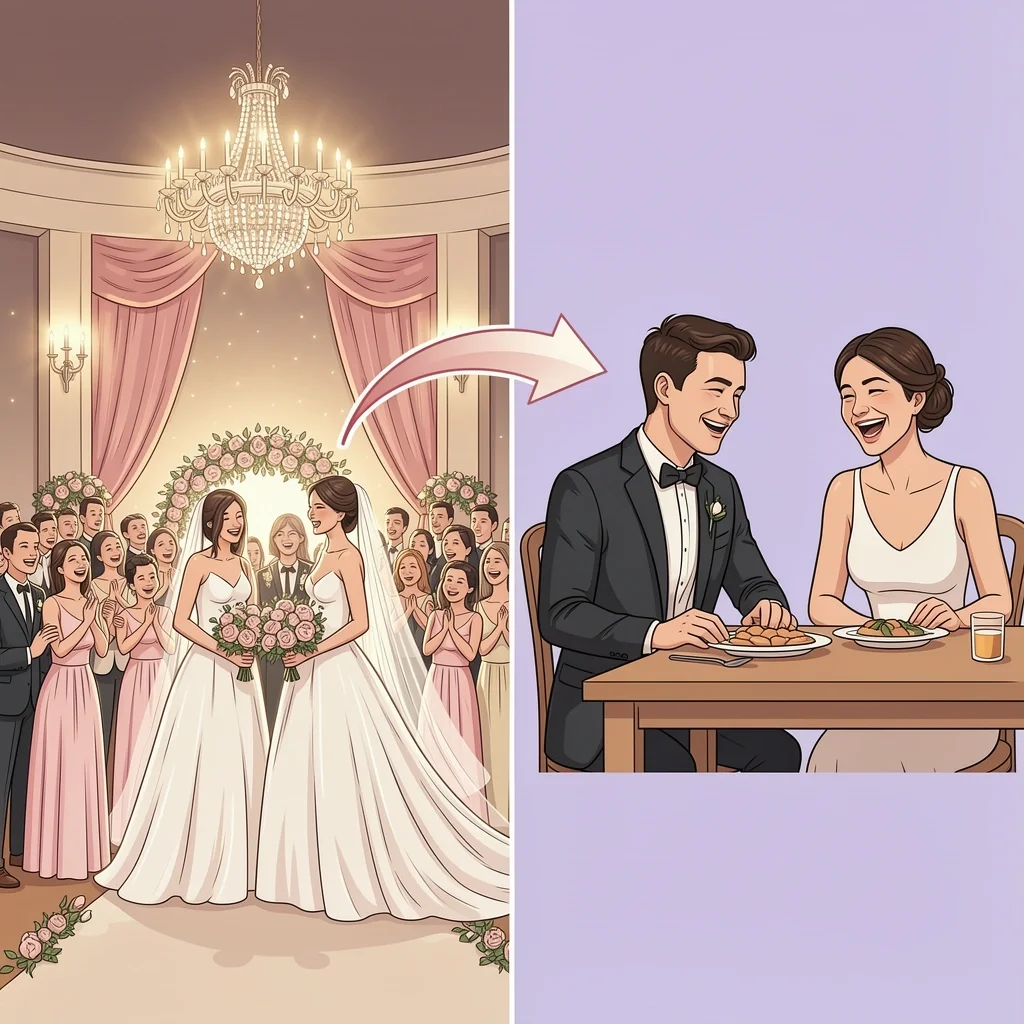
Hollywood and social media tell you that your wedding day will be the happiest day of your life. That is a myth. The reality is that the best day of your life might be a quiet Tuesday when your partner makes you laugh unexpectedly. A wedding day is wonderful, but it is also exhausting, emotional, and full of pressure. Many couples feel relief more than joy at certain moments, and that is okay.
I once had a bride tell me she felt “nothing” during the ceremony. She was so overwhelmed that her emotions shut down. Two hours later, during the first dance, she cried happy tears. The feeling comes in waves. Do not judge yourself for not feeling “on top of the world” every second. You are doing something hard and meaningful, and that matters more than a constant high.
The Pre‑Wedding Mental Preparation Checklist
Use this checklist in the week before your wedding to prepare your mind, not just your to‑do list.
- Visualize the day – Close your eyes and walk through the entire day from waking up to leaving the reception. Picture small details like the light, the sounds, and your partner’s face. This makes the actual day feel familiar and less scary.
- Write a journal entry – Answer: “What is my biggest fear about the day? What is one thing I am excited for? What would make me feel proud at the end?” Writing takes worry out of your head and onto paper.
- Practice one breathing exercise – The 4‑4‑6 pattern (inhale 4, hold 4, exhale 6). Do it twice a day for two minutes. By the wedding day, it will be automatic.
- Do a “worst‑case scenario” acceptance ritual – Imagine something going wrong (cake falls, rain pours, microphone dies). Say to yourself: “If that happens, I will still marry the person I love, and I will still have a good story to tell.” That acceptance kills anxiety.
- Schedule a five‑minute couple check‑in – The morning of the wedding, before all the chaos, sit together and say: “We are doing this. We love each other. Whatever happens, we have each other.” That is the anchor.
Frequently Asked Questions
How do I stop my hands from shaking during the ceremony?
That is adrenaline. Focus on your partner’s eyes, not the audience. Hold their hands and take three slow breaths together. If you still shake, press your palms flat against your thighs – the pressure helps steady them.
What if I don’t like my hair or makeup on the day?
First, remember that no one else sees the small flaws. Second, have a touch‑up kit ready with extra bobby pins and a lipstick. If it is truly bad, ask your stylist for a quick fix during the first look. Most stylists stay for touch‑ups.
Should I tell my wedding party if I’m feeling stressed?
Yes, but only one or two trusted people. Pick your calmest friend or sibling and give them a code word. When you say the word, they know to get you water, find your partner, or just stand quietly with you. Do not broadcast your stress to the whole group – that can amplify it.
How can I enjoy cocktail hour if I’m introverted?
Schedule a five‑minute recharge break. Escape to the bathroom or a quiet corner. Then come back for one drink and two conversations. You do not have to talk to everyone. Let your partner handle the crowd while you take small breaks.
Is it normal to feel nothing on the morning of the wedding?
Completely normal. Many people feel numb or detached because the brain is overloaded. That feeling usually breaks once you see your partner or walk down the aisle. If it lasts, do not worry – it is your mind’s way of protecting you from too much emotion. It will come.