
If you are reading this, you are probably feeling it right now. That tightness in your chest when you open another email from a vendor. The knot in your stomach when your mom asks about the guest list again. The quiet dread that creeps in when you realize you have to choose between three shades of ivory for the table linens.
Let me say this clearly: wedding planning is stressful for almost everyone. It is not a sign that you are doing something wrong or that your relationship is weak. It is a sign that you are trying to manage something that was never designed to be managed by two people alone. The good news is that once you understand the specific reasons behind the stress, you can cut it down by a significant amount within a few weeks. This guide will show you how.
Why Wedding Planning Feels Different From Other Stress

You have planned big events before. Maybe a birthday party, a work conference, or a family reunion. Those were stressful too, but wedding planning hits differently. Here is why.
First, the stakes feel enormous. This is not a one-night party. It is a public declaration of your commitment, witnessed by the people who matter most to you. The pressure to get it right is intense because you are not just planning a party. You are planning a memory that will be talked about for years.
Second, the money is personal. When you spend a corporate budget, you make decisions based on return on investment. When you spend your own savings, every dollar feels like a vote for what matters. That creates guilt, second-guessing, and fear of wasting money on the wrong thing.
Third, the decisions never stop. A typical engaged couple makes over 300 decisions during the planning process. That is not an exaggeration. From the date and venue to the font on the place cards, each choice drains a little bit of your mental energy. By the time you reach decision 200, even picking a color for the napkins can feel overwhelming.
Fourth, emotions are tied to everything. This is not a work project. Every decision carries emotional weight. The song you walk down the aisle to. The table where your divorced parents will sit. The dress your mother loves but you are not sure about. These are not neutral choices. They are loaded with family history, personal identity, and expectations.
When you combine high stakes, personal money, hundreds of decisions, and emotional weight, you get a perfect storm for stress. Understanding this is the first step to managing it.
Identify Your Stress Type
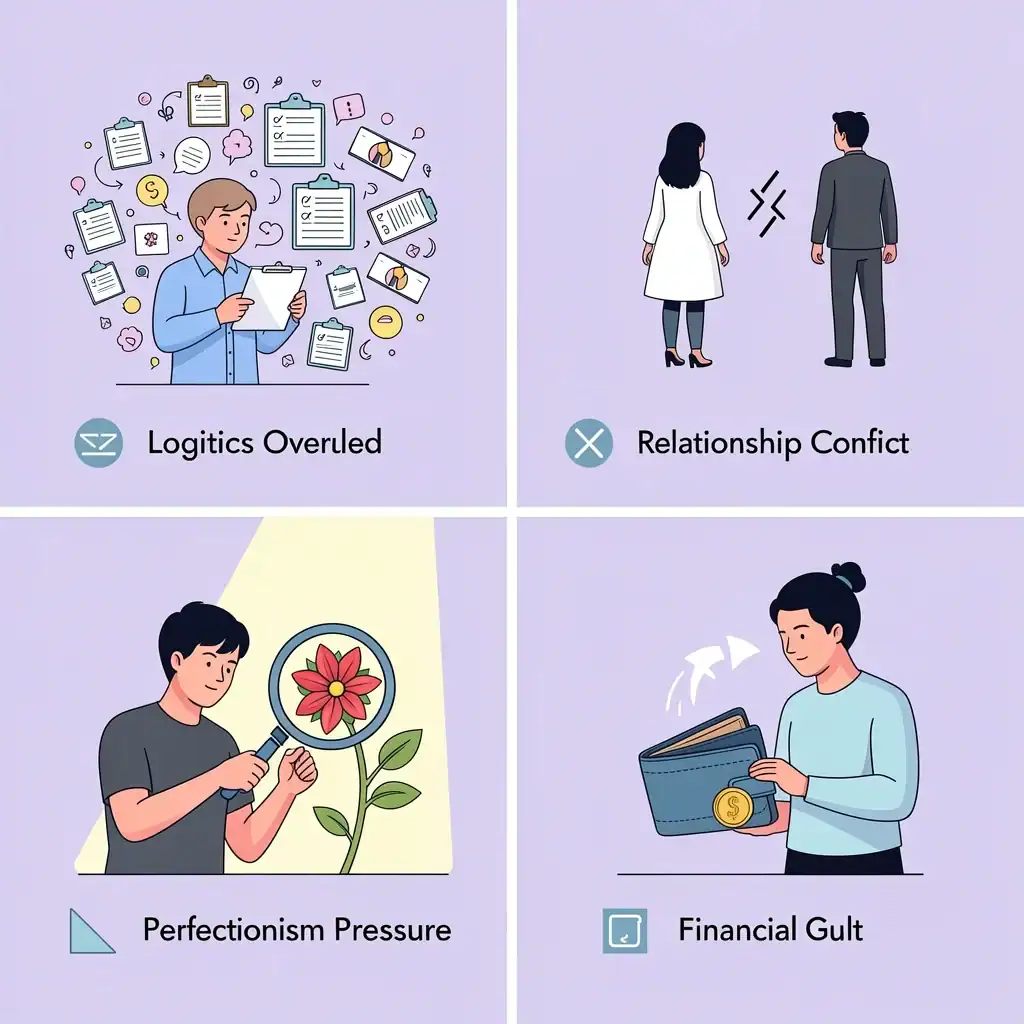
Not all wedding stress is the same. The advice that works for one person can be useless for another. Before you try any solution, you need to know what kind of stress you are dealing with. Most people fall into one of four categories.
Logistics Overload
You have a long to-do list and not enough time. You are juggling vendor calls, venue walkthroughs, and dress fittings. Your calendar is packed, and you feel like you are always behind. The stress here comes from volume, not emotion. You just need more systems and more help.
Relationship Conflict
You and your partner are not on the same page. Maybe one of you wants a big wedding and the other wants to elope. Maybe one person is doing all the work while the other checks out. The stress here comes from misalignment, not from the tasks themselves. You feel alone in the process, and that hurts.
Perfectionism Pressure
You have a vision in your head, and you are terrified that reality will not match it. Every detail feels critical. You spend hours comparing vendors, reading reviews, and second-guessing your choices. The stress here comes from the fear of failure. You are afraid that if one thing goes wrong, the whole day will be ruined.
Financial Guilt
You are spending a lot of money on one day, and that feels uncomfortable. Maybe you are paying for it yourself and watching your savings disappear. Maybe your parents are contributing, and you feel obligated to make choices that please them. The stress here comes from the gap between what you want and what you feel you should spend.
Most people are a mix of these types, but one usually dominates. Take a moment to identify yours. The solution for logistics overload is different from the solution for perfectionism pressure. Knowing your type will help you skip the advice that does not apply to you.
Immediate Relief Tactics You Can Use Today
Before we talk about big structural changes, let us cover what you can do right now to lower your stress level. These are not long-term fixes. They are emergency brakes.
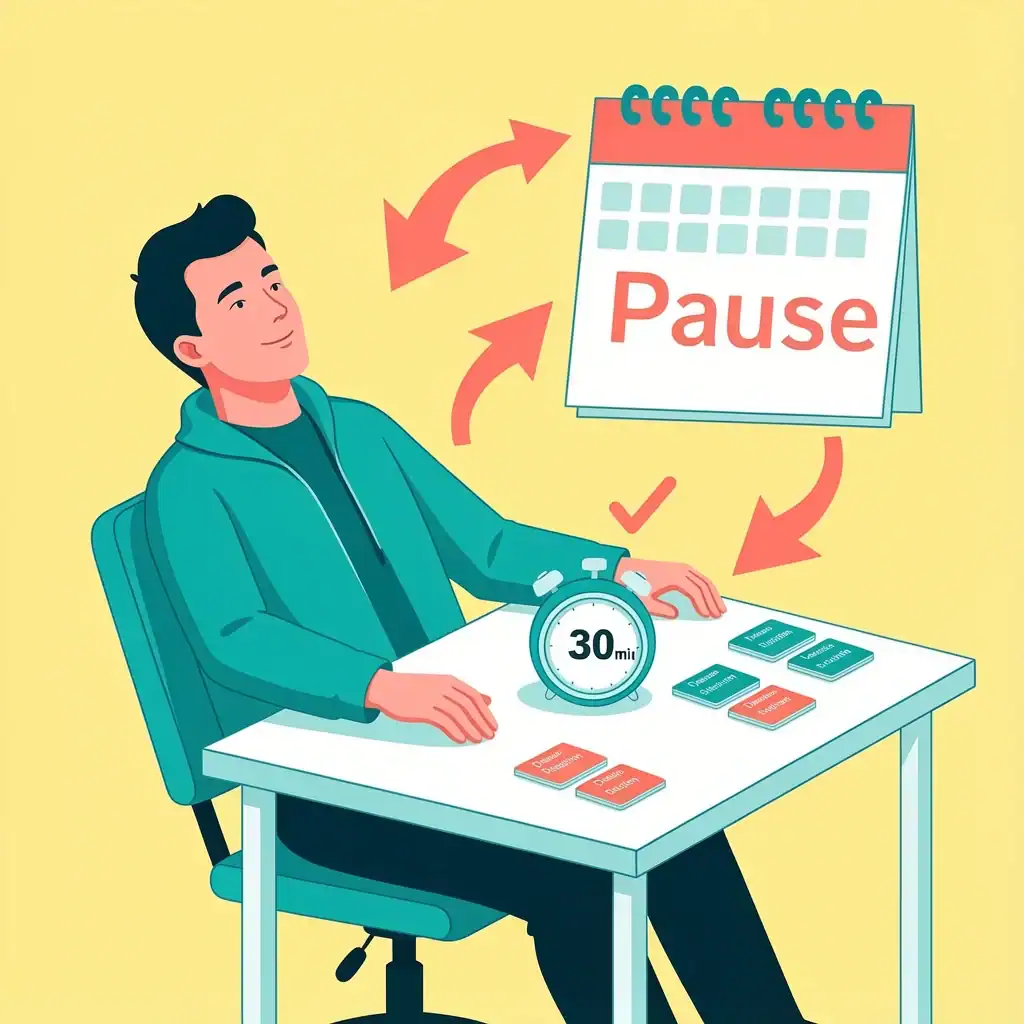
The 30-Minute Rule
This is a simple technique that works because it respects how your brain actually functions. Set a timer for 30 minutes. During that time, you are allowed to work on wedding tasks. When the timer goes off, you stop. No exceptions. You can pick it up again tomorrow. This prevents the spiral where one task leads to another, and suddenly you have spent three hours on Pinterest and feel worse than when you started.
Decision Batching
Group similar decisions together and handle them in one sitting. For example, on Monday evening, you choose all the paper goods: invitations, save-the-dates, programs, and menus. On Wednesday, you handle all the vendor confirmations. On Friday, you decide on the menu. This prevents your brain from switching contexts constantly, which is what causes mental fatigue.
The One-Week Pause
If you are feeling overwhelmed, give yourself permission to pause all wedding planning for one full week. No vendor calls. No Pinterest. No discussions with your partner about the guest list. Use that week to sleep, exercise, and spend time with friends without talking about the wedding. You will come back with a clearer head and better judgment.
Structural Changes That Actually Work
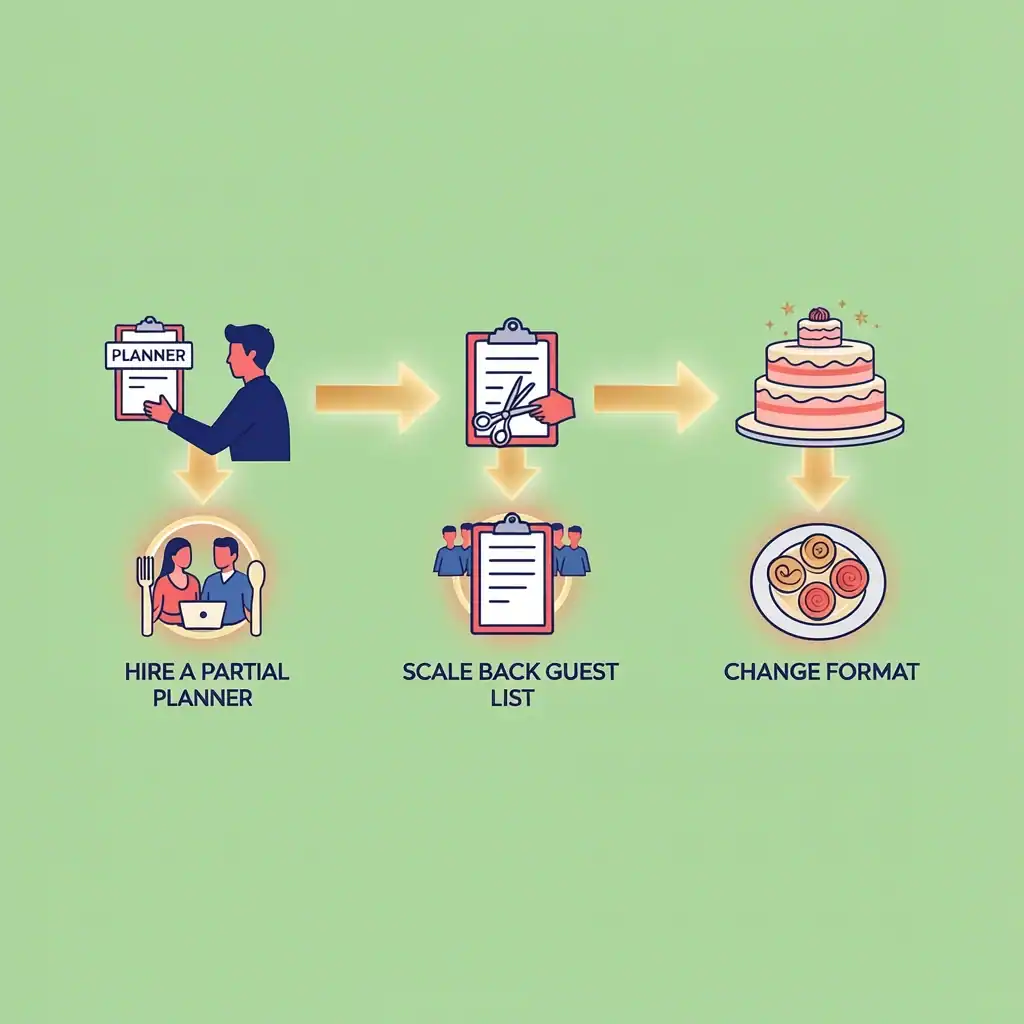
Sometimes the small tactics are not enough. If you are still drowning after trying the immediate relief methods, you need to change the structure of your planning process. Here are the three most effective structural changes you can make.
Hire a Partial Planner
Many couples think they have to choose between doing everything themselves and hiring a full-service planner who costs thousands. There is a middle ground. A partial planner, sometimes called a month-of coordinator or a finer details planner, takes over about six to eight weeks before the wedding. They handle the final vendor confirmations, the timeline, the seating chart, and the day-of logistics. This frees you from the most stressful part of the process: the final stretch. You still make the big decisions, but you do not have to manage the execution.
Scale Back the Guest List
Every person you invite adds complexity. More guests mean a bigger venue, more food, more tables, more centerpieces, more seating chart drama, and more people to please. If you are feeling overwhelmed, look at your guest list and ask yourself a hard question: do we really need to invite these 30 people from my dad’s work? Cutting the list by even 20 percent can reduce your stress by a much larger percentage because it simplifies every other decision that follows.
Change the Format
You do not have to have a traditional wedding. If the stress is coming from trying to fit your vision into a standard template, change the template. Consider a morning wedding with brunch instead of a formal dinner. Consider a weekday wedding to save money and reduce pressure. Consider a small ceremony with a larger party later. The format is yours to design. You are not required to follow any script.
The Stress-Cost Trade-off of Four Wedding Paths
One of the biggest decisions you will make is how much help to bring in. Here is a clear comparison of the four main paths, showing not just the monetary cost but the emotional cost in terms of stress hours saved or gained.
| Path | Monetary Cost | Stress Level | Best For |
|---|---|---|---|
| Full DIY | Lowest upfront cost | Highest stress | Couples with lots of time, strong organizational skills, and a small guest list |
| Partial Planner | Moderate cost | Moderate stress | Couples who want control but need help with execution in the final weeks |
| Full-Service Planner | Highest cost | Lowest stress | Couples with busy careers, complex weddings, or high anxiety about details |
| Elopement or Microwedding | Lowest cost | Lowest stress | Couples who value the marriage more than the wedding and want to avoid the whole machine |
Notice that the full DIY path is not always the cheapest when you factor in your time and mental health. If you are spending 20 hours a week on planning and crying every Sunday night, the cost of a partial planner is likely worth it.
Protecting Your Relationship From Wedding Stress
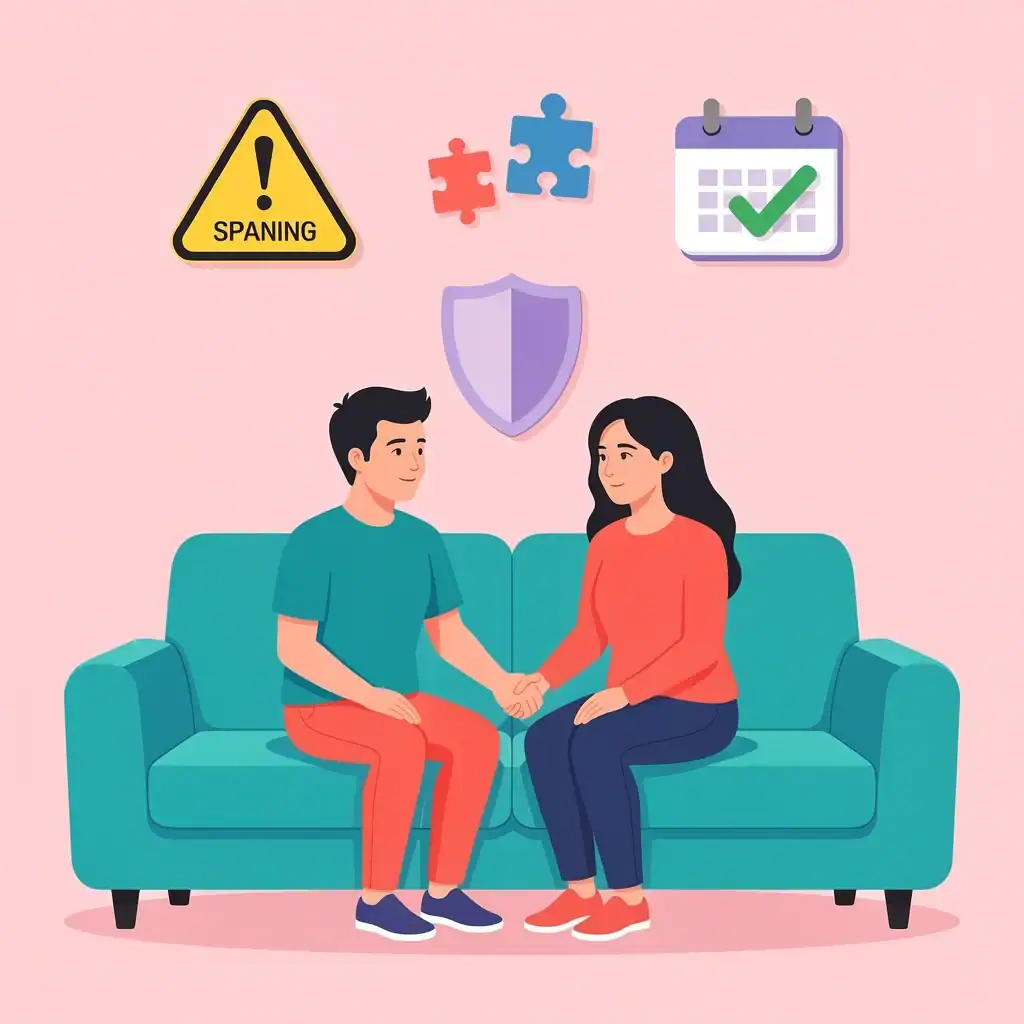
Wedding planning stress does not just affect you. It affects your relationship. The way you handle this period can either strengthen your partnership or create cracks that last into marriage. Here is how to make sure you come out stronger.
Learning how to handle wedding stress without losing yourself is essential for protecting both your sanity and your bond.
Spot the Warning Signs Early
Watch for these behaviors in yourself and your partner. Avoidance, where one person stops engaging in planning conversations. Criticism, where small mistakes become big arguments. Resentment, where one person feels they are doing all the work. If you see these signs, do not ignore them. They are not character flaws. They are symptoms of a system that is not working.
Divide Roles Based on Strengths
Do not split tasks evenly. Split them based on who is better at what. If one of you loves spreadsheets and the other loves design, let the spreadsheet person handle the budget and the design person handle the decor. If one of you is good at negotiating, let them handle vendor calls. If one of you is good at calming people down, let them handle family communication. This is not about fairness. It is about efficiency and reducing friction.
Schedule Weekly Check-ins
Set aside 30 minutes every Sunday evening to talk about wedding planning. No other topic. During this check-in, each person shares three things: what went well this week, what felt hard, and what they need help with next week. This prevents resentment from building up. It also ensures that problems are addressed while they are small, not after they have grown into arguments.
Here is a counterintuitive truth: couples who navigate wedding stress well often develop better communication patterns that last into their marriage. The key behaviors that separate successful couples from struggling ones are simple. They talk about the stress openly without blaming each other. They externalize the problem, meaning they see the stress as the enemy, not each other. And they celebrate small wins together, like booking the venue or finishing the guest list. If you can do these three things, you will come out of this process stronger than when you started.
How to Handle Family Pressure Without Losing Your Mind
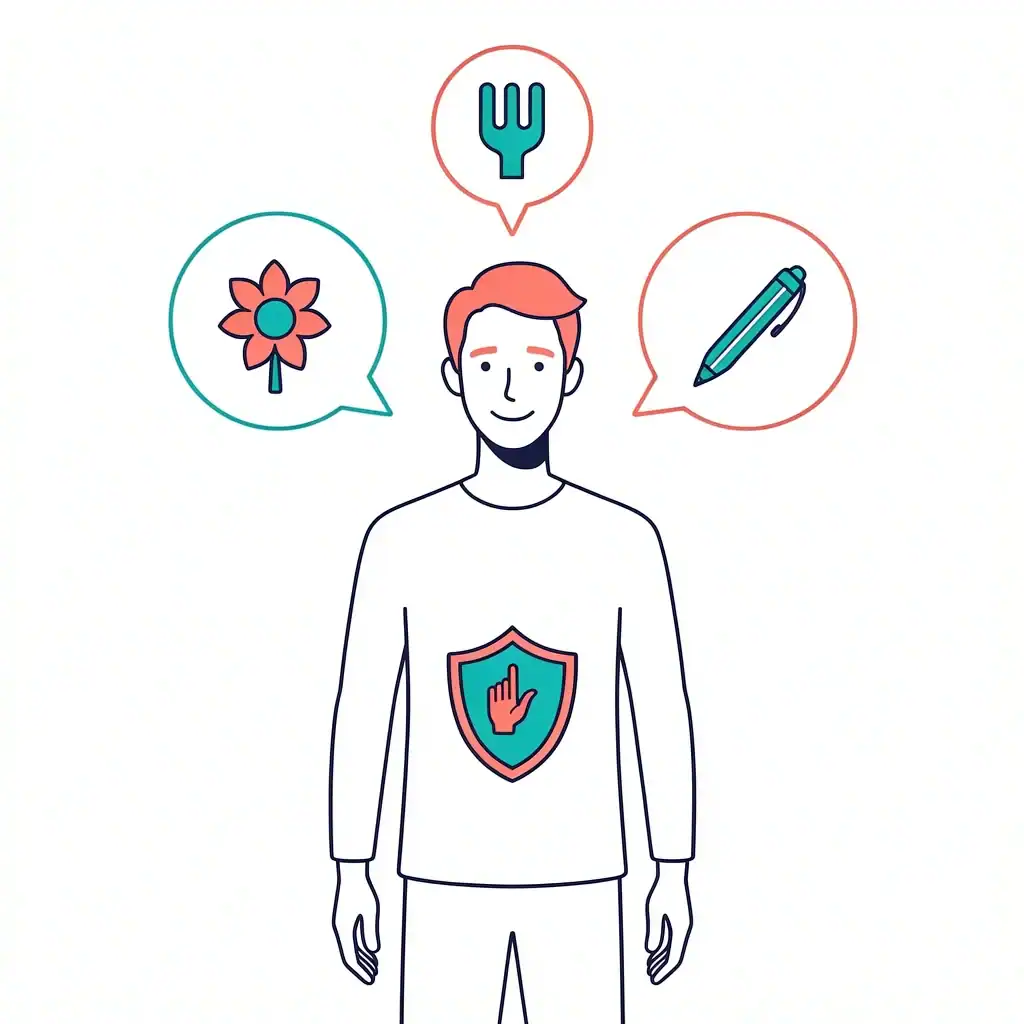
Family dynamics are one of the biggest sources of wedding stress. Parents who want to invite their friends. In-laws who have strong opinions about the menu. Siblings who offer unsolicited advice. Here is how to handle it without damaging your relationships.
Set clear boundaries early. Before you start planning, have a conversation with both families about what their role will be. If they are contributing money, clarify what that money buys. Does it buy a seat at the decision table, or is it a gift with no strings attached? Be honest about this upfront, even if it feels awkward. It is much harder to have this conversation after decisions have been made.
Use a simple script for unwanted advice. When someone tells you what you should do, say this: “Thank you for the suggestion. We will consider it.” Then move on. You do not have to explain why you are not taking their advice. You do not have to justify your choices. A polite acknowledgment is enough.
If a parent is causing significant stress, consider giving them a specific task to own. For example, let your mother handle the flowers completely. She chooses the florist, the colors, and the arrangements. You give up control over that one area, but you gain peace. This works because it channels their energy into something productive instead of letting it spread across everything.
When to Consider Eloping or Postponing
There is a point where the stress stops being manageable and starts being harmful. If you are experiencing any of the following, it is time to consider a major change.
- You are losing sleep regularly because of wedding anxiety.
- You are fighting with your partner more than you are connecting with them.
- You have stopped looking forward to the wedding and just want it to be over.
- You are experiencing physical symptoms like headaches, stomach issues, or chest tightness.
- You have considered canceling everything and running away.
If any of these sound familiar, give yourself permission to change course. Eloping is not a failure. It is a recognition that the wedding industrial complex is not serving you. Postponing is not a sign of weakness. It is a strategic decision to give yourself more time to plan without pressure. The marriage is what matters. The wedding is just the party. If the party is destroying your peace, change the party.
The Decision Load Myth
You have probably heard someone say, “Just relax. It is just one day.” This advice is well-meaning but useless. It ignores the real problem, which is not that you care too much. The real problem is that you are making too many decisions.
Research on decision fatigue shows that the quality of your decisions declines as you make more of them. By the time you are choosing between two shades of blue for the bridesmaid dresses, your brain is already exhausted from the 50 decisions you made earlier that day. This is why small choices feel so overwhelming. It is not because the choice matters. It is because your brain is out of fuel.
The solution is not to care less. The solution is to reduce the number of decisions you have to make. Here are three ways to do that.
- Set a rule that you will only look at three options for any given choice. No more. Pick the best of three and move on.
- Delegate entire categories of decisions to your partner or a trusted friend. You do not need to approve the font on the menu. Let someone else own it.
- Use templates and packages instead of custom everything. A pre-designed invitation suite is fine. A package deal from a vendor is fine. You do not need to customize every detail.
Frequently Asked Questions
Should I tell my wedding vendors I am stressed? Will they judge me?
You can tell them, and most will not judge you. They have seen stressed couples before. In fact, being honest can help them serve you better. Try saying something like, “I am feeling a bit overwhelmed with the planning. Can you help me simplify this decision?” Most vendors will appreciate the honesty and will work with you to make things easier.
Does wedding stress ever lead to cancellations or breakups?
Yes, it can. Wedding stress is a known contributor to relationship strain, and in some cases, it can lead to breakups or cancellations. This is rare, but it happens. If you are considering canceling, that is a sign that something deeper is wrong. It may be the wedding itself, or it may be the relationship. Either way, it is worth talking to a therapist or a trusted mentor before making a final decision.
How do I handle a parent who is stressing me out?
Start by setting a boundary. You can say, “I appreciate your input, but we need to make this decision ourselves.” If they push back, you can say, “If you cannot respect our decision, we will need to take a break from discussing this topic.” Follow through. If they continue to push, end the conversation. You are not being rude. You are protecting your peace.
Is there a best time of day to do wedding planning to reduce stress?
Yes. Your brain works differently at different times of day. Make big decisions, like choosing a venue or a caterer, in the morning when your mental energy is highest. Save logistical tasks, like sending emails or filling out forms, for the afternoon. Use evenings for inspiration, like looking at photos or reading blogs, but do not make any decisions during that time. This simple schedule can reduce the feeling of being overwhelmed.
What if I have already lost the joy and just want it to be over?
This feeling is more common than you think. Many couples reach a point where the wedding feels like a burden instead of a celebration. If you are there, give yourself permission to pivot. You can scale back the wedding. You can change the date. You can elope. You can do whatever you need to do to reclaim your peace. The wedding is supposed to serve you, not the other way around. If it is not serving you, change it.
Wedding planning is stressful, but it does not have to ruin your engagement. By understanding why the stress happens, identifying your specific type, and using the right strategies, you can bring the stress down to a manageable level. You deserve to enjoy this time. And you can.