
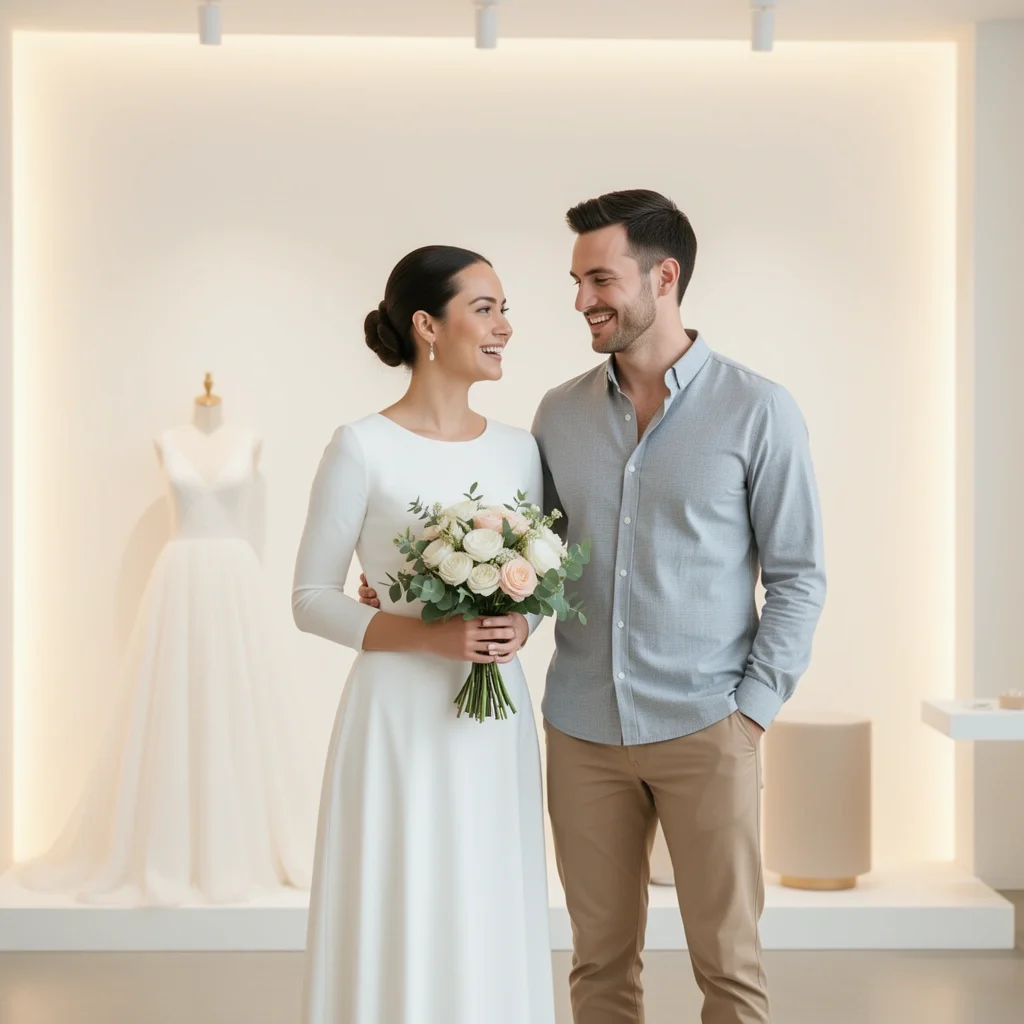
More couples than ever are choosing to shop for the wedding dress together. It makes sense. You are building a life as a team, so why not start with one of the biggest purchases of the wedding? Still, the idea comes with questions. Is it bad luck? Will it ruin the surprise? How do you keep the experience fun and avoid arguments? This guide walks you through everything you need to know, from the history behind the superstition to the exact steps for a successful appointment.
Is It Bad Luck to Go Wedding Dress Shopping With Your Fiancé?

The short answer is no. The idea that a groom seeing the dress before the wedding brings bad luck comes from a time when marriages were often arranged or based on financial agreements. In the Victorian era, a bride worried that if the groom saw the dress ahead of time, he might back out — especially if the dress cost more than expected. The superstition was a way to protect the bride’s investment, not a magical curse.
Today, most bridal consultants report that 30 to 40 percent of couples shop together at least once. Many cultures have no such tradition, and even in Western weddings, the “first look” photo session has made the pre-ceremony reveal common. The real risk is not about luck — it is about setting expectations. If you do not talk through your preferences and budget beforehand, you might end up frustrated. But with the right preparation, shopping together can strengthen your relationship.
The Case for Shopping Together
Bringing your fiancé along offers several benefits. First, it turns a solo task into a shared memory. You get to see his face light up when you find the right dress. That moment is special, even if it happens weeks before the wedding.
Second, it prevents regret. When you shop alone, you might second-guess your choice. Your fiancé knows your style and can remind you what you really wanted. He can also help you stay within budget by gently steering you away from dresses that stretch your wallet.
Third, it builds communication skills. Wedding planning is a test of teamwork. Learning to compromise on a dress teaches you how to handle bigger decisions later, like buying a house or raising kids.
Before You Go: Critical Conversations to Have First
Do not show up at a salon without a plan. A few honest talks will save you from stress and disappointment.
Budget Transparency

Your fiancé needs to know how much you are comfortable spending. If he thinks you are looking at dresses under $1,000 and you try on a $3,000 gown, the moment will feel awkward. Agree on a maximum number before you walk in. If he is paying for part of the dress, discuss what he is willing to contribute. If you are paying, let him know the range so he can give honest feedback without worrying about the price.
Style Preference Alignment
Create a shared Pinterest board or a folder of photos. Each of you pin dresses you like. Then talk about what you both love. Use words like “A-line,” “lace sleeves,” “satin,” or “train.” This builds a common vocabulary. When you are at the salon, you can say, “Remember that dress with the off-the-shoulder sleeves? I want something like that.” Your fiancé will know exactly what you mean.
Role Definition
Decide what each person will do during the appointment. You are the one trying on dresses, so you lead. He is there to give feedback, not to make the final call. Some couples prefer that he only nods or says “I like it” or “that is not my favorite.” Others want him to be more involved. Talk about it ahead of time so neither of you feels blindsided.
Decision-Making Protocol
Who gets the final say? Most brides want the last word, and that is fine. But your fiancé might have a strong opinion. Agree on a rule: “I will listen to your input, but if I love a dress and you are neutral, I will buy it.” Or “If you hate a dress, I will not buy it.” Write down the rule if you need to.
Choosing the Right Bridal Salon for a Couple’s Appointment
Not every salon welcomes partners. Some boutiques still have a traditional policy that only the bride and her female entourage attend. Call ahead and ask directly: “Is it okay if my fiancé joins me for the appointment?” If the consultant hesitates, find a different salon.
Look for salons that advertise “couples appointments” or “partner-friendly.” Large chains like David’s Bridal often have no problem with fiancés. Small boutiques may be more accommodating if you explain the situation. When you book online, add a note in the comments: “My fiancé will be joining me. Please let the consultant know beforehand.”
Also, consider the environment. A busy salon with loud music and many brides might overwhelm your partner. A quieter boutique with private dressing rooms can feel more intimate and focused.
How to Navigate the Appointment Together
Once you are in the salon, set the tone. Greet the consultant and say, “My fiancé is here with me. He will be helping me decide.” That puts everyone on the same page.
The Consultant Dynamic
Some consultants still assume the fiancé is just waiting. They might try to send him to the waiting area. You can say, “He is part of the decision. I want him here.” Most consultants will adjust. If they keep pushing, you can leave and find another salon. You are the customer.
His Role: Feedback Giver, Not Decision-Maker
Remind your fiancé before the appointment: “Your job is to tell me what you think, but I get to choose.” He might feel pressure to say the right thing. Let him know that honest feedback is helpful, but he does not have to love every dress.
Your Role: Lead the Process
You decide which dresses to try on. You control the pace. If you want to spend more time on a certain style, do it. If you feel overwhelmed, take a break. Your fiancé should follow your lead.
Handling Disagreement in Real Time
If he does not like a dress you love, do not get defensive. Ask why. “Is it the shape? The color? The fabric?” Sometimes his objection is something you can fix later, like a hem or sleeves. If he says something vague like “it just does not look right,” ask for details. If he cannot explain, it might be a gut feeling. You can still decide to try another dress.
When you feel yourself getting frustrated, take a deep breath. It is okay to say, “Let me try on a few more before we decide.” Do not let one disagreement ruin the whole appointment.
Building in Breaks
Wedding dress shopping is tiring. You will change clothes many times, and your fiancé will sit for a long time. Plan a break after four or five dresses. Step outside, get a drink of water, and talk about what you liked and did not like. This helps you reset and avoid fatigue.
What to Do When He Hates Every Dress
This happened to the author of the Today.com article, and it is more common than you think. If your fiancé consistently dislikes what you try on, do not panic. Instead, figure out why.
Common Reasons for Consistent Disapproval
- He is holding onto a mental image. You showed him photos of specific styles, and he expects you to try those exact styles. If you are trying on different silhouettes, he might be confused.
- He is worried about the budget. He might see a beautiful dress but think it is too expensive. He might not say it out loud.
- He is shy about giving compliments. Some men do not know how to say “you look great” without sounding awkward. His silence or criticism might be a cover for nervousness.
- He has a different vision. He might think of you in a sleek, modern dress, but you are trying on boho lace. The gap between his vision and reality can cause negativity.
Distinguishing Genuine Critique from Communication Breakdown
Ask him directly: “Are you saying you do not like the dress, or is it something else?” If he says “I just do not think it is the one,” ask him to describe what “the one” looks like. If he cannot describe it, he might not know what he wants either. That is okay. You can keep shopping until you find something that feels right to both of you.
When to Continue Shopping Versus When to Pause
If you have tried on 10 dresses and he has not liked any, stop. Do not force it. Go home, talk it through, and come back another day. Sometimes a fresh perspective helps. You can also go to a different salon with a different selection.
The Compromise Strategy: Combining Elements
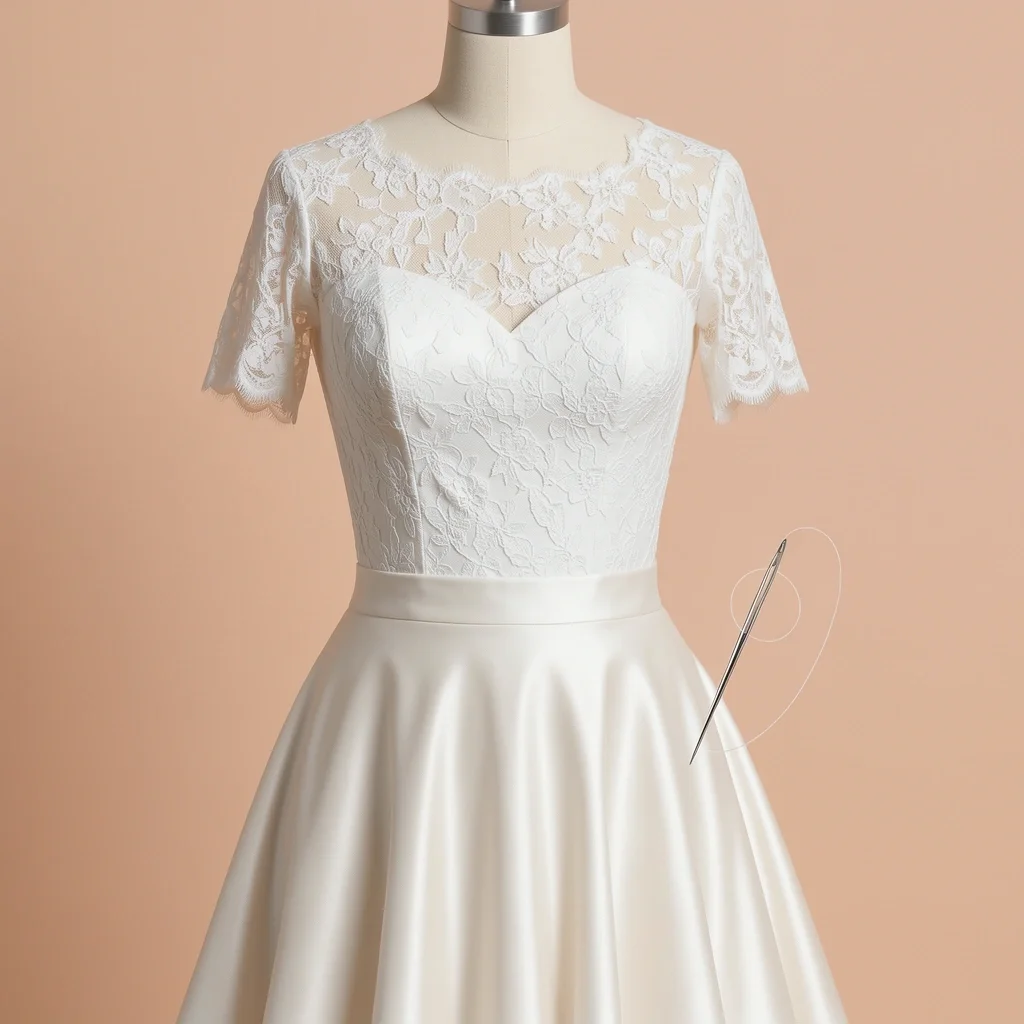
Many brides end up buying a base dress and then customizing it. You can add sleeves, change the neckline, or hem the skirt. If your fiancé loves a certain element, like a lace top, and you love a different skirt, ask a seamstress to combine them. This is how the Today.com author solved her problem. She bought a simple ball gown and had a seamstress add off-the-shoulder lace sleeves. The result was a dress that made both of them happy.
How to Salvage the Experience Without Resentment
If you feel hurt, tell him. “I am feeling frustrated because I want this to be fun, and it feels like nothing is working.” He might not realize how his comments affect you. Talk it out before you leave the salon. That way, you do not carry negative feelings into the next appointment.
The Superstition Reality Check: What the “Bad Luck” Tradition Actually Means
Let us go deeper into the history. The Victorian bride was often a young woman whose family arranged the marriage. The groom might not have seen the bride at all before the wedding day. The dress was a symbol of the family’s status. If the groom saw the dress and thought it was too plain or too fancy, he could call off the wedding. The “bad luck” was a polite way of saying “do not give the groom a reason to change his mind.”
Today, the superstition has evolved. Some couples still want the surprise of seeing each other for the first time at the ceremony. That is a valid choice. But if you want to shop together, you are not breaking any rule. You are simply choosing a different kind of surprise — the surprise of seeing his face light up when you find the perfect dress.
If you want to honor the tradition while still shopping together, consider a compromise. Let him see the dress during the appointment, but do not let him see your final look on the wedding day until the first look or the ceremony. Many couples do a “first look photo session” before the ceremony, where the groom sees the bride in her full outfit. That gives you the best of both worlds.
Common Pitfalls and How to Avoid Them
The Over-Opinionated Fiancé
Some men have strong opinions about fashion. If your fiancé is one of them, set boundaries early. Tell him, “I want your honest feedback, but I do not want you to dictate my choice.” If he starts to dominate the conversation, politely remind him, “I am the one wearing this dress. I need to feel comfortable and beautiful.”
The Silent Fiancé
The opposite problem: he gives no feedback at all. He just says “it looks fine” or shrugs. That can be frustrating. Ask him specific questions: “Do you like the color? Does the waist look good? Would you want to see me in this at the altar?” If he still cannot give a clear answer, accept that he might not care about the dress. That is okay. You can make the decision with your friends or family instead.
The Budget Clash
If your fiancé thinks you are spending too much, it can cause tension. To avoid this, be transparent about the total cost of the dress, including alterations and accessories. If he is paying, let him see the numbers. If you are paying, reassure him that you are staying within your own budget. If you both contribute, have a conversation about what is a fair split.
The Consultant Pressure
Some consultants will try to upsell you, especially when your partner is present. They might say things like “this dress is perfect for your figure” even if it is over budget. Stand firm. You can say, “I love this dress, but it is out of my budget. Can you show me something similar in a lower price range?” Your fiancé can support you by nodding along.
Making the Final Decision Together
You have tried on many dresses. You have heard his feedback. Now it is time to decide. Follow these steps to avoid a rushed purchase.
The 24-Hour Rule
Do not buy a dress the same day you try it on. Sleep on it. If you still love it the next morning, call the salon and place the order. This rule prevents impulse buys and gives you both time to think.
How to Weigh His Input Alongside Your Own Instincts
Make a list of the top three dresses you tried. Rank them by how you felt in each one. Then ask your fiancé to rank them from his perspective. Compare the lists. If you both rank the same dress number one, that is your winner. If you disagree, talk about why. You might find that you can compromise on a different dress that makes both of you happy.
When to Involve a Third Party
If you are stuck, bring in a trusted friend or family member who has good taste. They can offer an outside perspective. A professional stylist can also help. Some salons offer a “second opinion” service for an extra fee.
The Alteration Solution
If you cannot find a dress that satisfies both of you, remember that alterations can change almost anything. Hem length, sleeves, neckline, straps, and even fabric can be adjusted. Work with a good seamstress to create a custom dress that combines his favorite elements with yours. This is often the most satisfying outcome.
Frequently Asked Questions
Can my fiancé come wedding dress shopping if we have not set a date yet?
Yes. Many couples shop before they book a venue. Just let the consultant know the season and formality level you are thinking about, so they can pull dresses that fit.
Is it weird if only my fiancé comes, without my mom or friends?
Not at all. Some couples prefer the intimacy of a private appointment. If you want the traditional entourage experience, consider doing two separate trips: one with him and one with your family.
What should my fiancé wear to a bridal appointment?
Comfortable, neutral clothing. Dark colors like navy or black help him stay in the background. Avoid anything too casual, like gym clothes, because it can make the experience feel less special.
And for anyone attending the ceremony, the same rule applies—if you’re searching for courthouse wedding guest attire, choose something neat and elevated rather than overly casual.
How many appointments should I expect if shopping with my partner?
Most couples who shop together visit three to four salons. This is a little more than the average for solo shoppers, because you need to find a dress that both of you agree on.
Should I let my fiancé pick the dress as a surprise?
Only if you have thoroughly discussed your style preferences. Otherwise, the surprise often leads to disappointment when the dress does not match your vision. It is safer to shop together.
Wedding dress shopping with your fiancé can be a wonderful experience. It takes planning, open communication, and a willingness to compromise. But when it works, you end up with a dress that you both love — and a stronger foundation for your marriage.
My husband and I were hands-on when it came to purchasing our entourage dresses for our wedding last year at Victory North Savannah ), and it took us hours to accomplish everything, but it was wonderful.
Definitely time well spent!