
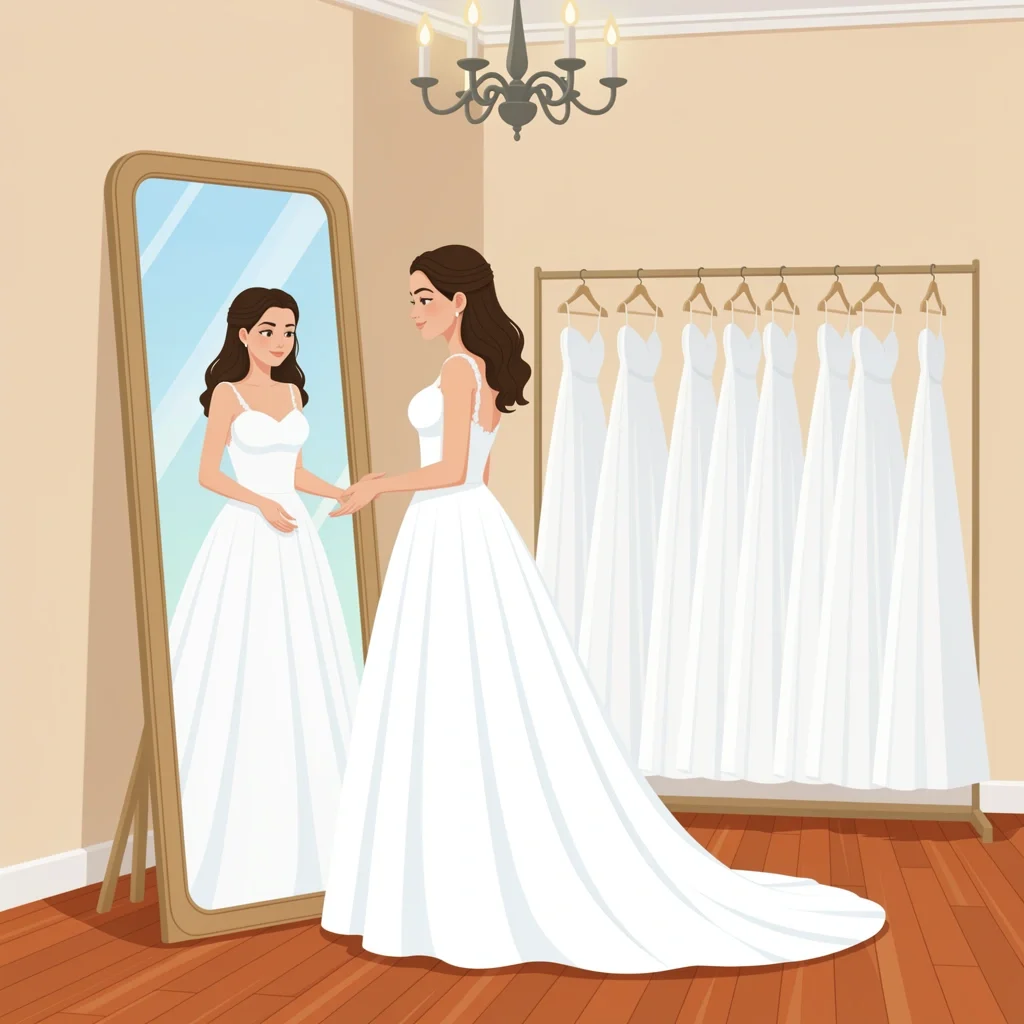
You bought the dress. You said yes. You felt the rush. And now, hours or days later, your stomach is in knots. You start scrolling through photos of other dresses. You wonder if you made a mistake. You ask yourself: Did I pick the wrong one?
This feeling has a name: post-decision dissonance. It is the discomfort your brain creates after making a big, irreversible choice. It does not mean you chose badly. It means you chose. And your mind is trying to adjust to a world where all other options are now gone.
Let me be clear: this anxiety is almost always a sign of a healthy decision-making process, not a sign of a bad decision. The goal of this guide is to help you understand why the panic happens, tell the difference between normal doubt and a real problem, and give you a concrete plan to feel confident again.
The Psychology of the Panic
Before you do anything else, you need to understand what is happening inside your head. The anxiety after buying your wedding dress is not random. It follows a predictable psychological pattern.
Post-Decision Dissonance
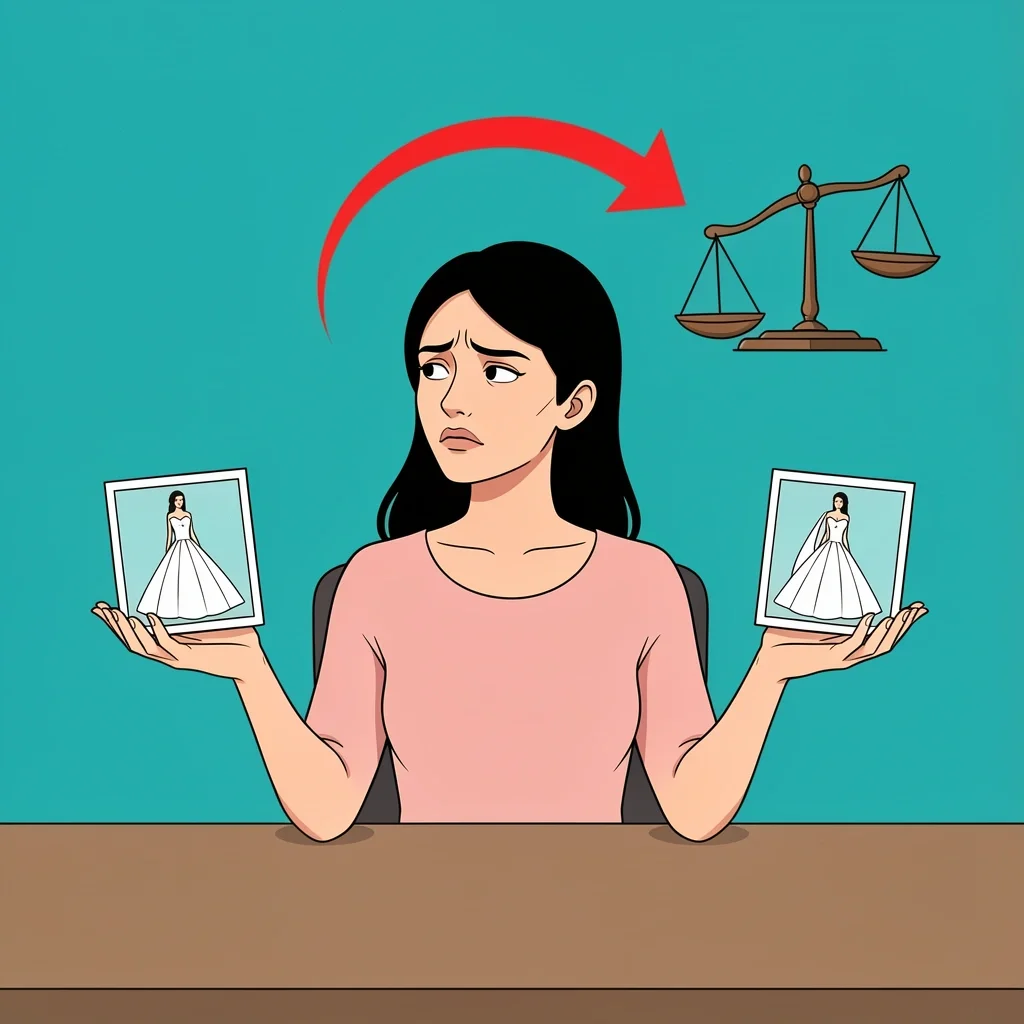
When you make a big purchase, your brain compares your choice against every other option you rejected. The more options you had, the stronger the dissonance. This is why dress regret often hits hardest after you saw many dresses online or in stores. Your brain is stuck in a loop of “what if.”
The Grass Is Greener Effect
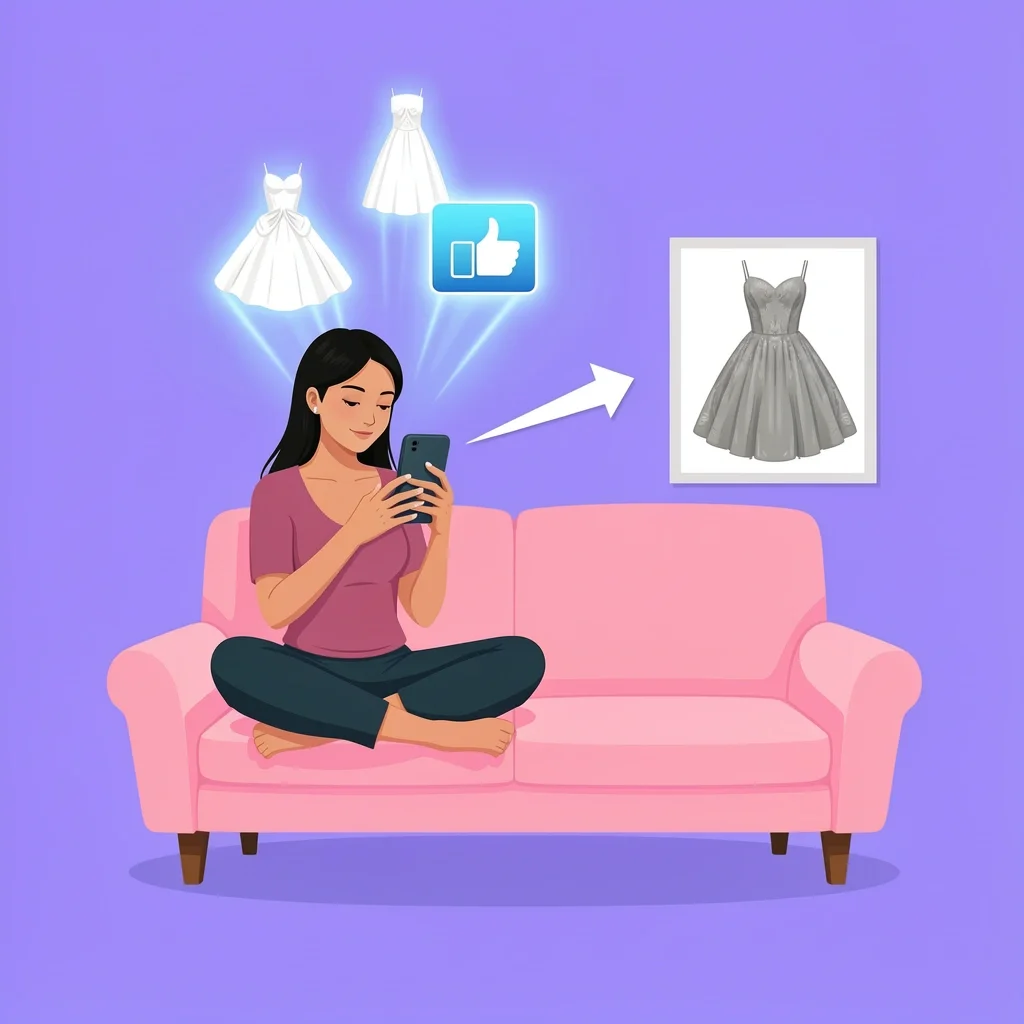
Social media makes this worse. You see a new designer launch, a friend posts her dress, or an algorithm shows you something you didn’t even know you wanted. Instantly, your own dress looks less special. But remember: you are comparing your real, in-person dress to curated, filtered images of someone else’s day. That comparison is unfair to you.
Sunk Cost Fear
You spent real money. That money is gone no matter what you do. This creates a pressure to justify the expense. The thought “I need to love this dress because I paid for it” adds to the anxiety. But loving something is not the same as justifying its cost.
Identity Shift Anxiety
A wedding dress is not just clothing. It is a symbol of your marriage and how you see yourself as a bride. If the dress does not match the image you had in your mind, your brain feels a mismatch. That gap creates doubt. It is not the dress’s fault — it is the gap between expectation and reality.
The Critical First Step: Distinguish Between Doubt and Desire to Change
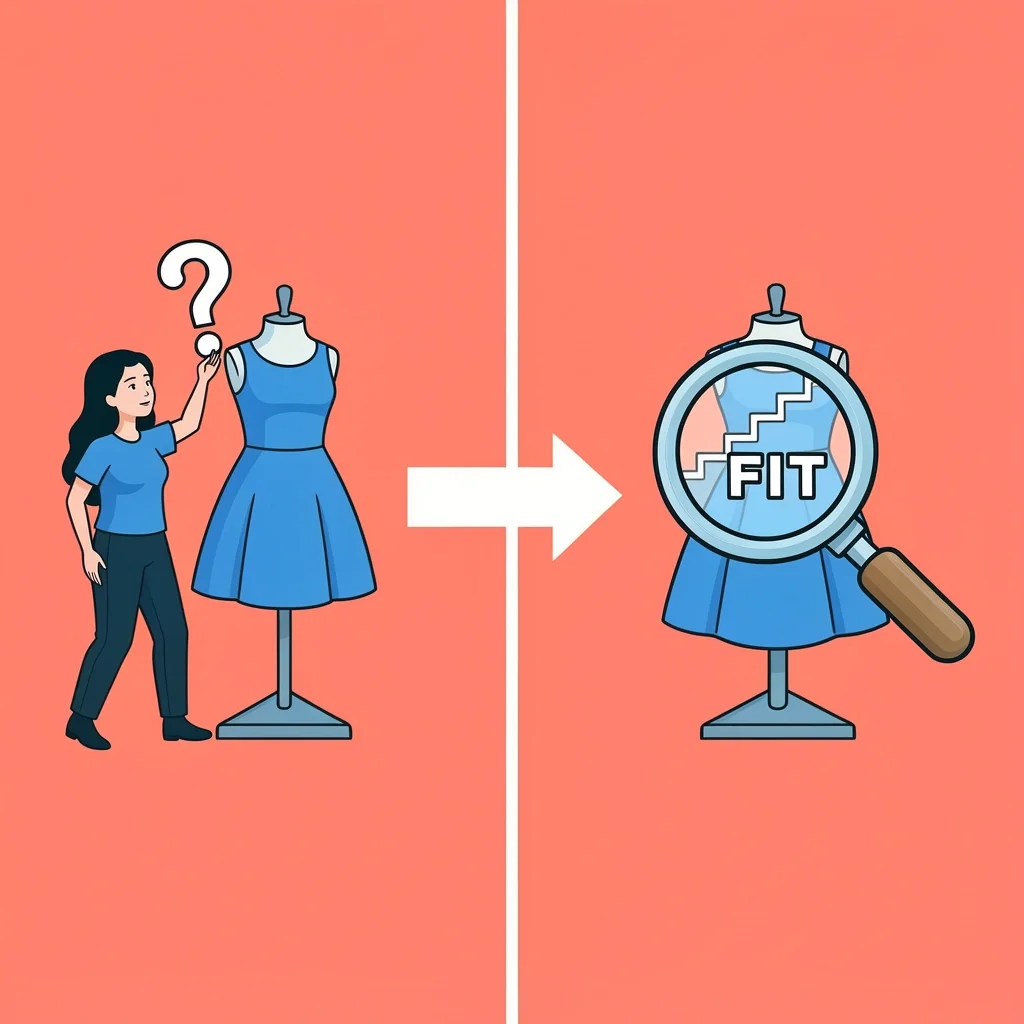
Not all anxiety is the same. You need to know where the feeling is coming from before you can fix it. Use the time-lapse framework and the feeling test below.
The Time Lapse Logic
- Early anxiety (0 to 3 days after purchase). This is almost always pure dissonance. Your brain is in shock from the commitment. Action: Do nothing for 48 hours. Do not look at other dresses. Do not call the store. Let the initial panic settle on its own.
- Mid-stage anxiety (1 to 4 weeks after purchase). Dissonance plus reality. The excitement has worn off. You may have told friends or posted on social media. Outside opinions start to creep in. Action: Go through the Tactical Reset protocol below.
- Chronic, late-stage anxiety (months later, fitting imminent). This is the most serious. If you have been anxious for weeks or months with no break, the problem may be real. Action: Move to the honest assessment of salvage versus pivot.
The Feeling Test
Ask yourself these questions honestly. Write down the answers if it helps.
Is the anxiety about the dress itself?
- Is the fit wrong?
- Is the silhouette not what you wanted?
- Is the color off on your skin?
- Do you dislike the fabric or the details?
Or is the anxiety about everything else?
- Are you worried about the budget?
- Are you stressed about other people’s opinions?
- Are you overwhelmed by wedding planning in general?
- Do you feel like you don’t deserve to spend this much on yourself?
If the answers are mostly about the dress itself, you might have a real mismatch. If the answers are about everything else, the dress is fine — your anxiety is just using the dress as a lightning rod.
The Tactical Reset: A Protocol to Reclaim Your Decision
If you have ruled out a true mismatch and suspect normal dissonance, follow this structured process. It is designed to help you see the dress objectively, without the noise of other people or your own racing thoughts.
Step 1: The Solo Re-Acquaintance
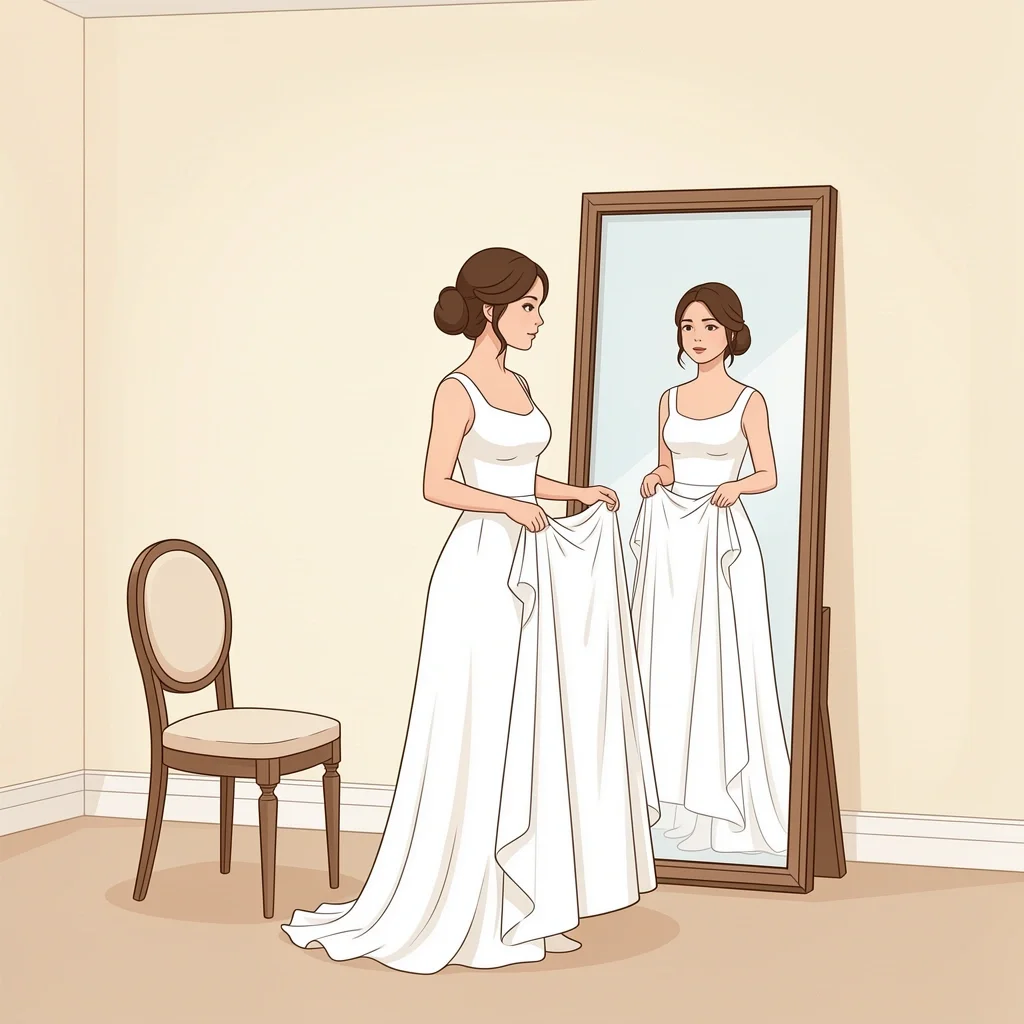
Book a private appointment with the store to try on your dress again. Go alone. No friends, no mom, no partner. Bring only yourself. This removes every outside opinion from the equation. Tell the consultant you want to sit with the dress quietly for 10 minutes.
Step 2: The “You Are the Camera” Exercise
Stand in front of the mirror. Ignore your face, your hair, and the setting. Pretend you are a camera lens recording only the dress. Look at:
- The way the fabric falls.
- How the seams line up.
- The movement when you walk.
- The color under the store lighting.
Now ask: Does this dress look cheap, wrong, or unflattering? Or are you projecting a fantasy onto it that it was never meant to fulfill? If the dress looks good structurally, the problem is in your head, not the garment.
Step 3: The Ace Question
Ask yourself this: “If this dress were the only option for my wedding, would I be devastated, or just uneasy?”
- If your answer is “devastated” — you have a real problem. Move to the pivot plan.
- If your answer is “uneasy” — you have normal anxiety. You can work through it.
The Over-Shopping Trap And The Path To Trusting Your First Instinct
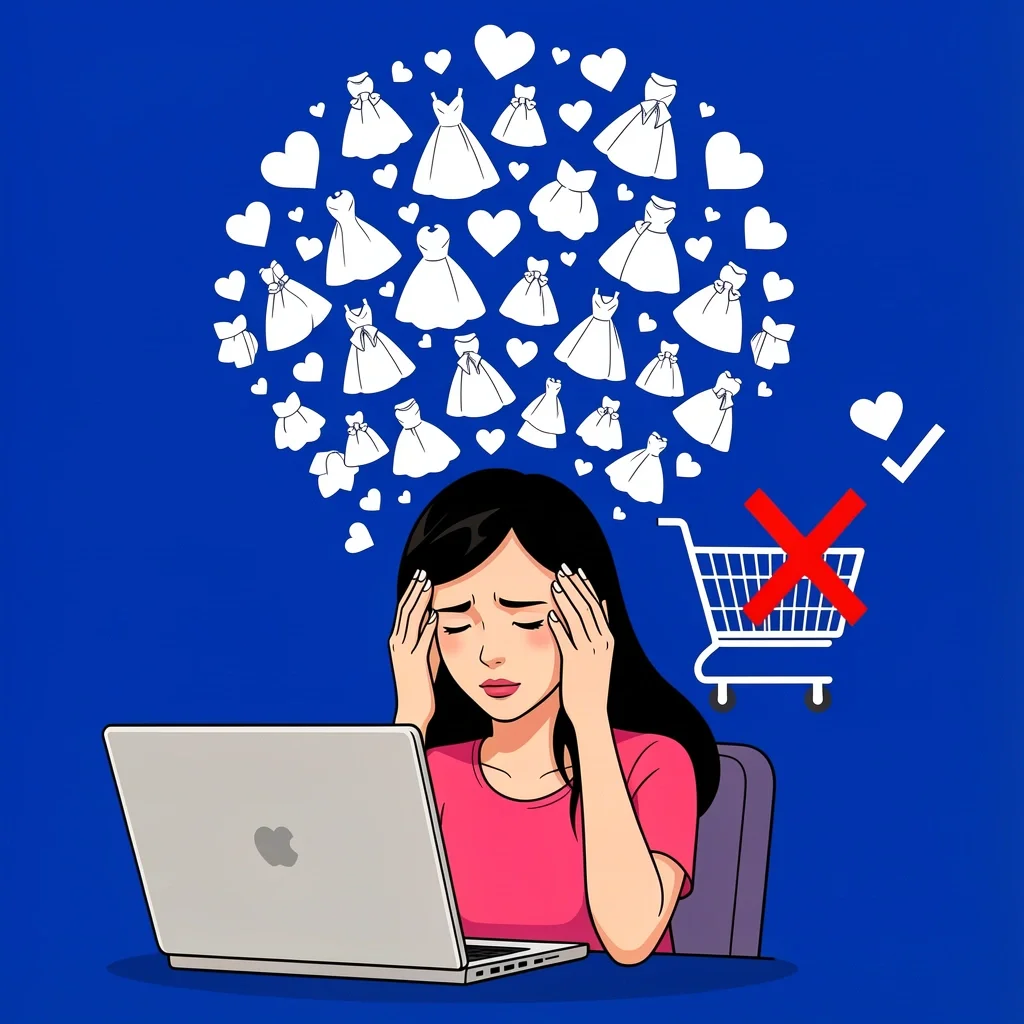
One of the biggest reasons dress anxiety spirals is that brides keep shopping after they buy. They look at new designers, search for the dress they almost picked, or scroll Pinterest for “alternatives.” This is a trap.
The Neurological Reason
Every time you see a new dress online, your brain releases a small hit of dopamine. It is exciting. But that excitement comes at a cost: it triggers regret about the dress you already own. The more options you expose yourself to, the more regret you will feel. This is not weakness. It is how the brain works.
Set a Decision Deadline
Give yourself a hard stop date. For example: “By Friday at 5 pm, I am done looking. No new searches, no new stores, no new Pinterest boards.” Write it down. Tell a friend. This deadline forces your brain to stop comparing and start settling into the choice you made.
The Pivot Plan: What to Do If You Really Bought the Wrong Dress
Sometimes, no matter how much you work through the psychology, the dress is genuinely wrong. That is okay. You have options.
Step 1: Financial Recon. Open your contract. Look for:
- Alteration fees already paid.
- Restocking fees (usually 10 to 50 percent).
- Cancellation policies.
- Return windows (most are short, but check).
Step 2: The Sell or Re-Wear Strategy.
- If you must sell, use sites like Stillwhite or PreOwnedWeddingDresses. You can realistically recoup 40 to 60 percent of the original price if the dress is unworn or only lightly altered.
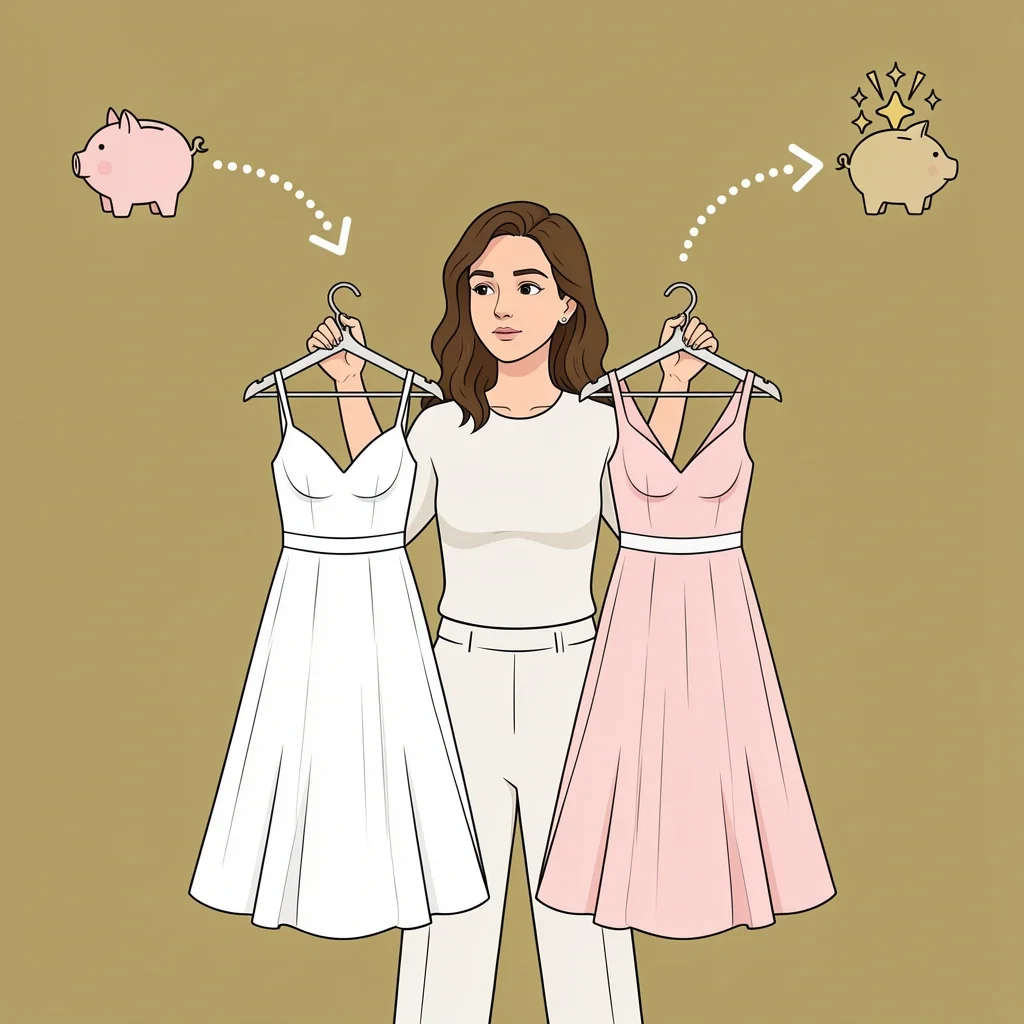
- Another option: keep the original dress for the ceremony or first look, and buy a completely different, low-cost dress for the reception. This turns one expensive mistake into two valid outfits. Do not let perfectionism force you into a single dress decision.
The Social Media Detox: A Strategic Unfollow
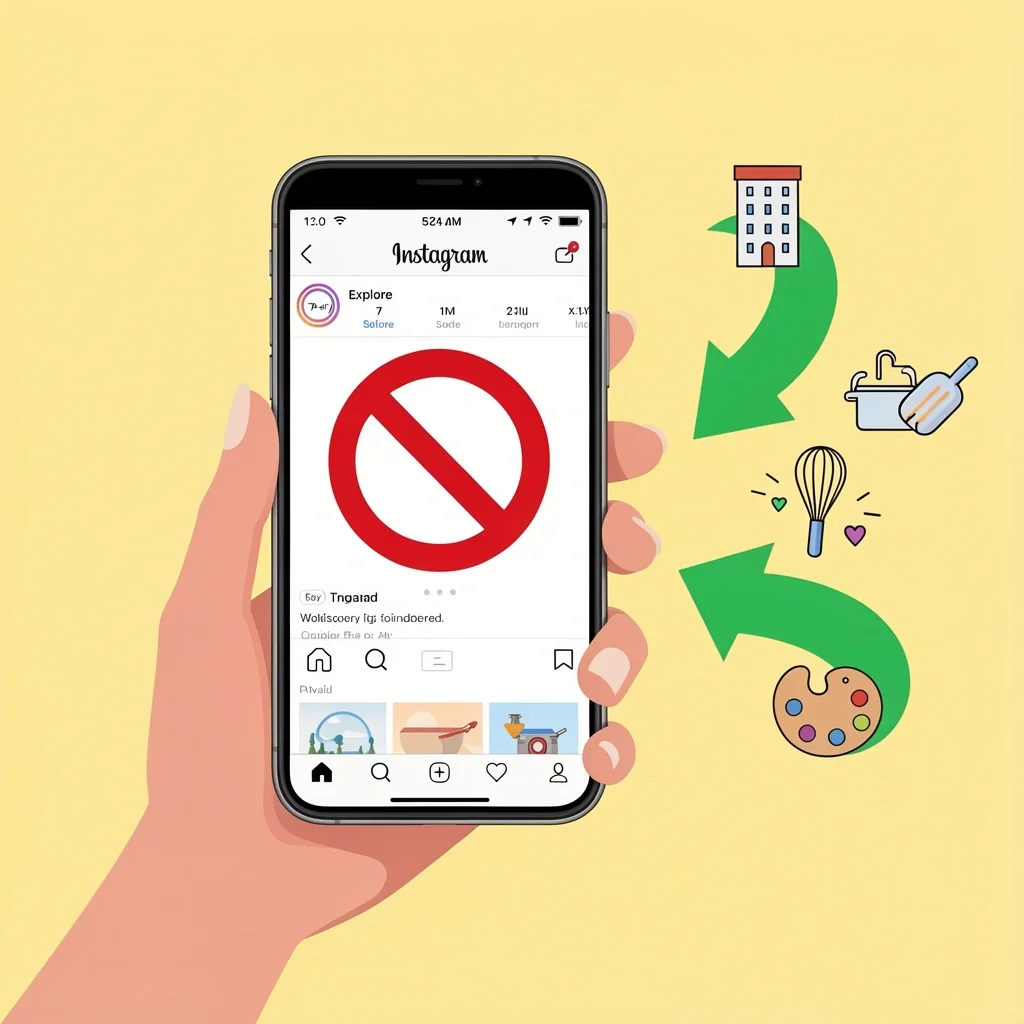
This is not about “put down your phone.” It is about actively retraining your algorithm so it stops feeding you bridal content that triggers anxiety.
The Algorithmic Reset
For three days, do this:
- Unfollow every bridal designer, bridal boutique, and wedding account on Instagram and TikTok.
- Search for non-bridal content: travel architecture, cooking, abstract art, gardening. Engage with those posts — like them, comment on them. This signals to the algorithm that you want to see something else.
The Golden Rule of No-Go
Do not search for “alternatives to my dress” or “the dress I almost bought.” Ever again. Searching for those terms is emotional self-harm. It will only deepen your regret. Trust your original decision or work the pivot plan — do not torture yourself by looking at ghosts.
Frequently Asked Questions
Is it normal to have doubts after buying a wedding dress?
Yes. Almost every bride experiences some level of doubt. It is a normal part of making a high-stakes decision. The anxiety usually fades once you stop comparing and start trusting yourself.
Can I take medication or use a natural supplement for wedding dress nerves before a fitting?
If the anxiety is overwhelming, talk to your doctor. Some brides find that low-dose anti-anxiety medication or natural supplements like ashwagandha or L-theanine help them stay calm during fittings. But never take anything without medical advice. Do not rely on supplements to fix a dress decision — they only manage symptoms.
My mom hates the dress. How do I handle her disappointment without ruining my own feelings?
First, remember that her opinion is about her taste, not your worth. You can say: “I hear you, and I appreciate your honesty. But this dress is what I feel best in. I need you to support my choice.” If she continues to push, set a boundary: “I will not discuss the dress with you anymore. Let’s talk about other aspects of the wedding.”
I lost or gained a significant amount of weight. What are my options for a dress that no longer fits?
Talk to your tailor immediately. Most wedding dresses can be taken in or let out by two sizes without major structural changes. If the weight change is more than that, you may need to order a new dress in your current size. Some brides buy a sample or off-the-rack dress as a backup. Do not try to starve or binge to fit the dress — it is not worth your health.
And while you are sorting the dress, remember that your support system will play a big role; here is a realistic breakdown of what the maid of honor actually does to help keep everything on track.
Is it possible to return a wedding dress after I have had it altered?
Almost never. Alterations are considered final. Once the dress is cut, the store will not accept returns. This is why you should do the Tactical Reset before any alterations begin. If you are past that point, your only options are to sell the dress or repurpose it.
I am two weeks from the wedding and I hate my dress. Is it too late to buy a completely new one?
No. It is not too late, but you must be realistic. Look for off-the-rack dresses at sample sales, department stores like Nordstrom, or bridal consignment shops. You can often find a simple, elegant dress that needs minimal alterations. You may not have time for a custom order, but you can absolutely find a dress you love in under two weeks. Do not let guilt keep you in a dress you hate on your wedding day.
One final thought: Your wedding dress is a piece of clothing. It matters, but not as much as your marriage. The anxiety you feel right now will pass. Whether you keep the dress or change it, you will walk down the aisle, and you will be beautiful. Trust yourself. You made a good decision — now own it.