
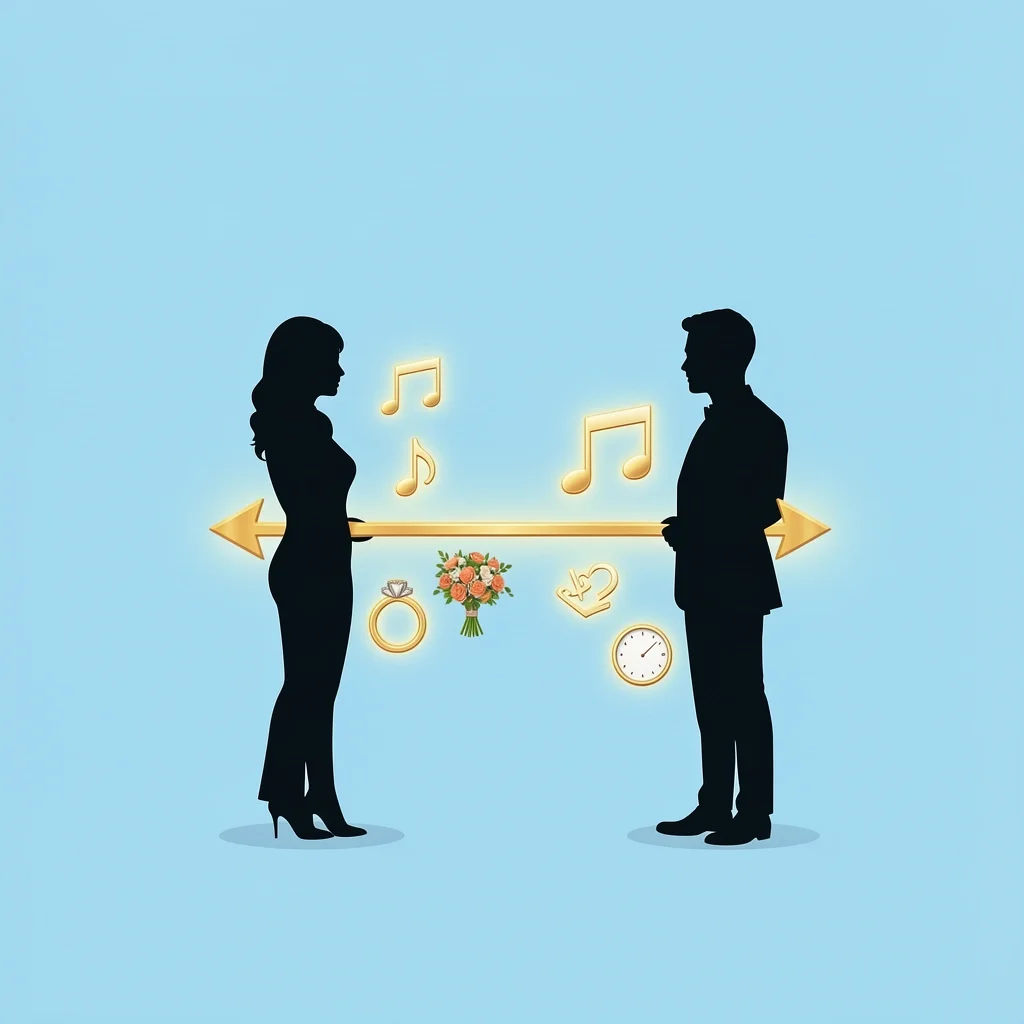
For a typical wedding, you will need between 45 and 75 songs total (ceremony + reception), spanning roughly 4 to 6 hours of music. The exact number depends on your ceremony length, reception duration, and the style of each segment. Here is a quick-reference breakdown:
| Segment | Typical Duration | Number of Songs |
|---|---|---|
| Ceremony (prelude, processional, interlude, recessional, postlude) | 20–35 minutes | 8–15 songs |
| Cocktail hour | 45–60 minutes | 10–15 songs |
| Dinner | 60–90 minutes | 15–20 songs |
| Dancing / party | 2–3 hours | 20–40 songs |
| Total | 4–6 hours | 45–75 songs |
This table answers the core question right away. The rest of this guide explains the numbers behind each segment, handles special cases like religious ceremonies, and gives you a formula you can use to adjust for your own timeline.
How Many Songs Does the Ceremony Require?
The ceremony is the most structured part of your wedding. Each phase has a purpose and a typical length. Here is how the songs break down.
Prelude (20–30 minutes)
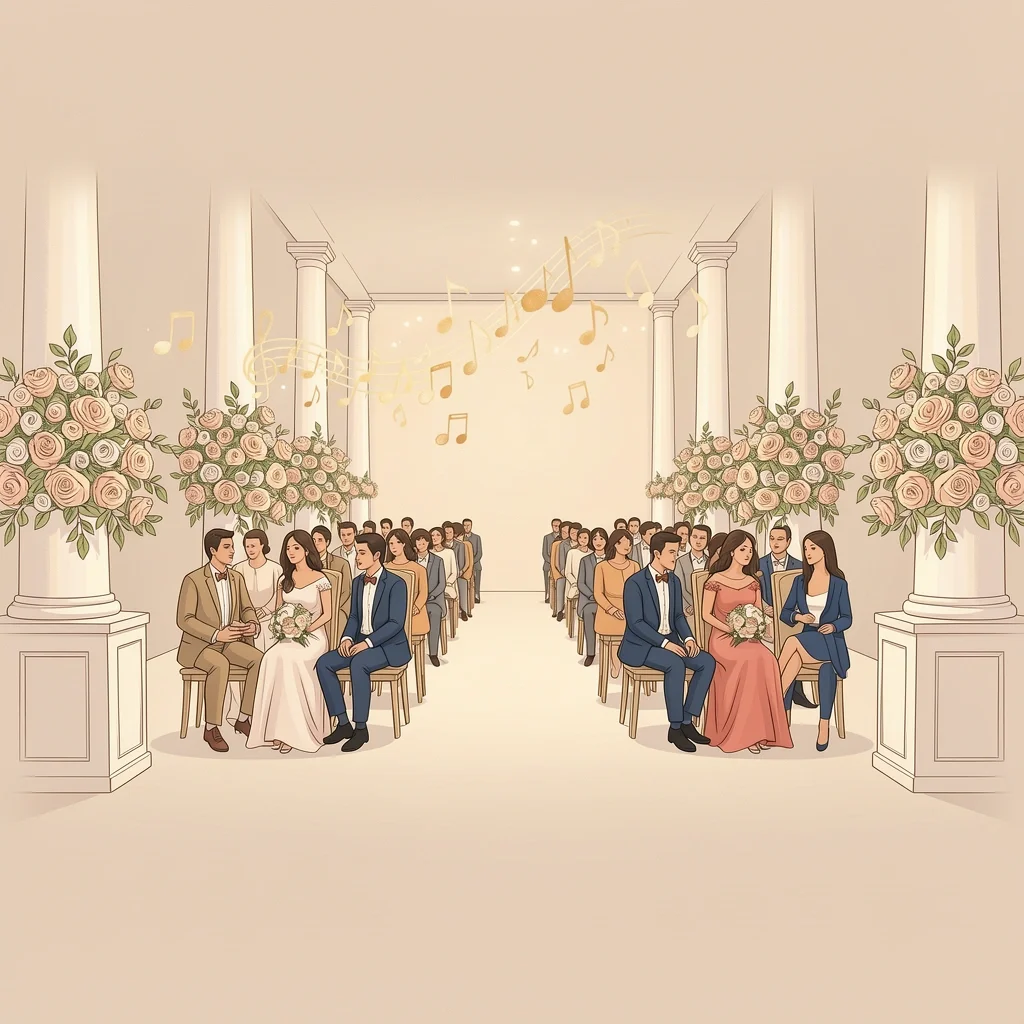
Prelude music starts as guests arrive and find their seats. It sets the mood without demanding attention. Plan for 5 to 10 songs. Keep them instrumental or low-key. Jazz, classical, or acoustic covers work well. If your ceremony starts 30 minutes before the official time, you will lean toward 10 songs; if you start 20 minutes before, 5 or 6 are enough.
Processional (3–10 minutes)
The processional covers everyone walking down the aisle. The number of songs depends on how many groups you have: officiant, grandparents, parents, wedding party, flower girl, ring bearer, and finally the couple.
You can use one continuous song for the whole processional, or split it: one song for family, one for the wedding party, and a separate song for the couple. Most weddings use 1 to 3 songs. Listen to your aisle length and walking speed. If the aisle is long and your party is large, a single 4-minute song may be enough. If it is short, you might need a second song to avoid an awkward gap.
A good rule is the 30-5 minute rule: each person takes about 30 seconds to walk, and the total processional should not exceed 5 minutes. That helps you decide how many songs you really need.
Interludes (2–5 minutes total)
Interludes cover rituals like unity candles, sand ceremonies, or readings. They also fill any unexpected pauses. Have at least 3 songs ready, even if you only plan to use 1 or 2. Your musician should have a few short instrumental pieces memorized to play on cue.
Recessional (1 song)
As soon as the officiant announces you as married, the recessional starts. It is one upbeat song that plays while you and your wedding party exit. Keep it 2–4 minutes.
Postlude (2–3 songs)
Postlude plays as guests leave the ceremony space and head to cocktail hour. You need 2 or 3 songs to cover the exit flow. If your ceremony ends in the same room as the reception, you might combine postlude with the first cocktail hour music.
Total ceremony count: 8 to 15 songs for a typical 30-minute ceremony. If you have a longer religious service with multiple readings and rituals, the count rises toward 15.
How Much Music Is Needed for the Reception?
The reception is longer and has three distinct zones: cocktail hour, dinner, and dancing. Each has a different energy level and song length.
Cocktail hour (45–60 minutes)
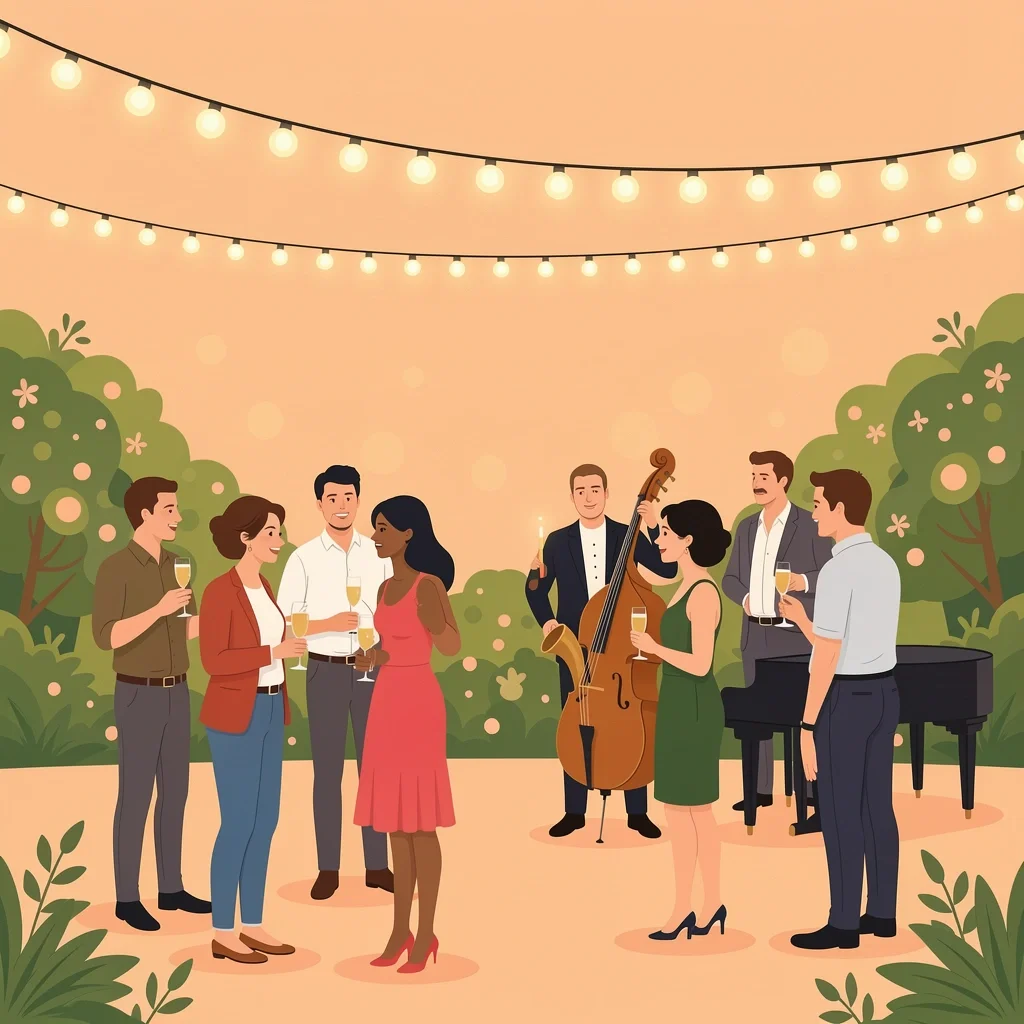
Guests mingle, drink, and eat appetizers. The music should be background-friendly but still engaging. Light jazz, acoustic covers, or upbeat instrumental tracks work well. Aim for 10 to 15 songs. Most cocktail hour songs are shorter – around 3 minutes each – so 12 songs fit a 45-minute slot nicely.
Dinner (60–90 minutes)
During dinner, keep the volume low and the tempo slow. People need to talk without shouting. Soft pop, classical, or lounge music is safe. Plan for 15 to 20 songs. If dinner takes 90 minutes and you use songs averaging 4 minutes, you need about 22 songs. Having extra songs gives you a buffer if dinner runs long.
Dancing (2–3 hours)
This is the high-energy part. Song lengths vary widely: a dance hit might be 3 minutes, while a slow dance can go 5 minutes. For 2 hours of dancing, you need roughly 30 songs. For 3 hours, 40 to 50 songs. A good DJ will read the crowd and adjust the playlist. You do not need to pick every song, but providing a list of 30 must-plays is helpful.
One-hour calculation: 1 hour of continuous music ≈ 12 to 15 songs at 4-minute average. Use this to scale your own timeline.
How to Calculate Total Music Duration for Your Wedding
Rather than guessing, add up the minutes for each segment of your day. Then convert to song count.
Step 1: List all segments that need music.
- Prelude: 20 minutes
- Ceremony (processional, interlude, recessional): 15 minutes
- Postlude: 10 minutes
- Cocktail hour: 50 minutes
- Dinner: 80 minutes
- Dancing: 150 minutes (2.5 hours)
Step 2: Add the minutes together. In this example: 20 + 15 + 10 + 50 + 80 + 150 = 325 minutes.
Step 3: Divide by 4 (average song length in minutes). 325 ÷ 4 = 81 songs. That is a rough maximum. In practice, you will have pauses between songs and natural breaks (toasts, cake cutting, bouquet toss). Subtract 10–15% for those gaps. So 81 × 0.85 ≈ 69 songs.
This gives you a realistic target. Adjust your own numbers based on your timeline. If you use a live band, they typically play 45-minute sets with breaks, so you need fewer songs but more backup tracks for the gaps.
The 30‑5 Minute Rule Explained (And Why It Matters for Your Song Count)
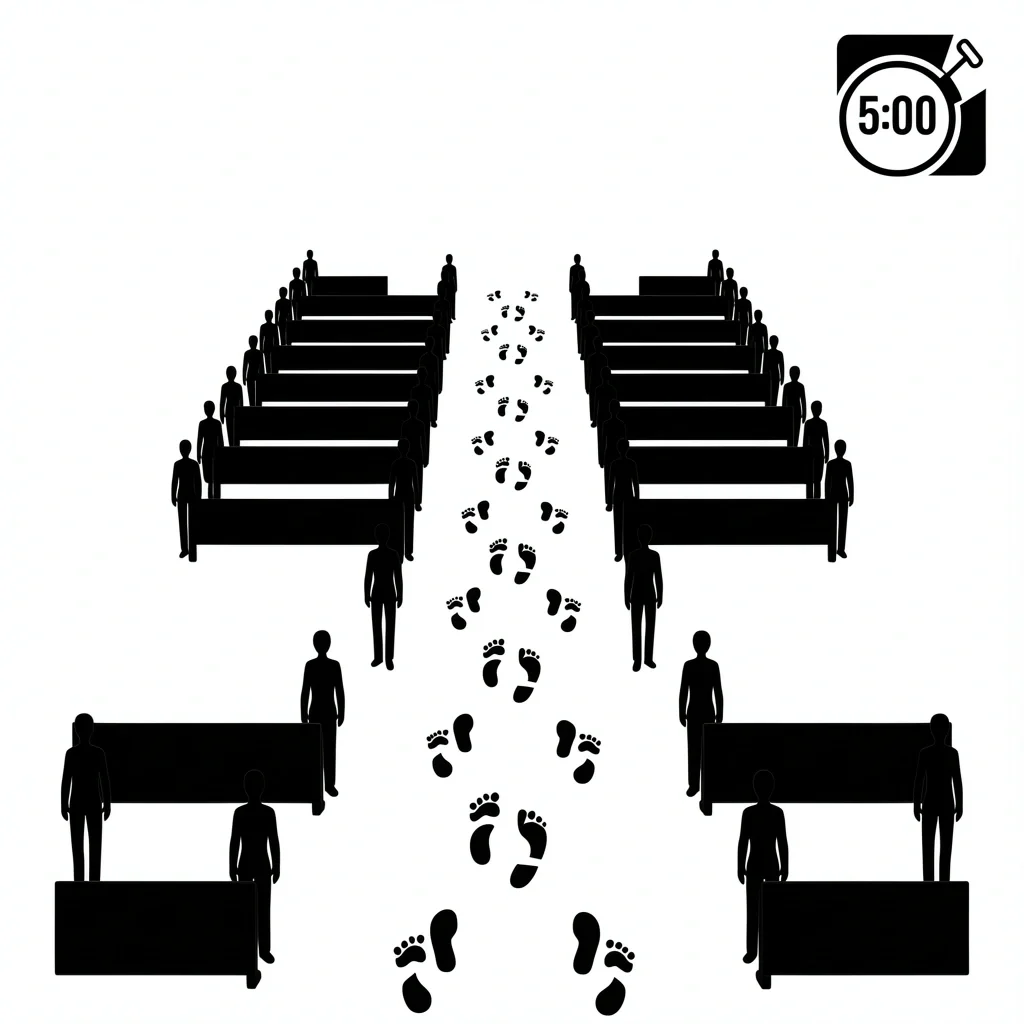
The 30‑5 rule is a practical guideline for timing your processional. It says: each person takes about 30 seconds to walk down the aisle, and the entire processional should last no more than 5 minutes. This helps you avoid dragging the entrance and making guests restless.
To apply it, count how many people are in the processional (officiant, grandparents, parents, wedding party, couple). Multiply by 30 seconds. For example, 12 people × 30 seconds = 360 seconds = 6 minutes. That is slightly over 5 minutes, so you might want to combine groups or use one continuous song instead of switching songs between groups.
If your processional is longer than 5 minutes, you might need two songs: one for the family and wedding party, and a separate song for the couple. If it is under 5 minutes, one song is usually enough. This rule directly affects how many processional songs you need to prepare.
How Religious Ceremonies Change the Music Count
Not all weddings are the same. Religious traditions have specific rules about music, which can raise or lower your total song count.
Catholic Nuptial Mass
A Catholic wedding inside a full Mass requires hymns rather than secular songs. You will need:
- Prelude: 3–4 instrumental pieces (no secular)
- Processional: 1 hymn
- During Mass: 2–3 hymns (e.g., Responsorial Psalm, Gospel acclamation, Communion)
- Recessional: 1 hymn
- Postlude: 2–3 instrumental pieces
Total: 8–12 songs, all hymn or liturgical. No secular music is allowed during the Mass itself.
Protestant Ceremony
Protestant churches are more flexible. You can use secular songs for prelude and postlude, but the processional and recessional are often hymns or traditional pieces. Count is similar to a civil ceremony: 10–14 songs.
Jewish Wedding
Jewish ceremonies have a specific order: Ketubah signing, bedeken (veiling), processional, Chuppah, seven blessings, breaking the glass. Music is used throughout. Plan for 12–16 songs, including instrumental pieces for rituals and Klezmer or classical for the processional.
Hindu Wedding
A Hindu wedding has multiple segments: Ganesh Puja, Kanyadaan, Saptapadi (seven steps), and more. Each segment may have a specific mantra or song. You will need a live musician (often a traditional singer) who knows the chants. Song count can exceed 20.
If you are planning a religious ceremony, ask your officiant or music director for a timeline. Adjust your song count accordingly.
Common Myths About Wedding Song Counts
Myth 1: You must have a different song for each person in the processional. No. One continuous song works perfectly for the entire group. It creates a smooth flow and avoids awkward transitions. Only switch songs if you want a dramatic change for the couple’s entrance.
Myth 2: You need exactly 3 hours of music for a 4-hour reception because dinner is silent. Dinner should never be silent. Background music keeps the atmosphere alive. Even low-volume music matters. Plan music for the entire reception duration.
Myth 3: More songs equal a better party. A tight playlist of 40 well-chosen songs is better than a random 60-song mix. Quality and pacing matter more than quantity. Cuts in filler songs keep the dance floor full.
How to Work With Your DJ or Band to Finalize the Count
Once you have your target song counts, share them with your music vendor. Here is what to do:
- Provide a timeline document showing each segment and its start/end time.
- Indicate your total song numbers for ceremony, cocktail hour, dinner, and dancing.
- Ask the DJ or band to prepare 3–5 extra songs per segment as buffers. Unexpected delays happen (long processional, announcement running late).
- For the dancing portion, give a list of 20 to 30 must-play songs. Let the DJ fill the rest based on crowd energy.
- If you have a live band, they typically play 4 sets of 45 minutes each, totaling about 16 songs. You will also need background music (pre-recorded) for their breaks.
Communication is key. A professional vendor will appreciate having concrete numbers rather than vague requests.
Frequently Asked Questions
How many songs do I need for a Catholic wedding ceremony?
Typically 8 to 12 songs. That includes prelude, processional, 2–3 hymns during the Mass, recessional, and postlude. All music should be liturgical or sacred.
Should I have the same songs for cocktail hour and dinner?
No. Cocktail hour can be more upbeat or jazzy. Dinner should be softer and slower. Prepare separate playlists to set the right mood for each part.
How many songs does a live band typically play in a 4-hour reception?
A band usually plays 3 to 4 sets of 45 minutes each, totaling 12 to 16 songs. They will also have background music (recorded) during dinner and band breaks.
What if I want recorded music for the ceremony and live music for the reception?
Calculate them separately. The ceremony needs 8 to 15 pre-recorded tracks. The reception requires coordination with the band for their setlist. Provide your timeline to both vendors so there are no gaps.
And while you’re sorting out the music, don’t forget to factor in the person leading the ceremony—knowing what you’ll pay an officiant for a wedding helps you budget properly for that important role.
Is there a rule for how many backup songs I should have?
Yes. Have at least 3 to 5 extra songs for the ceremony and 5 to 10 extra for the reception. They cover unexpected delays, extended toasts, or a dance floor that refuses to empty.