

Most people think boundaries in marriage are walls you build to keep your partner out. That idea is wrong. Healthy marriage boundaries are not restrictions. They are clarity agreements. They protect the relationship by defining where one person ends and the other begins. Without them, you either lose yourself in your spouse or drift so far apart that you become roommates. I have worked with dozens of couples who thought boundaries meant less love. They learned the opposite: boundaries make real intimacy possible.
This guide will show you what healthy boundaries actually look like, how to diagnose where yours need work, and exactly what to say to set them without sounding controlling or rejecting. You will also learn how to handle resistance, repair after a boundary conversation, and adjust boundaries as your marriage changes over time.
What Makes a Boundary Healthy in Marriage

A boundary is a line you draw to protect your well-being and your relationship. A barrier is a wall you build to keep someone out. The difference is intention. A healthy boundary says, “I need this so we can stay connected.” A barrier says, “I need this so you cannot get close.”
Healthy boundaries serve three essential functions:
- Protection – They guard your time, energy, emotions, and values from being drained or violated.
- Clarification – They make expectations explicit so neither partner has to guess what the other needs.
- Connection – They create safety that allows vulnerability and trust to grow.
When both partners know where they stand, resentment has nowhere to hide. You stop assuming your spouse should read your mind, and you stop feeling guilty for having your own needs. That is the foundation of a marriage that lasts.
The Three Boundary Patterns That Define Every Marriage

Every marriage falls into one of three patterns, and you can probably recognize yours right now. These patterns are not permanent labels. They are snapshots of how you and your spouse currently relate.
Consumed: You Lose Yourself
In this pattern, one partner’s needs dominate. The other partner shrinks to avoid conflict or to keep the peace. You might feel like you are always accommodating, always saying yes, always putting your own wants last. Over time, this leads to resentment and exhaustion. Common signs include:
- You feel guilty when you want time alone.
- Your hobbies, friends, and opinions have faded away.
- You often think, “My needs don’t matter.”
- You avoid bringing up disagreements because it feels too hard.
Distant: You Live Separate Lives
At the other extreme, you give each other so much space that you lose connection. You may be polite, share a house, and co-parent decently, but you no longer feel like a team. Intimacy is gone. You feel lonely even when you are together. Signs include:
- You rarely talk about anything deeper than logistics.
- You do not know what your spouse is feeling or struggling with.
- You feel more like roommates than partners.
- You are afraid that getting closer will mean losing yourself.
Balanced: Connection and Autonomy Coexist
This is the healthy middle. You have overlapping interests and shared goals, but you also have room to be yourself. You respect each other’s differences. You support each other’s individual growth. Healthy boundaries feel like:
- You can say no without fearing rejection.
- You ask for what you need directly.
- You feel encouraged to pursue your own talents.
- You handle disagreements by seeking understanding, not winning.
Take a moment to be honest with yourself. Which pattern describes your marriage right now? If you are in the consumed or distant zone, the rest of this guide will show you how to move toward balance.
The Six Domains Where Boundaries Matter Most

Boundaries are not one-size-fits-all. They apply differently across different areas of your life. Here are the six domains where boundary problems most often show up, along with concrete examples of what healthy and unhealthy look like.
| Domain | Unhealthy (Consumed or Distant) | Healthy (Balanced) |
|---|---|---|
| Time and attention | You answer work emails during dinner. Your spouse interrupts your reading constantly. You never have uninterrupted time together. | You agree on phone-free hours. You respect each other’s focus time. You schedule regular date nights. |
| Emotional availability | One partner vents constantly without asking if the other has capacity. The other shuts down and avoids emotional conversations. | You ask, “Can I talk about something heavy right now?” You respect when your partner says, “I need a few minutes first.” |
| Financial autonomy | One person controls all spending. The other hides purchases. Every financial decision becomes a fight. | You have a joint account for shared expenses and separate accounts for personal spending. You discuss large purchases before making them. |
| Physical space and intimacy | One partner demands sex at any time. The other feels pressured. Or one partner refuses all physical affection. | You openly discuss preferences and consent. You respect each other’s need for personal space and different libidos. |
| Parenting and extended family | Your in-laws make decisions about your children. One parent overrules the other. You feel like a guest in your own home. | You and your spouse are the primary decision-makers for your kids. You set clear limits with extended family together. |
| Social life and friendships | You have no friends outside the marriage. Or your spouse is jealous of your friendships. You cancel plans because your partner disapproves. | You each maintain your own friendships. You trust each other. You occasionally spend time apart without guilt. |
These six domains cover most of the friction points in marriage. But you do not need to fix all of them at once. The next section will help you decide where to start.
How to Know Which Boundary You Need Right Now
You cannot set every boundary overnight. Attempting to do so will overwhelm you and your spouse. Instead, identify the one area that is causing the most pain. Here is a simple diagnostic process.
Take a frustration inventory
Think about the last three times you felt irritated, resentful, or exhausted with your spouse. What was happening? Was it about time, money, emotional support, or something else? Write down the pattern. If the same domain keeps appearing, that is your starting point.
Check your exhaustion level
Are you over-giving in any area? Do you say yes to things you do not want to do because you are afraid of disappointing your partner? The place where you feel drained is often a boundary that needs strengthening.
Ask yourself what you have lost
Have you given up a hobby, a friendship, or a personal goal because of your marriage? That is a red flag. Healthy boundaries protect your individuality, not erase it.
Pick one domain to work on
Do not try to fix everything. Choose the domain that causes the most recurring frustration. Tackle that one first. Once you see progress, you will have the confidence to move to the next area.
The Communication Architecture for Setting Boundaries

This is the part most resources skip. They tell you what boundaries are, but they do not tell you how to actually say them to your spouse. Here is the framework I use with couples, and it works because it keeps the conversation collaborative instead of confrontational.
The difference between a request, a demand, and a boundary
- A request says, “Would you be willing to…?” It leaves room for negotiation.
- A demand says, “You have to…” It creates resistance and resentment.
- A boundary says, “I need…” It states your own limits without controlling the other person.
Boundaries are always about you. You are not telling your spouse what to do. You are telling them what you need for your own well-being. That distinction is everything.
The three-part boundary script
Use this structure when you are ready to have the conversation. It works for any domain.
- I notice – State the situation without blame. “I notice that we have been spending every evening in front of the TV, and I have not had time to read or exercise.”
- I need – State your need clearly. “I need two evenings a week where I can do my own thing after dinner.”
- Will you help me with… – Make it a collaborative request. “Will you help me figure out which nights work best for both of us?”
This script avoids accusations. It does not say, “You never let me have time.” It says, “I notice this pattern, and here is what I need.” That is much easier for a spouse to hear.
Timing matters: the cool-down window
Do not set a boundary in the middle of an argument. Wait until both of you are calm. A good time might be during a weekend morning over coffee, or during a walk. Say, “Can we talk about something important for a few minutes?” If your spouse is tired or stressed, wait.
What to do in the first minute after stating your boundary
The moment you finish speaking, stop talking. Let your spouse process. Do not fill the silence with explanations or apologies. That silence is where the real work happens. Your spouse might need a minute to react. That is normal.
Handling the three most common negative reactions
Even with the best communication, your spouse may push back. Here are three common responses and how to answer them.
- “You are being controlling.” – Say, “I am not trying to control you. I am telling you what I need to feel okay in this marriage. I want to find a solution that works for both of us.”
- “You do not love me anymore.” – Say, “I love you. That is exactly why I am telling you this. I want our marriage to be healthy, not built on resentment.”
- “We never used to do this.” – Say, “You are right. We did not used to talk about boundaries. But I have learned that this is how we protect our connection. I want to do this together.”
These responses are not scripts you have to memorize. They are examples of how to stay calm and avoid escalation. The key is to keep coming back to your need without getting defensive.
When Setting a Boundary Creates Conflict

Some people believe that if you set a boundary correctly, your spouse will immediately accept it with a smile. That is not realistic. Resistance is normal. It does not mean you are wrong.
Why resistance is normal
Your spouse is used to the old pattern. Any change – even a healthy one – feels threatening at first. Resistance is a sign that the boundary matters. If it did not matter, there would be no reaction.
Distinguishing between healthy pushback and boundary testing
Healthy pushback sounds like, “I am not sure I can do that. Can we talk about it?” That is a negotiation. You can work with that. Boundary testing sounds like, “I will do whatever I want, and you cannot stop me.” That is a violation. In that case, you may need to state a consequence.
The role of consequences
Consequences are not punishments. They are natural outcomes of a boundary being ignored. For example, if you have a boundary about not being interrupted during your work hours, and your spouse keeps interrupting, the consequence is that you close the door or leave the room. You do not need to announce the consequence in a threatening way. You simply follow through calmly.
Repair after a boundary conversation
Boundary conversations can feel raw, even when they go well. After the conversation, do something warm together. Watch a show, cook a meal, or take a walk. Reconnect without rehashing the topic. Repair is not about taking back the boundary. It is about reminding each other that you are still on the same team.
How Marriage Stage Changes Your Boundary Needs
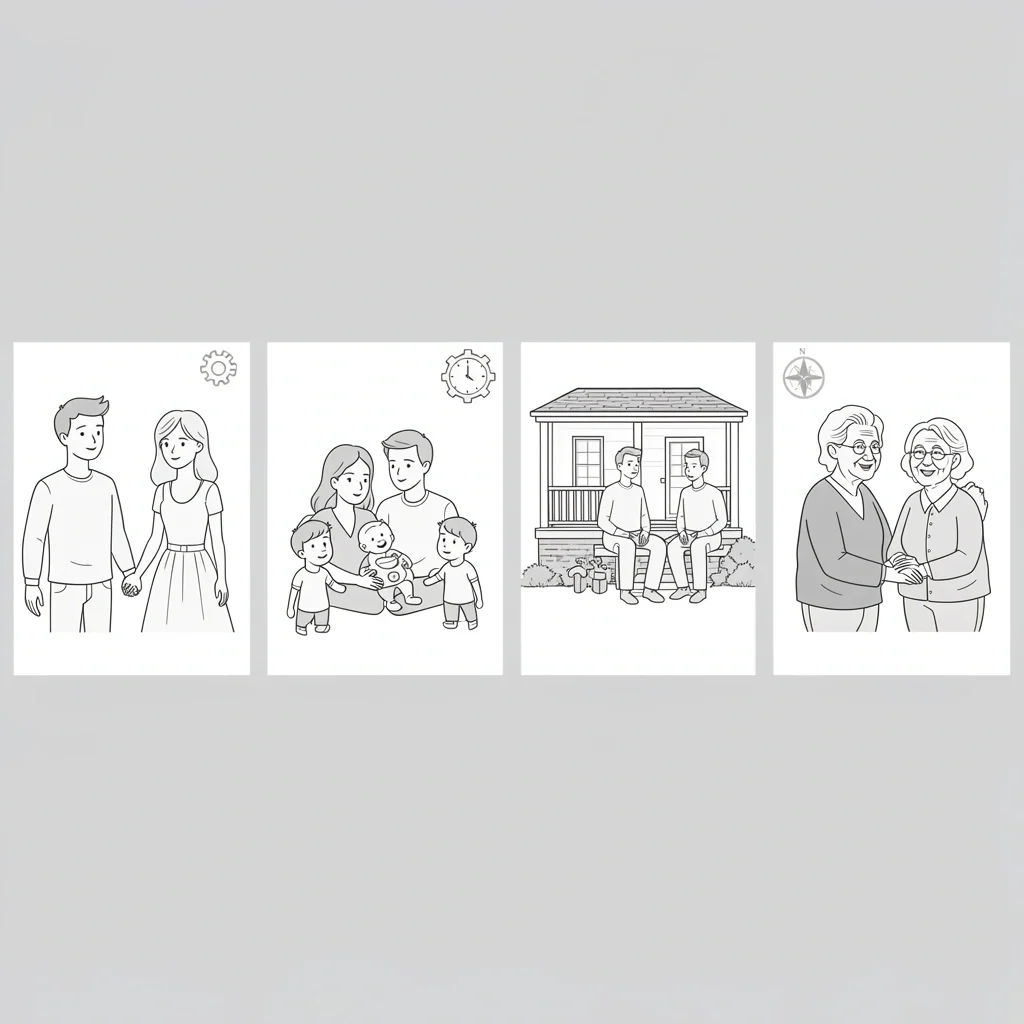
Boundaries are not static. They need to evolve as your marriage evolves. What works for a newlywed couple will not work for a couple with teenagers or for empty-nesters.
Early marriage: establishing patterns versus breaking inherited ones
In the first few years, you are forming habits that will last for decades. This is the time to set boundaries around money, family involvement, and communication. Many couples bring unspoken rules from their families of origin. You need to talk about those explicitly. If your parents called every night, that does not mean you have to. Decide together what works for your marriage.
Young children: the high-demand, low-reserve season
When children are small, both partners are exhausted. Boundaries here are about survival. You need clear agreements on who handles what, when each partner gets a break, and how to protect your couple time. It is easy to let the marriage slip into all logistics and no romance. Set a boundary that says, “We will have 15 minutes of uninterrupted conversation every day without phones.” That small boundary can save the connection.
Empty nest: renegotiating space and togetherness
After children leave home, you may suddenly have too much time together or too much space. This is a moment to renegotiate. If you have been used to distant boundaries because the kids kept you busy, you might need to close the gap. If you have been used to enmeshed boundaries, you might need to give each other more room. Talk openly about what you want this season to look like.
Long-term marriage: when boundaries need updating
Even after decades together, boundaries can become stale. People change. A boundary that worked in your 40s may not fit in your 60s. Maybe you have different health needs, retirement plans, or emotional priorities. Check in with each other every year or two. Ask, “Are the boundaries we have serving us well, or do we need to adjust?”
Frequently Asked Questions
Can healthy boundaries change over time? Isn’t a boundary supposed to be fixed?
Boundaries are not permanent rules carved in stone. They are agreements that should be revisited as your life circumstances change. A boundary about social time might be strict when you have a newborn and flexible when your kids are older. The key is to renegotiate openly, not to silently change the rules and expect your spouse to read your mind.
What if my spouse refuses to respect a boundary I have clearly communicated?
First, make sure you have been clear and consistent. If you have, and your spouse still ignores it, you may need to state a consequence. For example, “If you continue to look at your phone during our dinner conversations, I will eat in the other room.” The goal is not to punish, but to protect your own experience. If the disrespect continues, consider couples counseling. A pattern of boundary violations can indicate deeper issues.
Is it possible to have too many boundaries in a marriage?
Yes. Some people use boundaries as a way to avoid intimacy. If you have a boundary for every possible interaction, you may be keeping your spouse at arm’s length. Healthy boundaries create space for connection, not isolation. If you find yourself saying no to everything, ask yourself whether you are protecting yourself from vulnerability or from genuine harm.
How do boundaries differ between a Christian marriage and a secular marriage?
Christian couples sometimes struggle with the concept of boundaries because of teachings about submission, self-sacrifice, and unconditional love. But healthy boundaries are not selfish. They are rooted in the idea that you cannot love your neighbor well if you do not take care of yourself. Many Christian counselors now teach that boundaries are biblical: Jesus set limits on his time and energy. The same framework applies, but you may need to reconcile it with your faith language. The key is that boundaries protect the marriage, not weaken it.
Setting these kinds of loving limits is a huge step toward building a faith filled marriage that honors God and your spouse.
What is the difference between a boundary and an ultimatum?
A boundary is about you. It says, “I need this to feel safe and respected.” An ultimatum is about controlling the other person. It says, “If you do not do this, I will leave.” Ultimatums come from a place of fear and power struggle. Boundaries come from a place of self-respect. A boundary might lead to a difficult conversation, but it is not a threat. It is a statement of your own limits.