

The 50/50 split is the most popular expense sharing method. And it is often the most unfair. I have seen it destroy friendships, cause resentment between partners, and create awkward standoffs in shared offices. The problem is not that people are greedy. The problem is that most people grab the easiest system instead of the right one. This is the playbook you actually need.
The best expense sharing system aligns with three things: your relationship type, your income dynamics, and the variability of your expenses. If you pick a system that ignores any one of these, you will eventually have a problem. Here is how to choose and implement the right approach.
Three Foundations for Any Expense Sharing System

Before you decide on an app or a spreadsheet, you need to understand the three core methods. Every expense sharing system you will ever use is a variation or a combination of these three.
The Proportional Method. This splits costs based on a percentage. That percentage can come from income (if one person earns 60% of the household income, they pay 60% of shared costs) or from usage (if one person uses 70% of the internet bandwidth, they pay 70% of the bill). This is the most flexible method and the one that handles real-world inequality best.
The Equal Split Method. Everyone pays the same amount. It is simple. It requires no tracking. But it only works when everyone uses roughly the same amount of the shared resource and when incomes are similar. The moment one person eats more groceries or uses more heat, this method creates silent resentment.
The Hybrid Method. Fixed costs like rent and internet are split equally. Variable costs like electricity and groceries are split by usage or income. This is the most practical system for most groups because it matches the nature of the expense. You cannot easily change your rent consumption, but you can control your shower length.
Category-Based Sharing for Maximum Clarity
I learned this the hard way after a year of fighting with roommates about why one person paid the same for heating but kept their window open in January. The solution was simple: stop using one rule for every expense. Instead, group your expenses into categories and assign a different rule to each one.
Housing costs. Rent and mortgage payments are usually equal splits because the space is shared equally. If one person has a significantly larger bedroom, adjust the split proportionally by square footage.
Food costs. This is the most common source of conflict. Equal splits here only work if everyone eats roughly the same amount and buys the same types of food. If one person eats out four nights a week while another eats in every night, or if one person buys organic and another buys generic, you need a different approach. Either track individual purchases or switch to a per-consumption model.
Utility costs. These should almost always be proportional to usage, not equal. If one person works from home and uses the air conditioning all day while everyone else is at an office, the at-home person should pay more. You can track this by square footage of the space each person occupies or by applying a percentage based on agreed-upon usage estimates.
Discretionary shared costs. Things like Netflix subscriptions, shared cleaning supplies, or toilet paper. These are low enough in value that equal splits work fine, but you should have a clear rule about who buys what and when.
The “Kitty” System for Predictable Cash Flow

The biggest headache in expense sharing is not the amount of money. It is the timing. Someone pays a bill, waits for reimbursement, and then has to chase down their roommate. The kitty system fixes this entirely. It is also the only system I have personally used that never led to a late payment fight.
Here is how it works. Everyone contributes a fixed amount to a shared pool account at the start of each month. The total in the pool should cover all predictable shared expenses for that month, plus a small buffer. All shared bills are paid directly from the pool. Nobody asks for money after the fact because the money is already there.
To determine the contribution amount, look at your average monthly expenses for the past three months. Add a 10% buffer to cover price increases or unexpected small costs. Divide that total by the number of people according to your chosen method (equal or proportional). Everyone transfers their share to the pool on the first of the month. Done.
The kitty system works best for roommates and couples with predictable monthly expenses. It falls apart when expenses are highly irregular, which is why you need to pair it with the next section.
For Roommates: Avoiding the Bathroom Paper Wars
Living with roommates is the most common expense sharing arrangement, and it is also where most systems fail because people assume that equal living space means equal consumption. It does not.
Equal splits work for rent and common area cleaning services. They do not work for utilities, groceries, or shared consumables like toilet paper and paper towels. The person who takes 20-minute showers should not pay the same water bill as the person who takes five-minute showers. The person who hosts guests for a week should not pay the same electricity bill as the person who stays alone.
My solution for this is the “first of the month fund.” Every roommate contributes a fixed amount to a shared fund that covers utilities, internet, and household supplies. The contribution is proportional to usage, which you can estimate based on past bills. At the end of each quarter, you reconcile the fund against actual bills. If you over-contributed, the surplus rolls over to the next quarter. If you under-contributed, everyone chips in the difference proportionally.
This system has one rule that prevents all conflict: no retroactive charges. You agree on the usage estimates at the start and adjust them at the end of the quarter. You do not send a message to your roommate saying “You used too much electricity this month, send me $15.” That destroys relationships. You say instead “Our quarterly electric bill was higher than expected. Let us adjust our contributions for next quarter.”
And guest usage? Simple. If a roommate has a guest for more than three nights in a month, that guest becomes an expense-sharing responsibility. The hosting roommate pays an extra percentage of utilities for that month, calculated by dividing the total by the number of people in the home and multiplying by the number of nights the guest stayed. It sounds complicated, but a single formula in a spreadsheet handles it automatically.
For Couples and Partners: Blending Finances Without Losing Autonomy
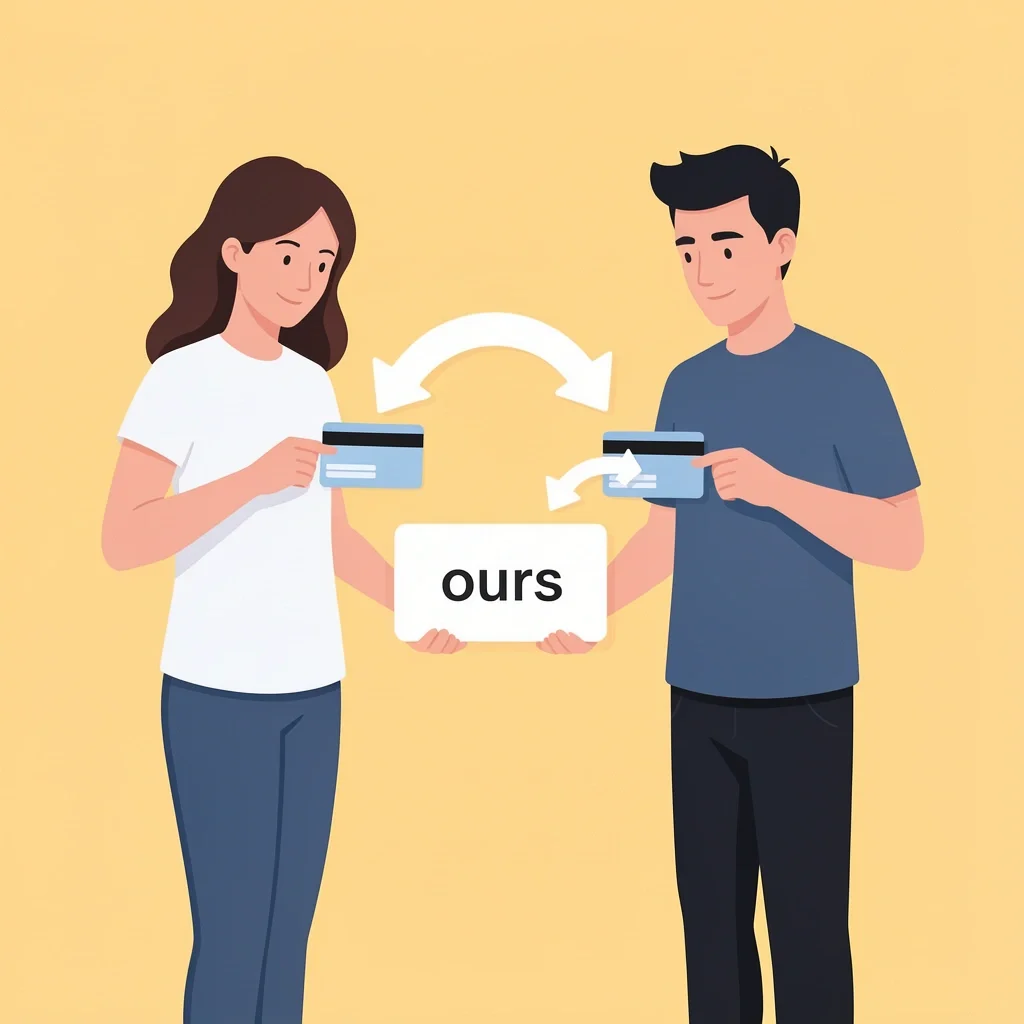
Expense sharing for couples is different from roommates because there is usually an expectation of permanence and because incomes are often unequal. The biggest mistake couples make is merging everything or splitting everything. Both extremes cause problems.
The three-account system works best for most couples. You have three bank accounts: yours, mine, and ours. The “ours” account is where shared expenses live. Both partners contribute to it. The question is how much each contributes.
If you earn $60,000 and your partner earns $40,000, an equal contribution of $1,000 per month means you are paying a smaller percentage of your income while your partner pays a larger percentage. That feels unfair to the lower earner over time. The income-proportional method fixes this. You calculate your combined income. Your individual income divided by the combined income gives you your percentage. You then multiply that percentage by the total monthly shared expenses to get your individual contribution.
For example, if your combined income is $100,000 and you earn $60,000, your share is 60%. If your shared monthly expenses are $3,000, you contribute $1,800 and your partner contributes $1,200. The system adapts as incomes change. When one partner gets a raise, contributions adjust. There is no argument because the rule is fixed.
The key rule for couples: the “ours” account covers only shared expenses. Individual spending, debt payments, and personal savings remain separate. You share the burden of living together without losing financial independence.
For Business Partners and Freelancers: Protecting the Company and the Relationship
Sharing expenses in a business context is more formal because the stakes are higher and the tax implications matter. I have seen two good friends end their partnership because they shared an office lease and one person stopped paying. The solution is to separate expense sharing from revenue sharing.
Expense sharing means each partner pays for the shared costs of running the business. Revenue sharing means each partner gets a portion of the income. These are two separate decisions, and you should never combine them into one imaginary calculation. If you do, you will eventually have a disagreement about what constitutes a “fair” split of the profit after expenses.
Instead, agree on a fixed expense sharing ratio based on usage or benefit. If two freelancers share an office and one uses 60% of the space, that person pays 60% of the rent and utilities. Period. You can change the ratio if usage changes. You cannot retroactively change it because one person had a bad month.
For variable expenses like software subscriptions or client meals, use a pre-approval process. Any shared expense above a certain threshold requires both partners to approve it in writing before it is incurred. This prevents the resentment of one person signing up for an expensive tool the other person does not use.
And for the love of everything, get everything in writing. A simple one-page agreement that lists the expense sharing rules, the reconciliation schedule, and the dispute resolution process is worth more than any verbal handshake. You do not need a lawyer for this. You need clarity. Write it down, both sign it, and put it in a shared folder.
The “Lumpy Expense” Problem

Every expense sharing system I have described works great for monthly recurring costs. But what about the expenses that do not fit a neat monthly pattern? Annual subscriptions. Appliance replacements. Car repairs. Medical costs for a shared pet. These lumpy expenses are the ones that break most systems because nobody plans for them.
The solution is the sinking fund. You estimate the annual cost of a lumpy expense, divide it by 12, and include that amount in your monthly contributions. At the end of the year, you have the cash ready to pay the bill without anyone needing to scramble for money.
For example, if you and your roommates have a shared refrigerator that will cost $600 to replace in three years, you set aside $16.67 per month in your sinking fund. When the refrigerator dies, the money is already there. Nobody argues about who should pay for it because everyone already did.
The same principle applies to annual subscriptions like Amazon Prime or a shared storage unit. You estimate the annual cost, divide by 12, and add it to your monthly contribution. The expense arrives and the fund covers it. No guilt. No resentment.
For lumpy expenses that you cannot estimate in advance, like an emergency repair, you have two options. The first is to maintain a shared emergency fund equal to one month of expenses. The second is to agree on a contingency split rule in advance. The rule should specify how you will handle unexpected costs, including a maximum amount that can be approved without a group discussion.
The Fairness Trap: When Equal Is Not Equitable
This is the most important section in the entire playbook. Most people think fairness is about splitting things equally. It is not. Fairness is about proportionality and agreement.
I once lived with a roommate who earned three times what I did. He insisted on a 50/50 split for everything because “that is what fair means.” He was wrong. He used more electricity because he worked from home. He ate more food because he was a bodybuilder. He hosted more guests because he had a larger social circle. An equal split meant I was subsidizing his lifestyle. That is not fair. That is exploitative, even if unintentional.
Fairness in expense sharing requires you to distinguish between procedural fairness and distributive fairness. Procedural fairness is about the rules. Did you agree on the system in advance? Is the system transparent? Does everyone understand how their contribution is calculated? Distributive fairness is about the outcome. Does the result feel balanced given the circumstances?
A mathematically equal split can feel unfair if the underlying circumstances are unequal. A mathematically proportional split can feel unfair if one person feels they are subsidizing another’s choices. Both types of fairness matter.
The solution is to normalize the difficult conversation. At the start of any expense sharing arrangement, you sit down and say out loud: “We have different incomes, different usage patterns, and different values about money. Let us design a system that respects all of that.” If the conversation feels uncomfortable, that is a sign that you need to have it anyway. The discomfort now is much less than the resentment later.
For couples determined to avoid financial conflict, learning about budgeting as a married couple can turn these difficult conversations into productive planning sessions.
Conflict Resolution: Preventing the “Settling Up” Blowout
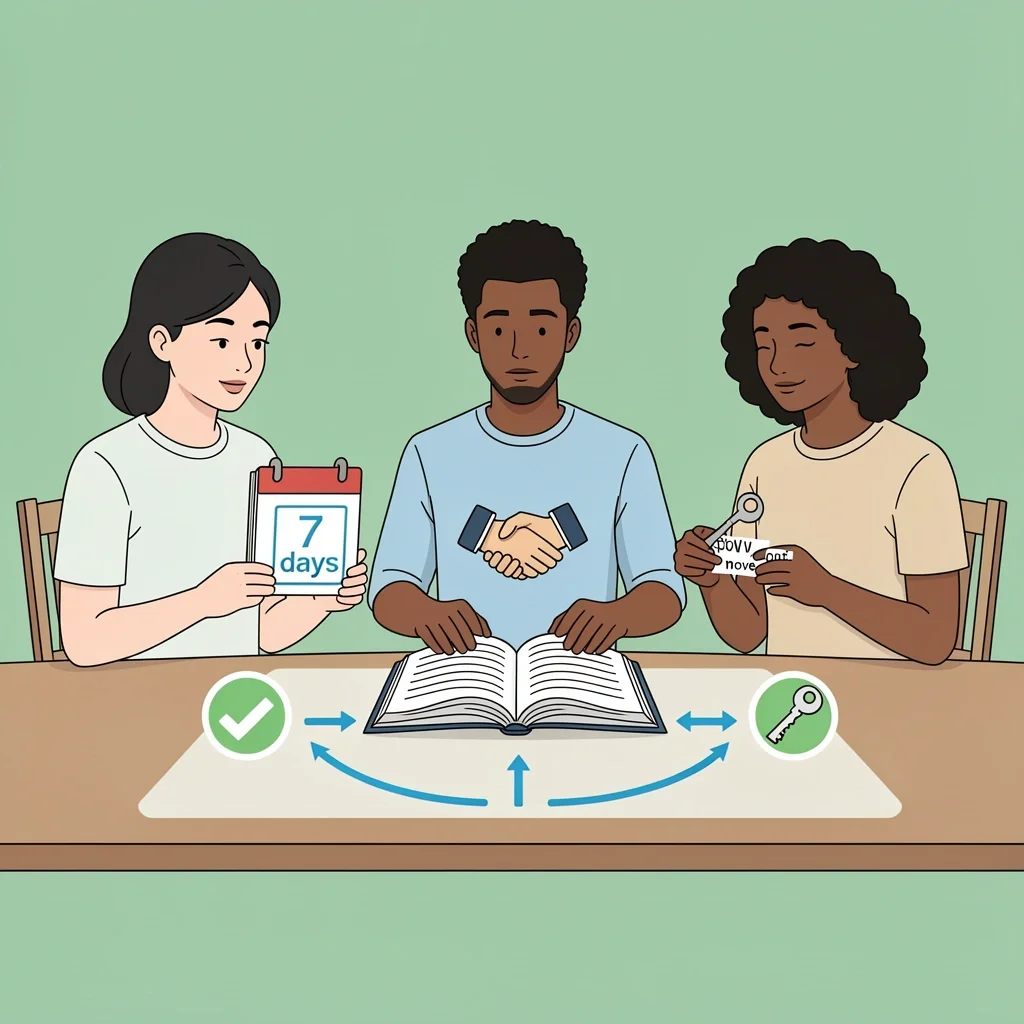
Even the best system will have hiccups. Someone forgets to transfer money. Someone disputes a charge. Someone moves out mid-cycle. The difference between a system that survives these hiccups and one that collapses is whether you have a conflict resolution plan built into the system.
The grace period. Every expense sharing system should have a standard grace period for late payments. I recommend seven days. After that, a small late fee applies. The fee is not about punishment. It is about creating a respectful boundary that prevents chronic lateness. Without it, the punctual people end up financing the forgetful ones.
The dispute process. If someone disputes a shared charge, the charge is paid in full first from the shared pool. The disputed amount is then held in a separate ledger entry until it is resolved. This prevents the whole system from freezing over a single disagreement. You can argue about the money while the bills still get paid.
The mid-cycle move-out. This is the most common source of conflict in roommate situations. The rule should be simple and agreed upon upfront. If someone moves out mid-month, they are responsible for their share of all fixed expenses for the full month. Variable expenses are prorated to the day they left. The person who stays is responsible for finding a new roommate or covering the difference starting the next month.
The open books policy. Every person in the expense sharing arrangement has the right to see every transaction and every calculation at any time. No secrets. No hidden accounts. Full transparency is the only way to build trust in any shared financial system.
The Shared Expense Spreadsheet That Actually Works
Apps are great, but a well-designed spreadsheet is better because it adapts to your specific situation. Here is the spreadsheet structure I have used successfully for years.
Essential columns for a monthly tracking sheet. You need the date, the expense description, the category, the total amount, the percentage each person owes, the amount each person paid, and the running balance for each person. That is it. Seven columns. Anything more is noise.
The formula that matters. In the “amount each person paid” column, you enter the actual payment made by each person for the expense. The spreadsheet then calculates each person’s net balance at the bottom. The person with a positive balance is owed money. The person with a negative balance owes money. Settling up is as simple as looking at the bottom row.
Monthly versus rolling tracking. I recommend monthly reconciliation for most people. At the end of each month, everyone settles their balance. This prevents balances from building up to uncomfortable levels. For business partners, quarterly reconciliation is fine because the transactions are usually larger and less frequent.
Public link versus private accountability. Share the spreadsheet with all participants as a view-only link. Everyone can see the same data at the same time. This eliminates the accusation of hidden charges or miscalculations.
App Comparison: Splitwise, Tricount, and the Underserved Alternatives
Spreadsheets are not for everyone. If you want an app, here is how to choose the right one for your situation.
Splitwise is the market leader for a reason. It handles multiple groups, multiple currencies, and multiple split methods. It sends reminders automatically. It integrates with payment apps. The downside is that it can become a dumping ground for too many small transactions, which makes the balance screen noisy and confusing. Use Splitwise if you have a small group with frequent but diverse expenses.
Tricount is the best alternative if you want simplicity over features. It does one thing: calculate who owes whom after a series of shared expenses. It does not send reminders. It does not integrate with payment apps. It just calculates the math. Use Tricount for one-time events like group trips or shared gifts.
The manual system works better than any app if you have fixed, recurring expenses and everyone is responsible about paying on time. A shared note document with a running balance is all you need. Do not use an app just because you think you should. Use the system that requires the least friction for your specific group.
Frequently Asked Questions
How do I handle expense sharing with someone who has irregular income?
Use income averaging. Look at the person’s total income over the past 12 months, divide by 12, and use that average to calculate their proportional share. Also set a minimum contribution floor so the system does not collapse during lean months. If the irregular earner has a month with no income, they still pay the minimum floor amount, and the difference is reconciled when their income returns.
Should I include shared debt payments in my expense sharing system?
No. Shared debt only goes into the system if both parties are legally liable for it. A joint lease is shared debt. A joint car loan is shared debt. One person’s credit card debt is not shared, even if you are in a committed relationship. Never combine individual debt into a shared expense system. It creates legal and emotional entanglement that is hard to unwind.
How often should we reconcile and settle up?
Monthly is the sweet spot for most arrangements. Weekly is too frequent and creates administrative overhead. Quarterly is too infrequent and allows balances to grow into uncomfortable territory. Monthly gives you enough data to identify problems early without making you track every single transaction.
What is the best way to track shared expenses for tax purposes?
For business partners, keep a separate ledger of all shared expenses with receipts attached. Categorize expenses by type (rent, utilities, software) so you can deduct them on your taxes. For roommates, your individual rent payments may be relevant if you claim a home office deduction, but the shared expense tracking itself is not a tax issue. The key is receipts. No receipt means no deduction. Store them digitally in a shared folder with date and category labels.
How do I expense share when one person owns the asset and others use it?
Separate ownership costs from usage costs. The owner pays for ownership costs: mortgage interest, property taxes, insurance, major repairs. The users pay for usage costs: utilities, maintenance, consumables. If a shared car is involved, the owner pays for the car payment and insurance. The users pay for gas, oil changes, and wear and tear items like tires. This prevents the owner from subsidizing others’ usage while also preventing users from paying for the owner’s asset appreciation.
What legal protections should I have in place?
A written agreement is the minimum. It does not need to be a legal document, but it should list the expense sharing rules, the contribution amounts, the grace period for late payments, and the process for dispute resolution. Both parties sign and date it. For business partners, consider having the agreement notarized. For roommates, include a clause that handles early move-out. A written agreement is not a guarantee against problems, but it removes ambiguity about what was agreed upon.