
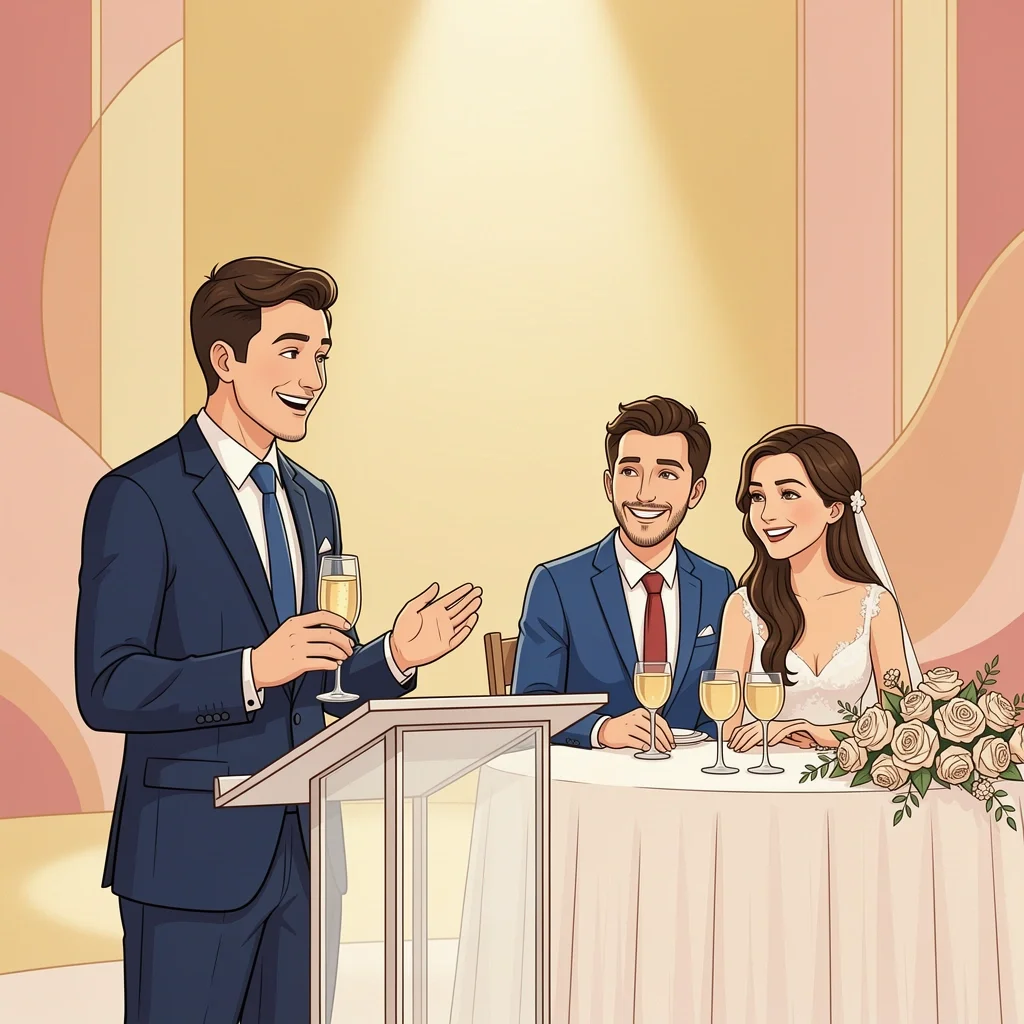
If you’re searching for the best wedding toast, you probably already know that a list of one-liners or funny quotes won’t cut it. You want something that feels genuine, earns real applause, and makes the couple—and every guest—feel something. I’ve given and coached dozens of toasts, and the ones that hit every time follow a simple formula. Let me show you what that formula is and how to apply it to your situation.
What Makes a Wedding Toast Truly the Best

The best wedding toast is not the longest, funniest, or most emotional. It is the one that does four things well:
- Short – under three minutes (about 350–400 words).
- Personal – anchored to one specific, universal story that illustrates the couple’s relationship.
- Inclusive – makes every guest feel part of the moment, not left out of an inside joke.
- Forward-looking – ends by blessing the union and raising a glass to the future.
If you hit all four, you’ll deliver a toast that people still talk about long after the cake is gone.
The Four-Part Structure of Every Great Toast
Break your toast into four clear parts. Each has one job, one common mistake, and one fix.
1. The Opening
Job: Hook the room. Acknowledge the setting, the couple, or something the whole room is thinking. Do not introduce yourself.
Common mistake: “For those of you who don’t know me…” That wastes time and divides the audience.
Better approach: Lead with a one-line observation. Example: “I met Amy ten years ago, but I didn’t see her truly happy until she met James.” Straight to the point.
2. The Story
Job: Show one concrete moment that proves the couple is right for each other. “Show, don’t tell.”
Common mistake: Listing adjectives (kind, loving, great) or telling a story that makes you or one person look good.
Better approach: Pick a 30-second story where the couple’s dynamic is the point. Example: “I remember the night a sudden rainstorm ruined our picnic. While everyone else panicked, Mark just looked at Jenna, and they both laughed. That’s when I knew: nothing can break these two.”
3. The Compliment to the Other Spouse
Job: Say something genuine about the person you don’t know as well. This is the most important part.
Common mistake: A generic “You make my friend happy.” That’s a placeholder, not a compliment.
Better approach: Share a real observation from the wedding day or a single previous interaction. “The first time I met Sarah, she asked more questions about my job than I had ever heard. That’s when I understood why my brother talks about her all the time.”
4. The Closing
Job: End with a clear blessing and a call to raise glasses.
Common mistake: Fading out with a weak “Well, cheers.”
Better approach: Link back to your opening or story. Then say: “If their love could survive a rainstorm, it can survive anything. Please join me in toasting Amy and James.”
Role-Specific Strategies – What No One Tells You
Your role in the wedding shapes what people expect from your toast. Here’s how to adjust for each.
Best Man
Your biggest trap is turning the toast into a roast. Ironic detachment is out. Inside jokes are out. You’re the friend the groom trusts most—show him that trust by being sincere. Keep the humor light, then follow it with a true compliment about his character. Example: “Ben once drove three hours to pick me up from a broken-down car. He’s that reliable in every part of his life, and I know he’ll be that for Emily too.”
Maid of Honor
Your trap is emotional over-gush. It’s okay to tear up, but don’t make the toast about your own journey with the bride. Keep the focus on the couple. A short, grounded story about their first meeting works better than a long list of why she’s your best friend.
Father of the Bride or Groom
The classic mistake is the “famous daughter” speech—all about how great she is, with the new spouse as an afterthought. Instead, include the new spouse from the first paragraph. A safe structure: “When I first saw [name], I knew [child] was lucky. But watching them together today, I realized the opposite is also true. They’re both lucky.”
Sibling
You share decades of history, which can be a nostalgia trap. Don’t spend three minutes on childhood memories. Pick one moment that shows your sibling growing into the person who chose this partner. Example: “I remember when my sister was terrified of public speaking. Today, she’s standing here confident, next to someone who clearly makes her feel safe. That’s the power of this love.”
Friend Who Doesn’t Know the Spouse Well
This is the hardest role. You can still give a great toast by turning your lack of knowledge into a strength. The “observational” toast works: “I’ve known Tom for six years, but I only met Lisa three hours ago. In those three hours, I saw her make him laugh twice, fix his tie once, and hug his grandmother like she was her own. That’s all I needed to see.” That’s honest, humble, and inclusive.
For best men, the secret to a standout toast often comes down to this one simple trick.
The One-Question Test for Every Story
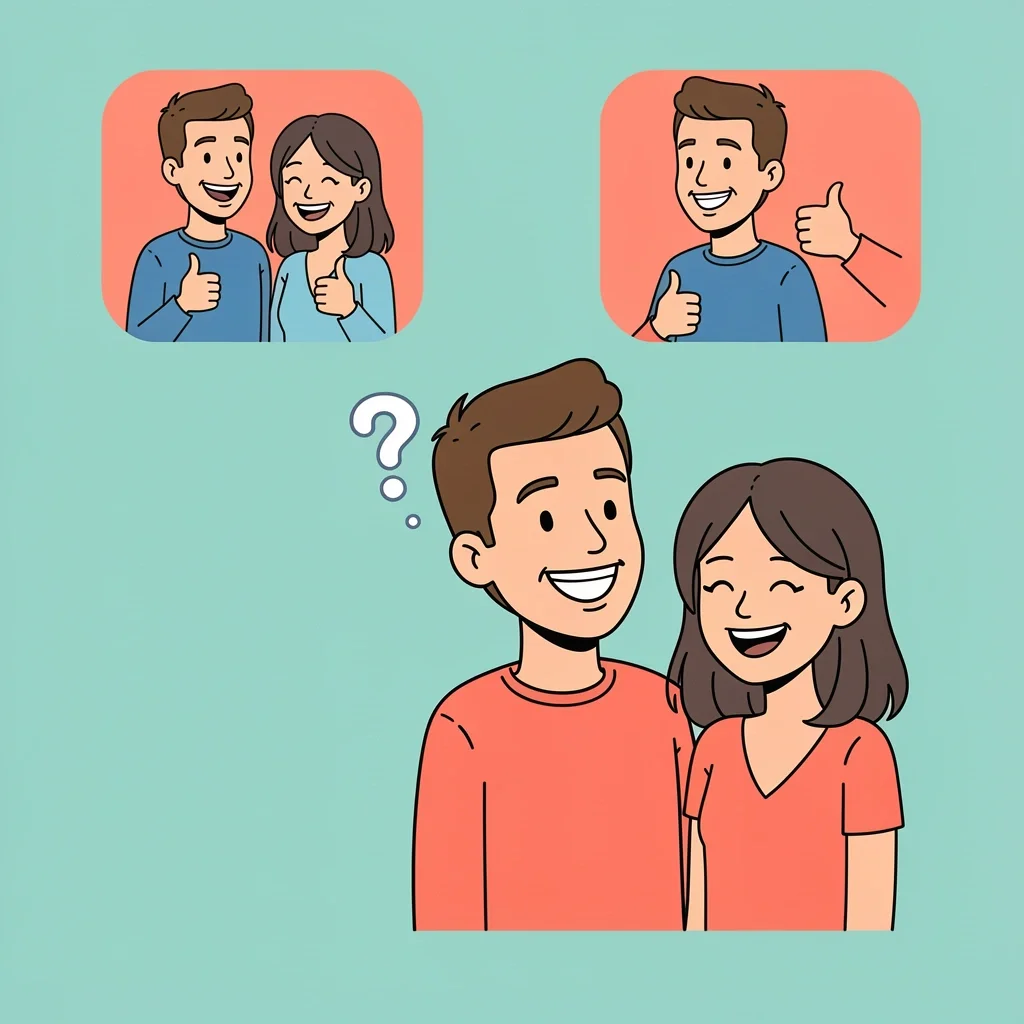
Before you include any story, ask yourself one question: Does this story make the couple look good, make you look good, or make everyone in the room feel something?
Only the third option survives. Here are two examples of stories that fail and how to fix them:
- Fail: “I remember that road trip where we got lost and I had to bail us out.” That makes you look good and the couple look clueless.
- Fix: “I remember that road trip where we got lost. Instead of getting frustrated, [spouse] just pulled out a map and started laughing. That’s when I saw they handle stress together.”
- Fail: “My sister and I used to fight over the TV remote as kids.” That’s about you two, not the couple.
- Fix: “My sister used to fight over the TV remote, but when she met [spouse], she suddenly became the most patient person I know. That’s how I knew this was real.”
The Delivery Check – What Your Rehearsal Should Reveal
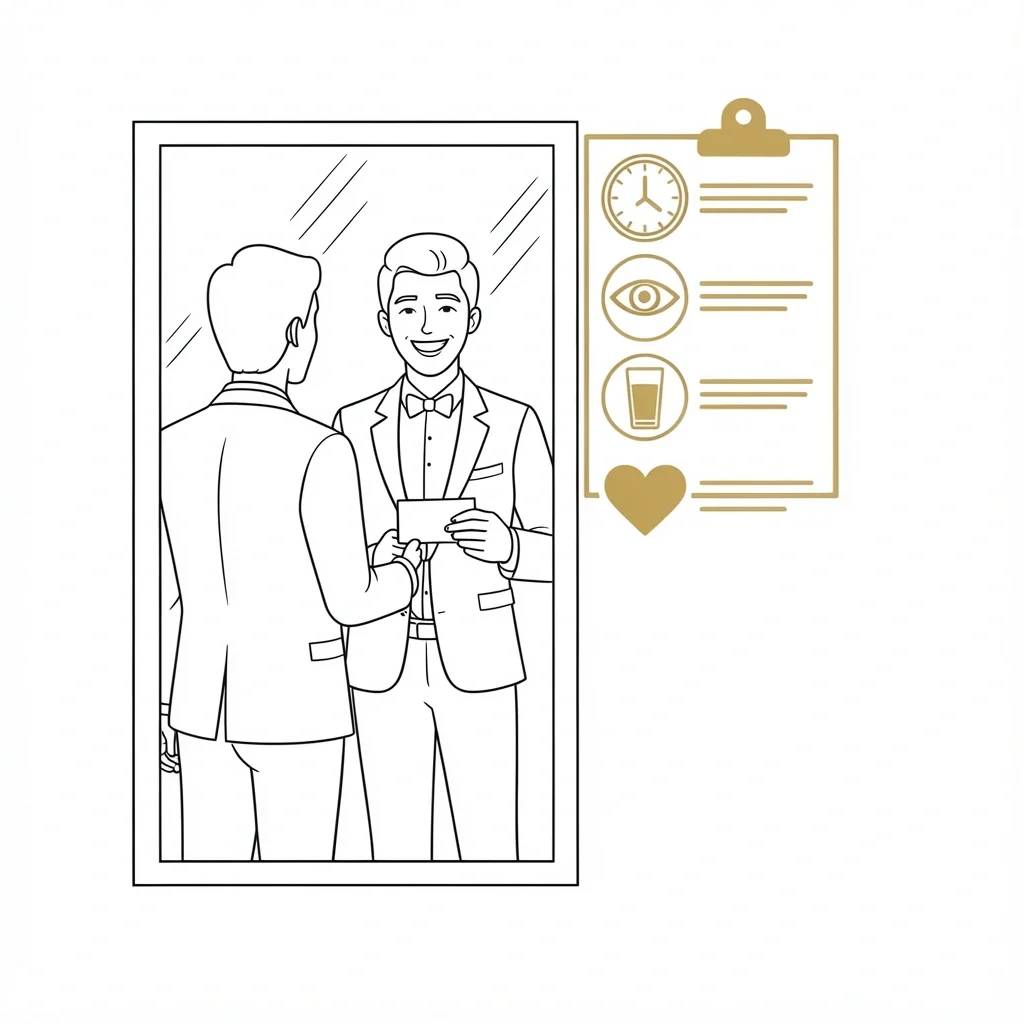
Practice is not just reading it aloud once. Use this five-minute checklist to uncover hidden problems.
- Pacing: Time yourself. If you go over three minutes, cut words. No exceptions.
- Breath control: Mark spots where you pause naturally. If you rush through the story, mark a comma to breathe.
- Eye-contact distribution: Practice looking at the couple, then at different corners of the room. Do not stare at your card.
- Exit: Rehearse the final sentence and the gesture of raising your glass. Make sure you don’t end with a trailing “so uh… yeah.”
- Emotional point: Run the emotional high point three times. If you tear up, pause, smile, continue. It’s endearing.
If you discover any of these issues, fix them before the ceremony. A single run-through is not enough.
Frequently Asked Questions
How long should a wedding toast be?
Two to three minutes. That’s about 350–400 words spoken at a normal pace. If you go longer, you risk losing the audience and delaying dinner.
Should I use notes or memorize?
Use bullet points on a small card. Memorizing can cause panic if you forget a line. Notes kept to one 3×5 card with keywords will keep you on track without reading.
What if I cry during the toast?
Pause, take a slow breath, smile, and continue. Tears are human and make the moment more real. Do not apologize for them.
Can I sing a wedding toast?
Only if you are a trained performer and have rehearsed it a dozen times. Otherwise, it often backfires and feels awkward. Stick to speaking.
Do I need to mention the other spouse even if I don’t know them?
Yes. A genuine observation from the wedding day works. “I’ve only known [name] for a few hours, but I already see how happy they make my friend.”
Is it okay to roast the groom?
Yes, but keep it light and short. Always follow a joke with a sincere compliment. The ratio should be 80% genuine, 20% funny.
What do I do if someone else’s toast goes too long?
Nothing. You control only your own toast. Do not try to interrupt or make a face. Let the emcee handle timing.
Should I toast with champagne?
Water or sparkling wine is fine. Never toast with an empty glass—that looks disrespectful. Just have something in your hand to raise.
I’ll never forget my friends who made a wedding toast at Victory North Savannah ) on my wedding day; it makes the celebration more fun and there’s a lot of laughter.
That is great to know!