
You found the dress. You said yes. And now you are stuck in a waiting game that feels like it will never end. You are not alone in wondering why wedding dresses take so long to arrive. The average wait time is six to eight months, and that feels like an eternity when your wedding date is creeping closer.
But here is the truth: the delay is not random. It is not a conspiracy by bridal shops to stress you out. It is a chain of specific, separate steps, each with its own timeline. Here is exactly what happens from the moment you place your order to the moment you step into your dress.
The Production Pipeline Takes Four to Six Months
Most wedding dresses are made to order. That does not mean a seamstress starts cutting fabric the day you pay your deposit. Designers run production in batches. They schedule manufacturing runs months in advance based on the orders they receive from boutiques all over the world.
How a dress is actually built
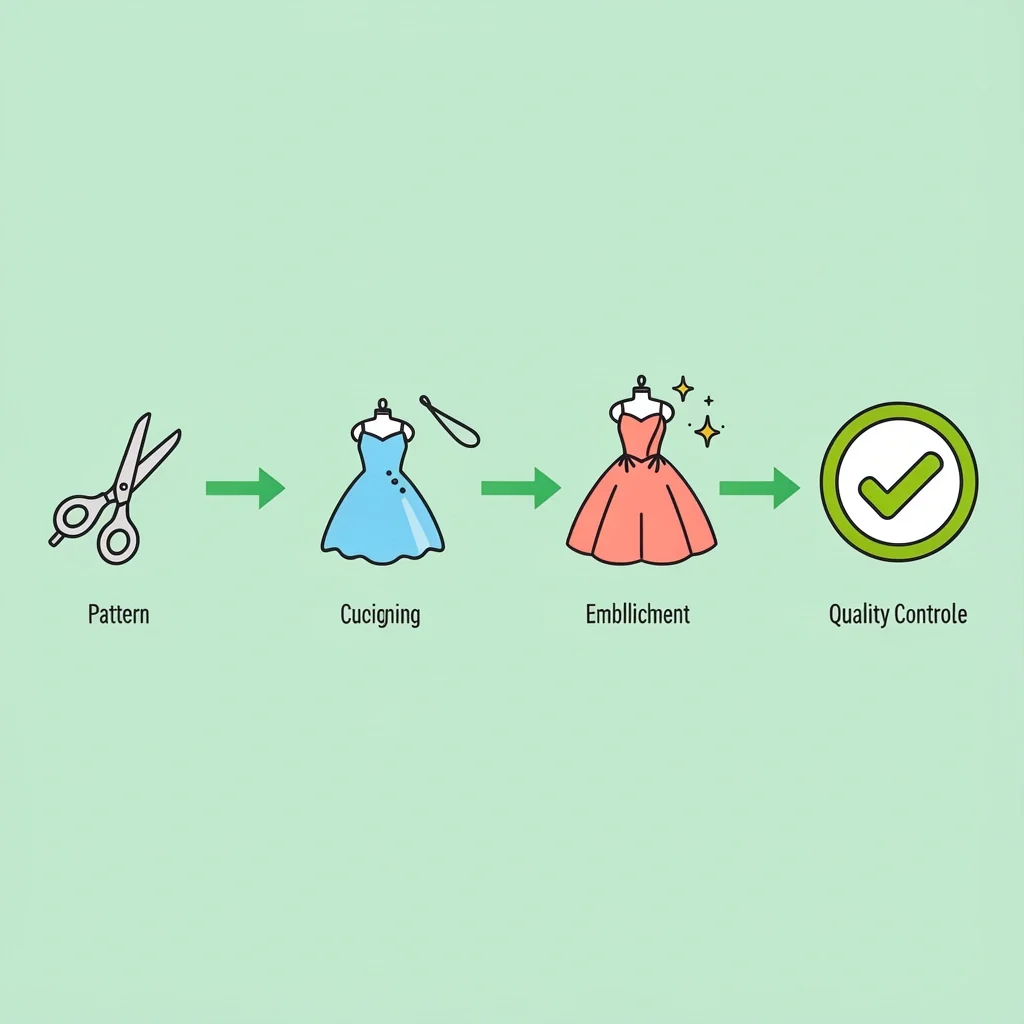
The process looks like this:
- Pattern cutting. The designer creates or pulls the pattern for your specific style.
- Sewing the base. The main structure of the dress is assembled by skilled sewers.
- Embellishment. This is where lace, beads, sequins, or appliqués are added by hand. This step alone can take weeks.
- Quality control. Every seam, zipper, and stitch is checked before the dress leaves the factory.
Each of these stages is done in sequence. There is no shortcut. If your dress has heavy beading or intricate lace, the embellishment phase alone can eat up two to three weeks of production time.
Fabric sourcing adds hidden weeks
Not all fabric sits on a shelf waiting to be used. Some designers order custom lace, silk, or tulle from specialized mills. If that fabric is not in stock, the mill has to produce it. That adds another two to four weeks before the dress can even be cut.
Industry consensus is that the production phase for a standard made-to-order wedding dress takes between 16 and 24 weeks. That is four to six months just for the dress to exist.
The Boutique Ordering Cycle Can Stall Your Order Before It Starts
This is a step most brides never know about. Your boutique does not send your order to the designer the moment you sign the paperwork. Boutiques aggregate orders and submit them to designers on specific dates, usually once or twice per season.
If you order your dress the day after the boutique sent its last batch, your order sits for two to four weeks before the boutique sends it to the designer. You are paying for a dress that has not even entered the production queue yet.
Some boutiques only order sample sizes from designers. Your dress is not made until the boutique places your specific order. That means the production timeline does not even begin until the boutique submits its batch. This is one of the biggest reasons why wedding dresses take so long from the customer’s perspective. You think the clock started on day one, but it often does not start for another month.
Shipping and Customs Are the Unpredictable Black Box
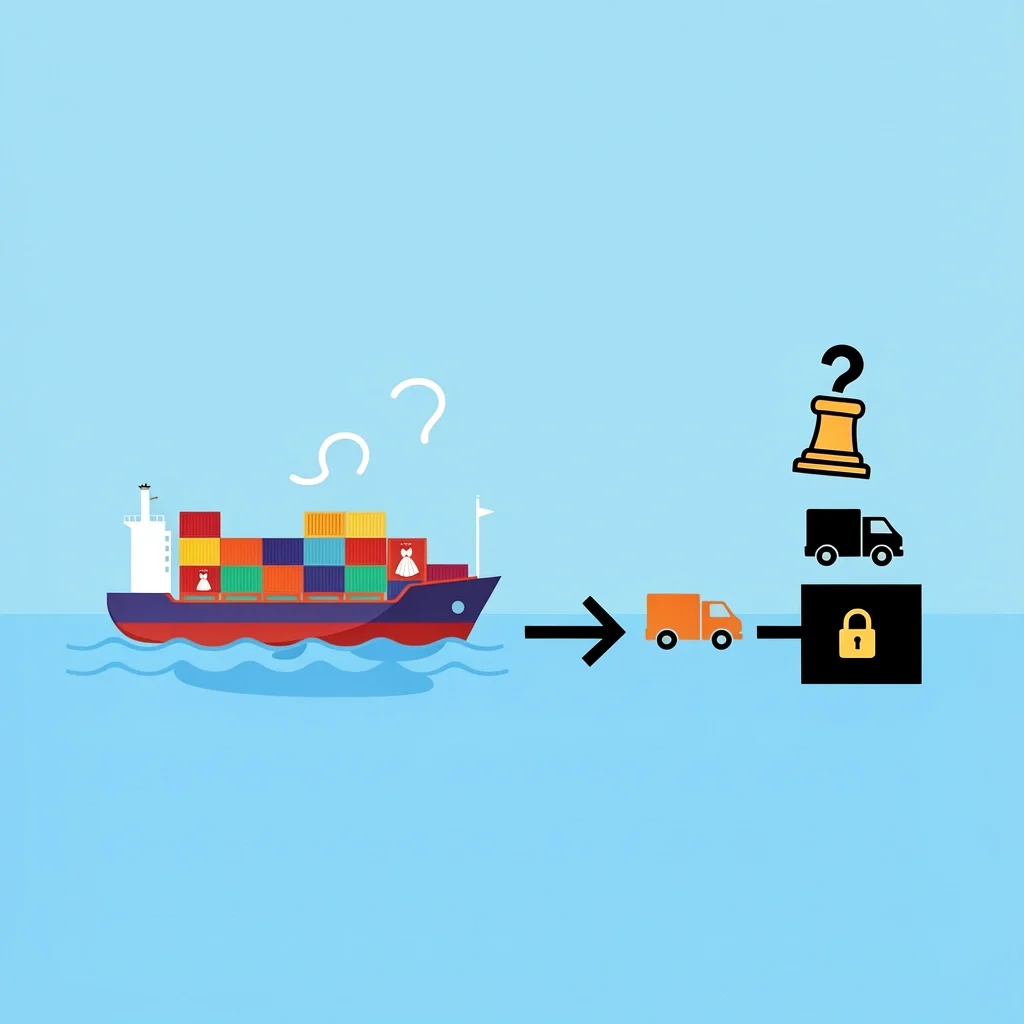
Most wedding dresses are made overseas. The biggest production hubs are in China, Vietnam, and Eastern Europe. Once the dress is finished, it has to travel to your country. That journey involves several stages.
The shipping timeline
Standard shipping for a wedding dress is ocean freight. It is the cheapest option, but it is also the slowest. The dress is packed into a container, loaded onto a cargo ship, and sailed to a port in your country. That takes two to six weeks depending on the origin and destination.
The weight of the dress can also affect shipping logistics, so it helps to know how heavy is the average wedding dress when estimating total costs.
After the ship docks, the container goes through customs clearance. That can take one to two weeks. Customs officers inspect the shipment, verify paperwork, and assess duties. If anything is wrong with the documentation, the container is held until it is resolved. That can add another week or more.
Once the container clears customs, it is loaded onto a truck and shipped to the designer’s warehouse or directly to the boutique. That inland freight takes another few days to a week.
The total shipping time is normally three to eight weeks. If your dress is shipped by air freight, it is faster, usually one to two weeks. But air freight adds $200 to $500 to the cost. Most boutiques do not include that in the standard price.
Why some dresses get stuck
Port congestion is a real problem. Major ports like Los Angeles, Long Beach, and New York frequently experience backlogs. A ship can sit at anchor for days or weeks waiting for a dock to open. There is nothing you or the boutique can do about it. It is simply a reality of global shipping.
Alterations Are the Final Non-Negotiable Delay
Most brides think the hard part is over when the dress arrives. It is not. The dress comes in a standard size, usually between a 6 and a 12. It will not fit you perfectly straight out of the box. That is where alterations come in.
What alterations actually involve
Alterations are not just hemming the bottom. A typical alteration session includes:
- Hemming the length.
- Taking in or letting out the bodice.
- Adjusting the straps or sleeves.
- Adding a bustle so you can dance after the ceremony.
- Adjusting the neckline if needed.
- Adding or removing cups.
If your dress has lace, the seamstress has to match the pattern when cutting and sewing. That is meticulous work. A simple hem on a lace dress can take a full day.
The timeline for alterations
A straightforward alteration job takes two to three weeks. A complex dress with multiple layers, heavy beading, or a corset back can take six to eight weeks. Most bridal seamstresses recommend at least three fittings spaced a few weeks apart.
This is where many brides panic. They think the dress arriving early means they are safe. But if your dress arrives four months before the wedding and you wait until two months out to start alterations, you are still at risk. The alterations timeline runs parallel to the production timeline, not after it.
Why Some Dresses Arrive Faster and the Trade-Offs
You have probably seen a friend get her dress in three months and wondered why yours is taking twice as long. The answer is that she likely bought off the rack or chose a sample dress.
Off-the-rack dresses
Some boutiques carry ready-to-wear dresses in stock. If you find one in your size and style, you can take it home that day. But you lose the ability to customize. You cannot change the neckline, add sleeves, or swap the fabric. You also have no guarantee that the dress is in perfect condition. It has been tried on by other brides.
Sample sales
Boutiques clear out sample dresses at steep discounts. You get a dress at a fraction of the price, but it is a single size and has been worn many times. You are also racing against other brides. The dress you want might be sold to someone else before you can decide.
Rush orders
Some designers offer rush production for an extra fee. That fee is typically 15 to 30 percent of the dress price. Rush orders compress the production timeline to four to six weeks instead of 16 to 24 weeks. But there is a trade-off. Rush orders often skip multiple fittings, limit embellishment options, and can result in a lower quality finish. Designers prioritize standard orders, so rush orders are not always perfect.
If you absolutely need a dress in three months, your best bet is off the rack or a sample sale. If you want a made-to-order dress with customization, you have to accept the longer timeline.
The Real Timeline Month by Month
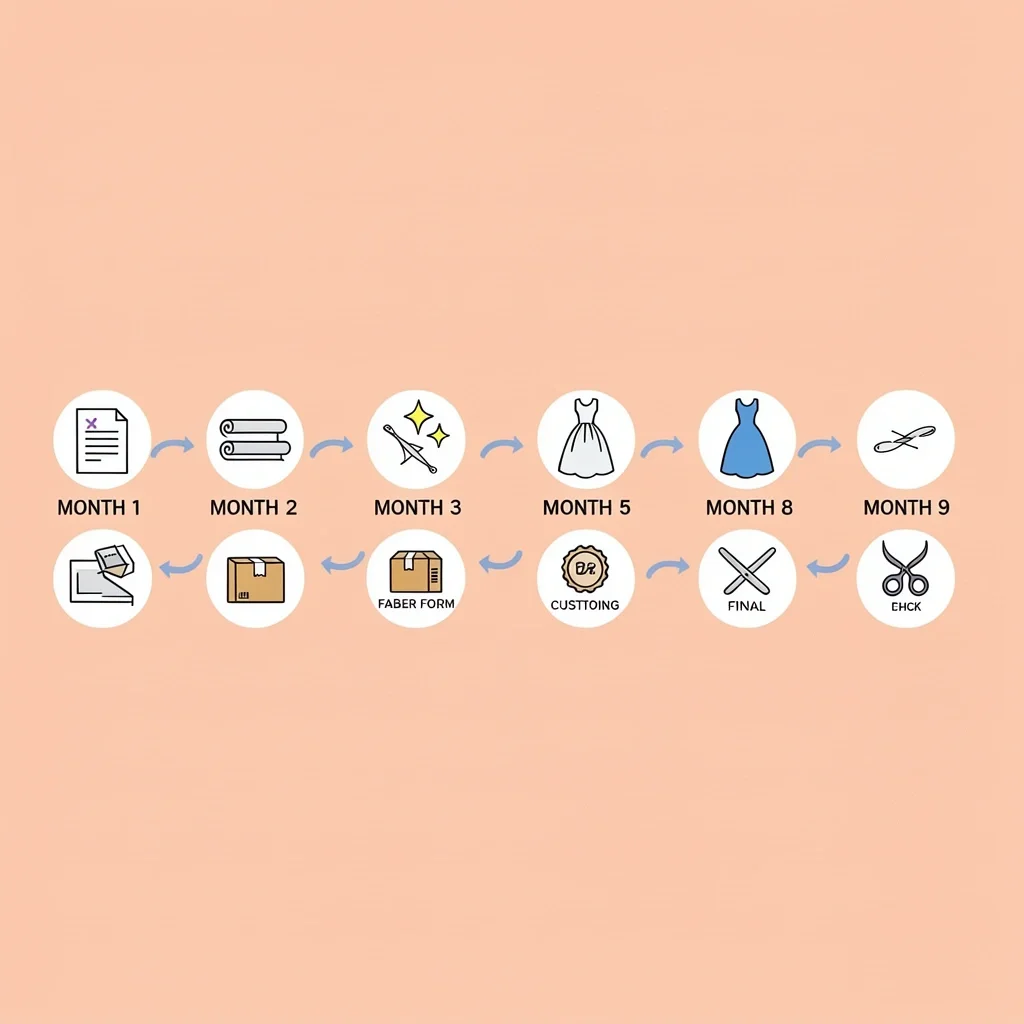
Here is what a standard made-to-order wedding dress timeline looks like from the day you order.
| Month | What Happens |
|---|---|
| Month 1 | Boutique processes your order and submits it to the designer. The production queue begins. |
| Month 2 | Designer sources fabric and starts cutting the pattern. |
| Month 3 | Sewing and construction of the dress. Embellishment begins on complex designs. |
| Month 4 | Final assembly and quality control. Dress is packed for shipping. |
| Month 5 | Dress is shipped via ocean freight. Customs clearance occurs. |
| Month 6 | Dress arrives at the boutique. You begin the alterations process. |
| Month 7 | Alterations continue. You have your first fitting, then a second, and possibly a third. |
| Month 8 | Dress is finished. You pick it up a week or two before the wedding. |
If you rush production, you can compress Month 1 through Month 4 into as little as six weeks. But shipping and customs still take three to eight weeks, and alterations still take four to eight weeks. Rushing production does not skip the other steps.
Frequently Asked Questions
Can I get a wedding dress in 3 months?
Yes, but only if you buy off the rack, buy a sample dress, or pay for a rush order. Off-the-rack dresses are already in inventory and bypass the production queue. Sample dresses are already made and sitting in a boutique. Rush orders cost extra and may have quality trade-offs. If you need a dress in three months, do not order made-to-order from a major designer. That timeline is six to eight months minimum.
What happens if my dress is delayed?
Contact the boutique immediately. Ask for the tracking number and the estimated delivery date. If the delay is substantial, ask the boutique to check on the status with the designer. If the dress will not arrive in time, you need a backup plan. That could mean renting a dress, buying a sample, or having a seamstress on standby to alter a dress you buy off the rack. Do not wait until the last minute to check on your order.
Do designer dresses take longer than private label?
Usually, yes. Big-name designers like Pronovias, Vera Wang, and Monique Lhuillier have longer production queues because they handle a high volume of orders. Private-label or smaller designers often have shorter queues and can produce a dress faster. But smaller designers may have less reliable supply chains. If you need speed, ask the boutique about the designer’s typical turnaround time before you buy.
How long do wedding dress alterations actually take?
A simple hem and bustle can be done in two to three weeks. A full alteration job that includes taking in the bodice, adjusting straps, and adding a bustle takes four to six weeks. Complex alterations on heavily beaded or lace dresses can take six to eight weeks. Start alterations at least three months before your wedding. That gives you a cushion if the seamstress finds unexpected issues.
Should I order my dress before or after losing weight?
Order for your current measurements. Dresses are designed to be taken in, not let out. If you order a smaller size and then do not lose the weight, you risk the dress not fitting at all. If you lose weight, a skilled seamstress can take the dress in to match your new shape. Ordering larger gives you room to adjust. Ordering smaller is a gamble that often ends in disappointment or expensive rush alterations.
Great article. A good blog always comes up with new and exciting information and while reading.
I have felt that this blog has all those qualities that qualify a blog to be one.
I had and idea about gold jewelry but this really cleared up any questions I had about it.
Love that you describe how we get the different colors of gold also.
Very informative thanks this is going to be very usefull.
“It’s just an amazing article!
For wedding cinematic photography they are the best choice, It was a pleasure to have these guys on board.
They were happy to go the extra mile with every job we gave them.