

After officiating over 900 weddings as an interfaith celebrant, I’ve seen every possible way people enter a ceremony. The question I hear most often is: “What is the correct wedding ceremony processional order?” The honest answer is that no single order is correct for everyone. The right order is the one that makes your most important relationships feel honored, keeps the logistics smooth, and builds the emotional moment you want.
In this guide, I’ll walk you through the logic behind common processional orders, show you templates you can adapt, and give you concrete solutions for the tricky situations that most online advice skips. By the end, you’ll know exactly who walks when and why.
The Processional Isn’t a Rulebook; It’s Your Ceremony’s Opening Shot

A processional has three simultaneous jobs. First, it handles logistics — getting people into their seats at the right time so the ceremony starts without awkward standing and shuffling. Second, it shows honor by highlighting the people who matter most to your relationship. Third, it creates drama — the buildup of anticipation, the music shift, the first moment everyone sees you or your partner.
When you understand these three layers, you stop trying to follow a strict template and start designing a sequence that works for your specific cast of characters. The “correct” order is whatever balances logistics, honor, and drama in a way that feels true to you.
The Anatomy of a Processional: Roles, Rhythm, and the Seating Map
A processional typically unfolds in three acts. The pre‑processional seats VIPs like grandparents and parents so they are settled before the main event. The main processional brings in the wedding party and any special attendants. The grand entrance is the reveal of the couple — or the last person to walk.
Understanding the seating logic will help you decide order. Traditionally, the groom’s family and friends sit on the left side (when looking at the altar), and the bride’s family and friends sit on the right. This allows the groom and officiant to see the bride’s entrance as the big reveal. If you have a different layout or equal sides, the visual focus still matters — whoever enters last should have a clear path and an audience that is watching.
The Traditional Processional Template and Why It Works Logistically
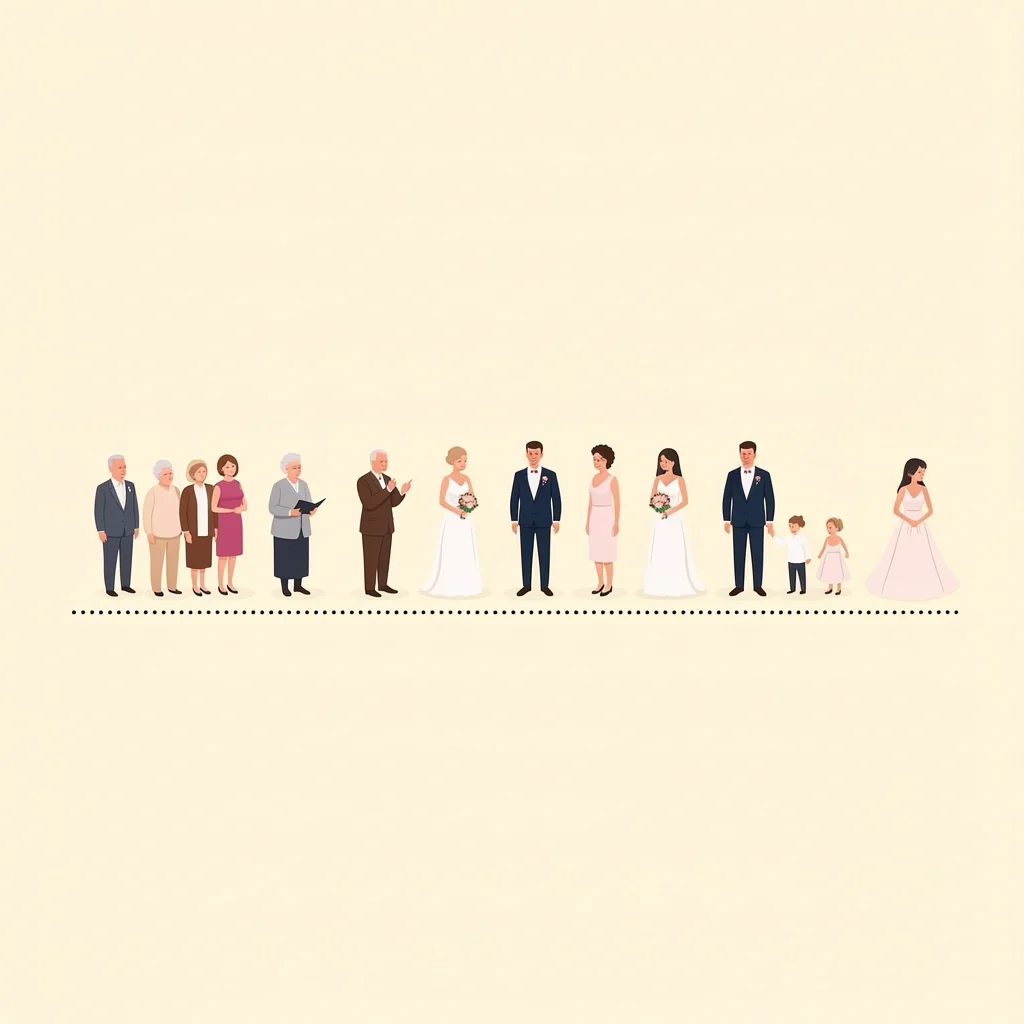
Here is the classic template I start with for a straight‑ahead ceremony. Each step has a reason.
- Officiant enters from the side or down the aisle to signal the start.
- Grandparents walk and are seated in the front rows.
- Parents of the groom walk — typically the groom’s mother escorted by an usher or his father — and are seated.
- Mother of the bride walks last among the parents and is seated in the front row (this is a traditional seating cue that the ceremony is about to begin).
- Groom walks alone or with both parents, takes his place at the altar, and turns to watch the aisle. This creates a visual focal point for guests.
- Bridesmaids and groomsmen walk in pairs. If numbers are uneven, have two bridesmaids walk with one groomsman or send them single file.
- Maid of honor and best man walk together (or last in the wedding party).
- Ring bearer and flower girl walk, usually alone or together. Young children can be escorted by a parent or older sibling.
- Bride walks alone or with her parent(s) after the music changes. The officiant says, “Please all stand for our bride.”
- The giving away — if included — happens at the front row. The officiant asks “Who gives this person?” and the parent(s) respond. Then the groom meets the bride, they take hands, and the officiant asks everyone to be seated.
This order works because it seats the VIPs early, places the wedding party so they can see the aisle, and reserves the most dramatic moment for last. If your family is simple and you like tradition, this template is a solid start.
Modern Mixology: Adapting the Order for Every Type of Couple
Now let’s get into the real world. Not everyone has two living parents. Below are the most common scenarios I help couples navigate.
For the Blended Family: The Seating and Escort Protocol

This is the emotional minefield that most guides ignore. Here are concrete outlines for common blended‑family situations.
Scenario: Divorced parents, both still involved. The simplest approach is to have each parent walk in the pre‑processional with their own spouse or alone. If you want both parents to escort you, have them walk on either side of you. The officiant can ask “Who stands with this couple in their new life?” and both parents respond from their seats. No one is singled out as “giving away” — everyone is supporting.
Scenario: Step‑parent and biological parent. If the step‑parent has been a major figure in your life, you can have both escort you. Alternatively, have your biological parent walk you down the aisle, but the officiant acknowledges the step‑parent during the ceremony with a special blessing or reading. Never make it a contest. Talk with both parents beforehand to set expectations.
Scenario: Multiple sets of grandparents. Seat all grandparents in the pre‑processional, in the order they will sit. If one side’s grandparents arrive first, have them walk in that order. An usher can escort them together.
My key advice: designate a “family captain” — a trusted friend or wedding planner who knows everyone’s seating assignment. They can handle any awkward moments so you don’t have to.
Additional creative twists and scripts for introducing the wedding party can be found in this detailed post.
Don’t be afraid to ask your officiant to adjust the script. Instead of “please all stand for our bride,” you can say “please all stand for our grooms” or “please all stand for our couple.” Small language shifts make a big difference.
For the Non‑Traditional Venue: Orchestrating the Entrance Without an Aisle
Outdoor venues, barns, and circular layouts often lack a straight aisle. You have three options.
The Center Stage approach. Everyone — wedding party, officiant, and family — is already present at the ceremony site. Only the couple enters, walking from behind the guests toward the front. This is simple and works for amphitheater‑style seating.
The Walkabout. The wedding party walks through the guests from one side to the other. Guests turn in their seats to watch. This works well for circular layouts. Have your coordinator or a friend guide the group so they don’t get lost.
The Side Entrance. The officiant and couple are already at the front. The wedding party enters from one side and takes their positions. This is common for beach ceremonies where the aisle is not clearly defined. It reduces confusion and keeps the focus on the couple.
The Critical Breakdown: How to Manage the “Giving Away” Ceremony and the Recessional
Most guides gloss over the choreography of the giving away and the recessional. Here’s the exact logistics for each.
The Giving Away: Three Levels of Tradition
Traditional (with script). The escort stops at the front row. The officiant asks “Who gives this person in marriage?” The escort says “I do” (or “We do” if two parents). The groom steps forward, shakes the escort’s hand, and the bride hugs the escort. The bride and groom then turn to face the officiant.
Modern (no verbal exchange). The escort walks the bride to the front, shares a hug, and then takes a seat without any words. The officiant simply says “Please all be seated” after the bride is in place.
Two escorts. Both escorts walk together. When they reach the front, the officiant can say “With the blessing of these two families, we begin.” No one is asked to “give” — the emphasis is on support, not transfer of ownership.
The Recessional: The Part Everyone Forgets
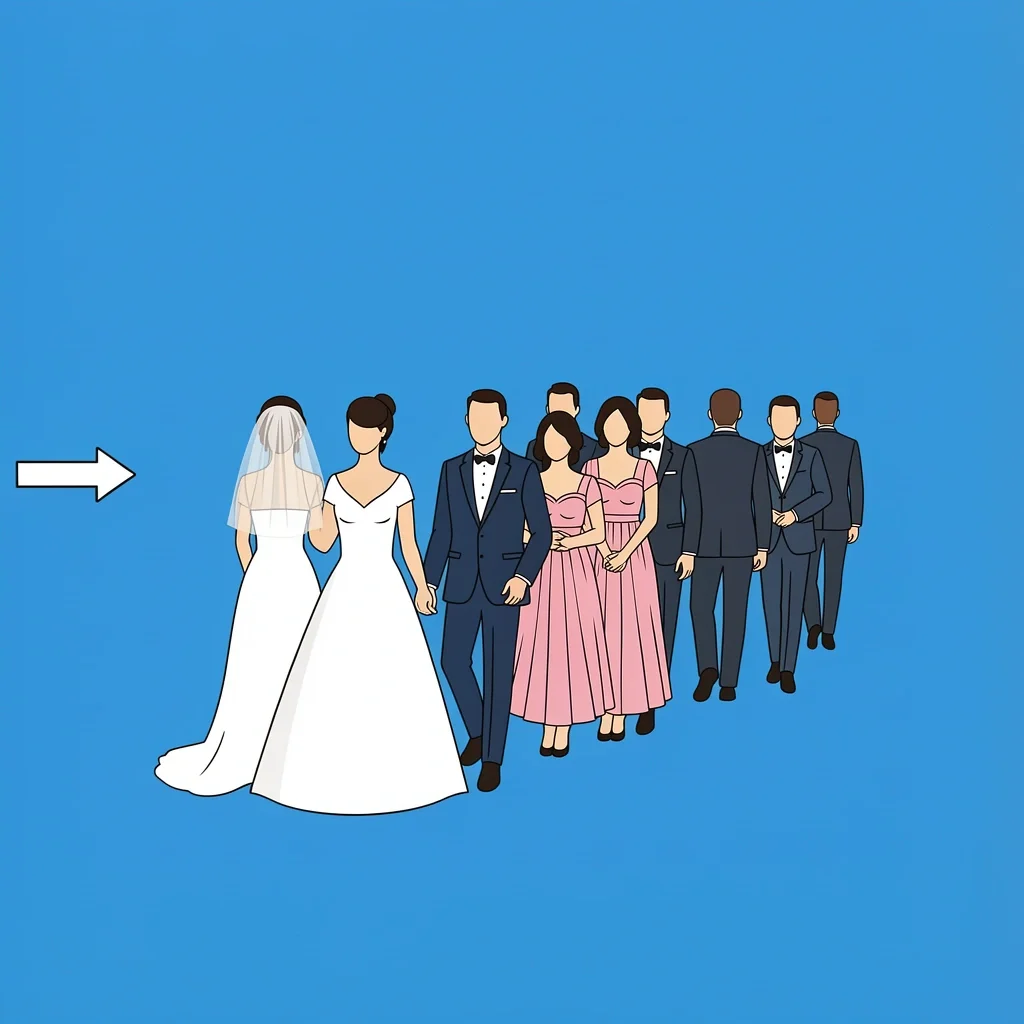
The recessional is the exit, and it’s often chaotic. Here is the simple reverse‑order template I give every couple.
- Couple walks first, hand in hand, after the officiant presents them.
- Wedding party follows in reverse order of the processional. So if bridesmaids walked first, they exit last. The best man and maid of honor exit first among the party.
- Flower girls and ring bearers can be picked up by their parents or walk with a bridesmaid.
- Officiant waits until the party clears the aisle, then either exits or makes an announcement.
- Parents and grandparents are released by the officiant: “If parents and grandparents would follow.” They exit through the sides or the back of the ceremony space.
- Guests are dismissed row by row, usually starting from the front.
Appoint an aisle captain — someone with a clipboard and a strong voice — to keep the recessional moving. If a member of the wedding party is missing, they can be skipped without drama.
Frequently Asked Questions
How many songs should I use for the processional?
Three songs are standard. One for the pre‑processional (seating of VIPs), one for the wedding party, and one for the grand entrance. The final song should be 90 seconds to two minutes long so it feels epic but not rushed. If you have a song change, the officiant or coordinator should cue the musician.
What happens if a bridesmaid or groomsman is late?
Don’t panic. Have a designated aisle captain — the wedding planner or a trusted friend on the guest list. They are the last word. If someone is missing, the captain signals the officiant to skip them or create a brief pause. Never let the officiant stop the music. The missing person can be seated by an usher later, or they can slip in from a side entrance during the ceremony.
Do the parents of the couple walk back down the aisle in the recessional?
No, not typically. The recessional is for the newly married couple and the wedding party. After the party clears the aisle, the officiant will gesture to the front rows and say, “If parents and grandparents would follow.” They then exit through the sides or the back. This avoids having them walk the aisle again and keeps the recessional clean.
Your wedding ceremony processional is one of the most memorable moments of the day. Spend time thinking about who walks, when, and why. Trust your instincts, communicate with your VIPs, and let your officiant help you set the pace. When the music starts and you see the faces of the people you love, you’ll know you got it right.