
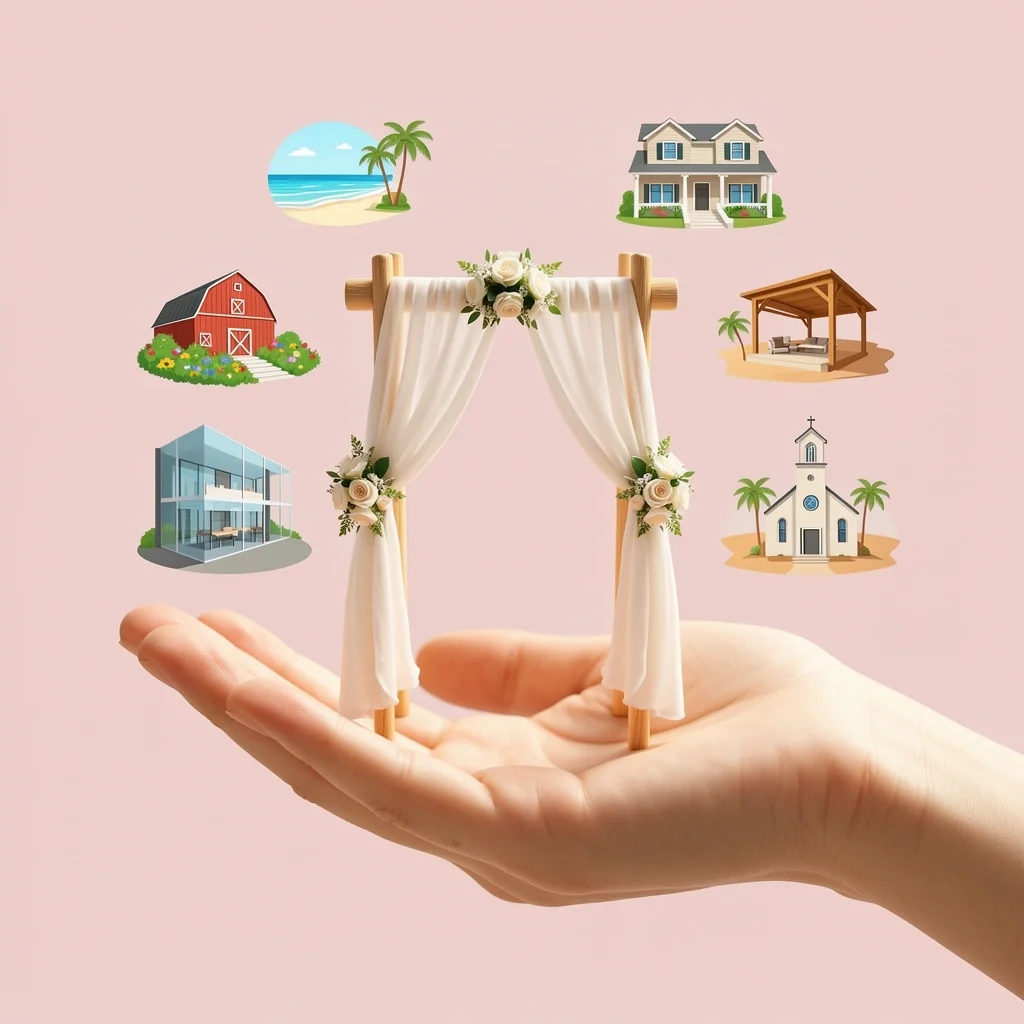
The spot where you exchange vows is the heart of your ceremony. It anchors every photo, every memory, and every guest’s view. But with so many options — arches, chuppahs, backdrops, natural features — it is easy to feel overwhelmed. I have worked with dozens of couples over the years, and the biggest mistake is choosing an altar that fights the venue or stretches the budget. This guide walks you through the decision process step by step: first by venue type, then by style, then by budget and practical realities. By the end, you will know exactly what works for your day.
Why Your Altar Defines the Ceremony
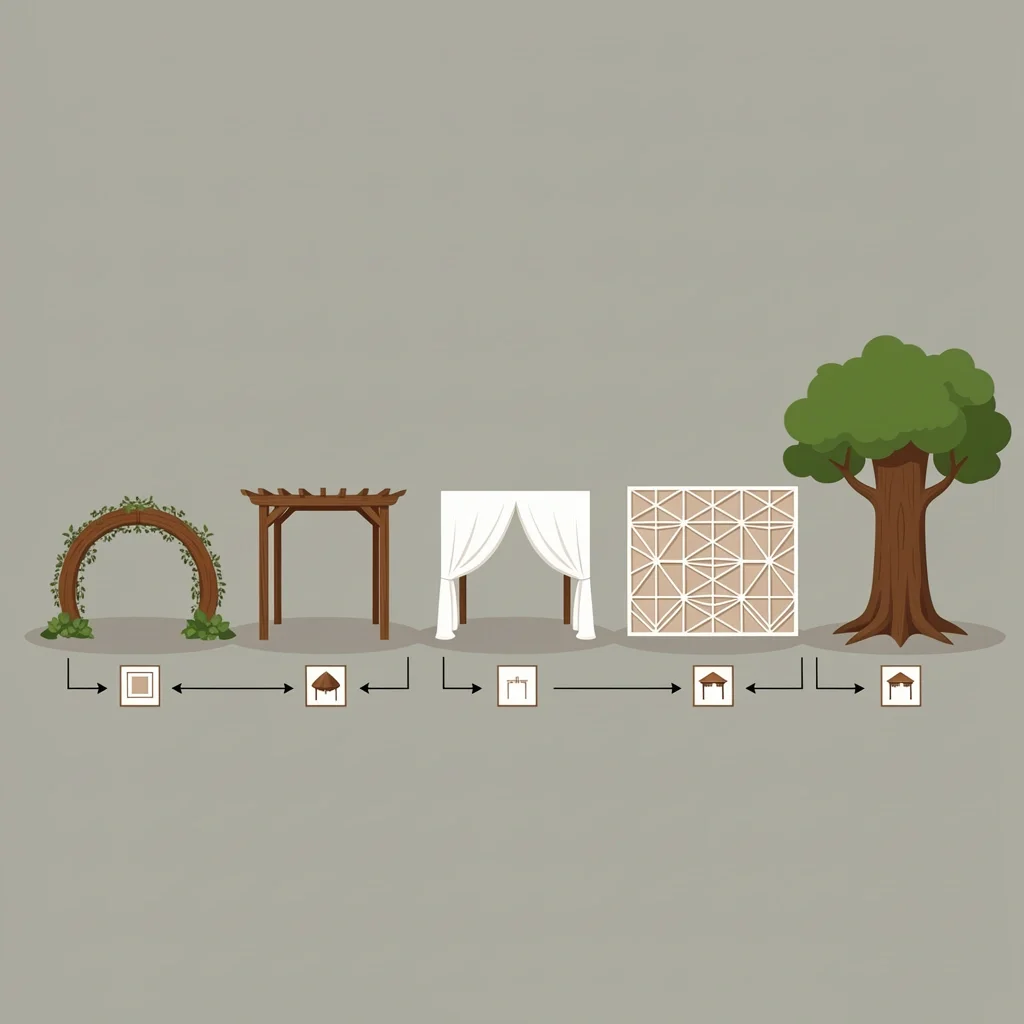
The altar is not just decoration. It is the visual anchor that tells guests where to look and frames the most important moment of the day. A well-chosen altar complements your venue without overpowering it. Before diving into specific ideas, understand the five most common structural types:
- Arch — a curved or peaked frame, often wooden or metal, that creates a doorway-like focal point.
- Pergola — a square or rectangular overhead structure, open on all sides, offering shade and support for draping.
- Chuppah — a canopy with four poles and a covered top, traditional in Jewish ceremonies but used widely for its intimate feel.
- Freestanding backdrop — a flat panel, geometric frame, or wall that sits behind the couple without overhead elements.
- Natural feature integration — using a tree, waterfall, cliff, or existing architecture as the altar without adding a man-made structure.
Each type has its own strengths. A chuppah creates enclosure; a natural feature blends seamlessly. Choose based on what your venue asks for.
Matching Altar Ideas to Your Ceremony Location
Your venue is the starting point. An altar that works on a windy beach will fail in a drafty barn. Below I break down what fits each setting, drawing from real setups I have helped plan.
Beach and Coastal Venues
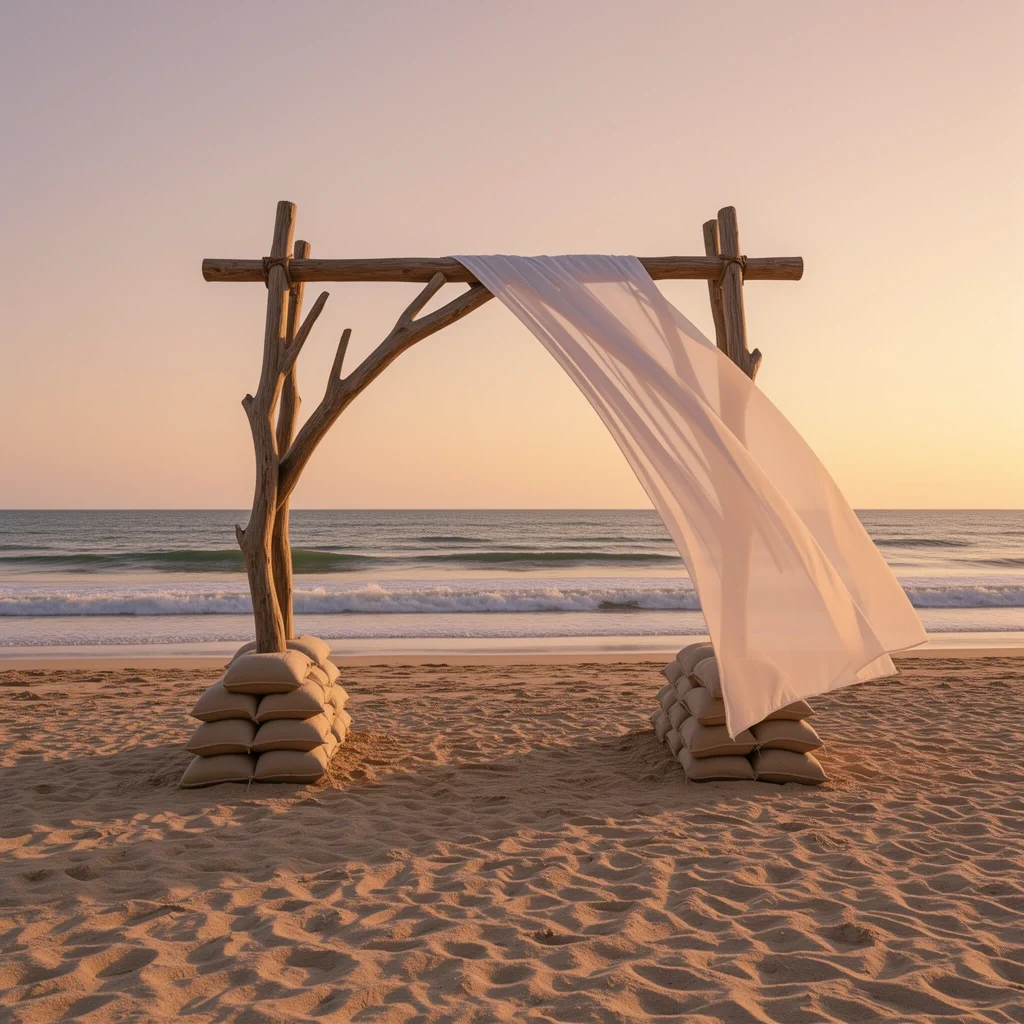
Wind and sand are your main challenges. Skip heavy drapery and tall structures that can topple. Instead, use driftwood arches, low A-frames wrapped in seashell garlands, or a simple blanket spread on the sand with a few surrounding candles. A lightweight bamboo arch with sheer curtains that flutter naturally works well. Pro tip: anchor the base with sandbags or water weights. I once saw a stunning arch collapse minutes before the ceremony because the couple skipped that step.
Garden and Botanical Settings
Your advantage is existing greenery. Enhance it rather than hide it. Flower-covered arches, living walls of moss and ferns, or a tree-hung installation of hanging florals all blend beautifully. For a garden wedding I planned, we used a circular metal frame wrapped in ivy and roses — it looked like the garden grew the altar itself. Avoid anything too artificial; let nature be the star.
Barn and Rustic Venues
Wooden pergolas, vintage mantles repurposed as backdrops, and hay bale accents fit right in. A simple wooden A-frame with dried flowers and burlap ribbons is both affordable and charming. I have also seen couples use an old window frame as a backdrop — just lean it against a hay bale. Pro tip: if the barn has a large door, consider using the door frame as your altar and decorate the top with greenery only.
Modern and Industrial Lofts
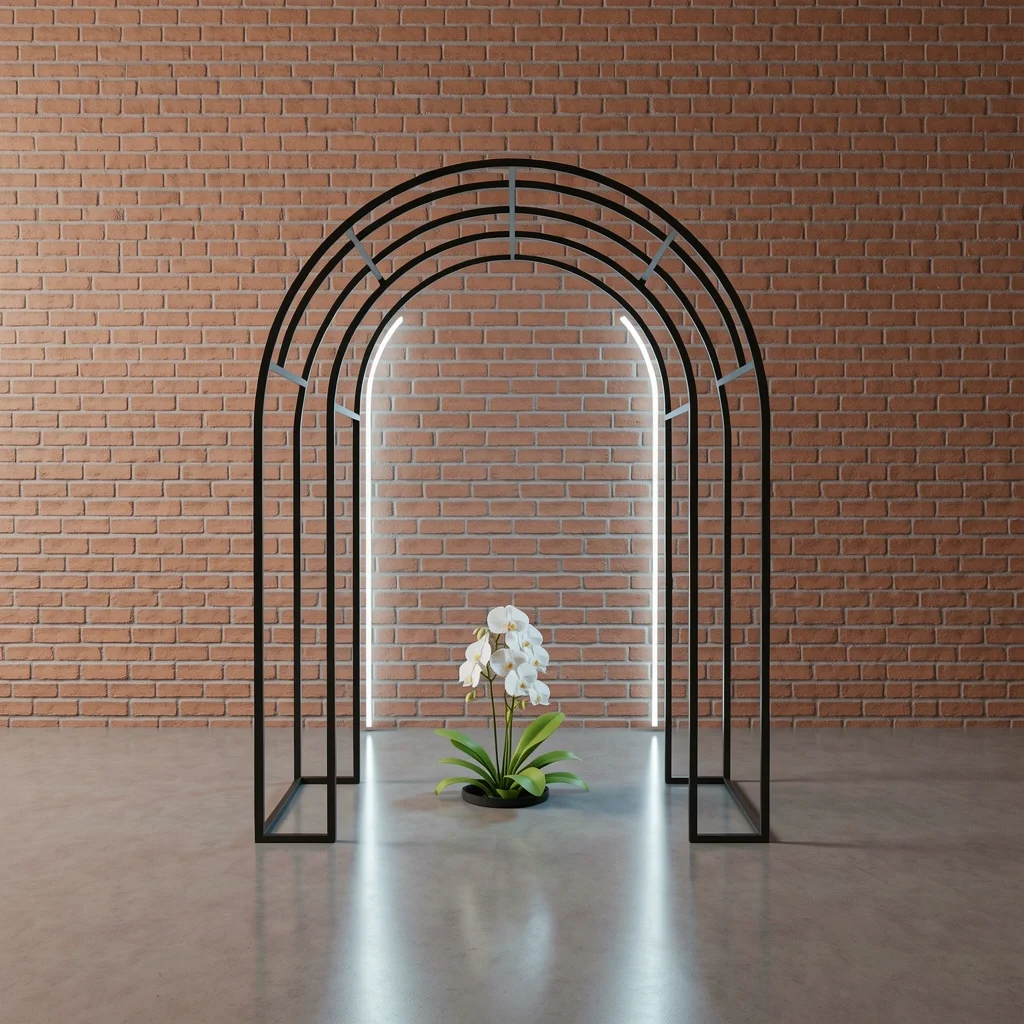
Clean lines, monochrome palettes, and geometric shapes work best. A black metal arch with white florals, a hanging installation of clear acrylic rods, or a single large circle frame with greenery. For an industrial space, one couple used a large black metal rectangle with neon lights spelling their initials. The contrast against raw brick walls was stunning. Keep it minimal — too much decoration fights the architecture.
Desert and Arid Landscapes
Low wooden A-frames, pampas grass bundles, and earthy rugs create a grounded look. Cacti in terracotta pots arranged on either side of a simple arch bring in local character. Pro tip: avoid anything white or shiny that will reflect harsh sunlight. Use matte finishes and neutral tones. For a desert ceremony, I helped a couple build a low triangular frame from reclaimed wood, draped with a single swath of linen — it cost less than $100 and looked intentional.
Church and Traditional Venues
Less is more. Let the existing architecture lead. A single floral spray on the altar, a candelabra behind the couple, or greenery cascading from a stone ledge. For a church wedding, I suggest using the pulpit or chancel area as the altar and adding one large arrangement of white flowers. Do not add a freestanding structure inside a historic church — it feels like a stage set, not a sacred space.
Couples seeking to enhance the spiritual atmosphere may consider a wedding day devotional to center your hearts before God as part of the ceremony.
(Quick reference: table below summarizes venue matches.)
| Venue Type | Best Altar Styles | Key Consideration |
|---|---|---|
| Beach / Coastal | Driftwood arch, low A-frame, blanket setup | Wind resistance, anchor points |
| Garden / Botanical | Flower arch, living wall, tree-hung | Complement existing greenery |
| Barn / Rustic | Wooden pergola, vintage mantle, A-frame | Keep natural wood tones |
| Modern / Industrial | Metal geometric frame, hanging installation | Minimal, monochrome colors |
| Desert / Arid | Low wooden frame, pampas, earthy rugs | Matte finishes, avoid glare |
| Church / Traditional | Single floral spray, candelabra, existing architecture | Do not overshadow the space |
Altar Styles That Amplify Your Wedding Theme
Once you know your venue, refine by aesthetic. These style categories help you choose floral arrangements, materials, and colors that match the mood you want.
Boho and Free-Spirited
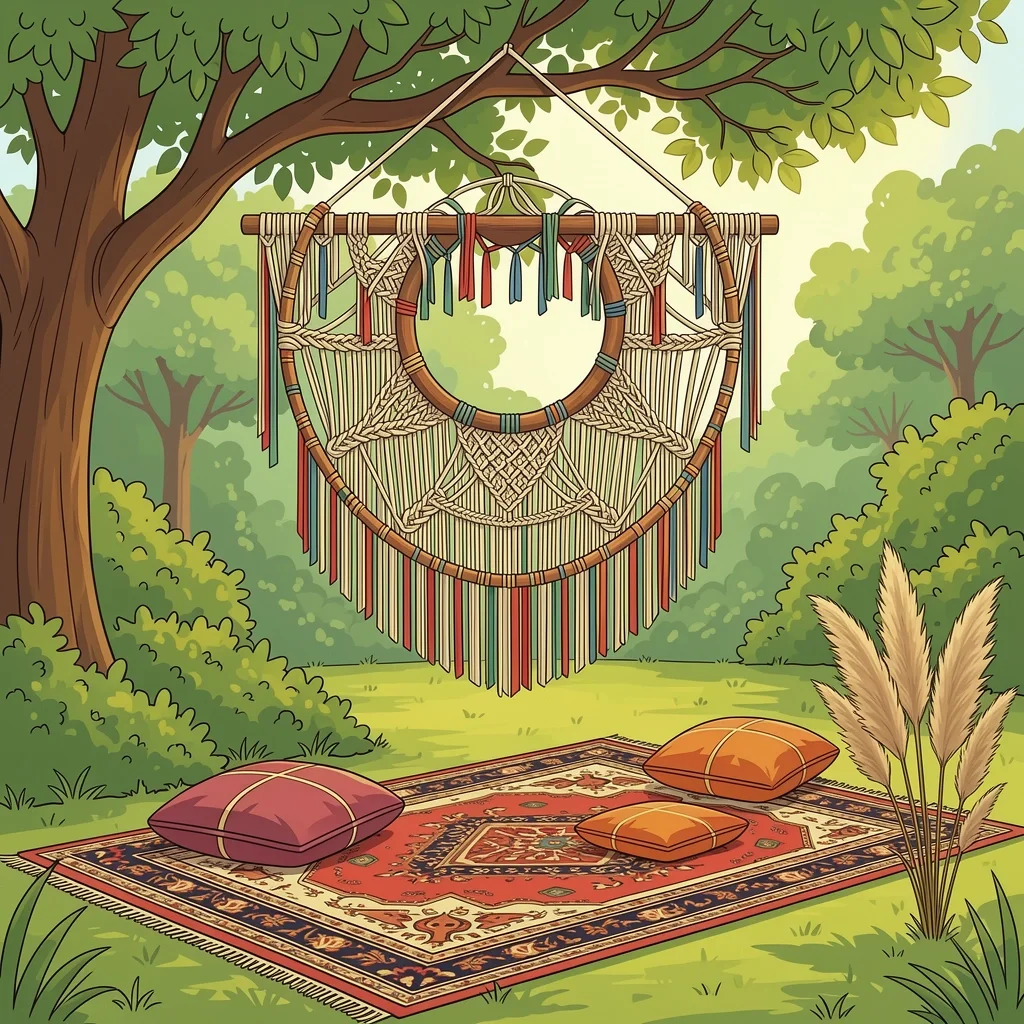
Macramé backdrops, dream catchers, ribbon streamers, and low-floor seating on Persian rugs. Use dried pampas grass, feathers, and earth tones. A simple wooden arch with macramé hangings and a few eucalyptus sprigs is easy to DIY. For a boho wedding I worked on, we hung dozens of dyed ribbons from a circular frame — guests loved the movement in the breeze.
Romantic and Garden-Party
Cascading florals, tulle, rose-covered arches. Think soft pinks, ivories, and lush greenery. A chuppah wrapped in roses with trailing ivy is quintessential romantic. Pro tip: ask your florist to use flowers that will hold up in heat — peonies can wilt quickly. Garden roses are more resilient.
Minimalist and Modern
Clean lines, single materials, negative space. A black metal arch with one large orchid spray, a white acrylic backdrop, or a simple wooden frame with no decoration except the couple. For a modern look, I suggest a single rectangular frame in brushed gold, with only a few stems of eucalyptus at the base. Less really is more.
Rustic and Earthy
Birch logs, dried flowers, candle clusters, burlap. Use natural textures like cedar, slate, and cotton. A log pile altar (stacked birch logs with candles on top) is extremely cheap and warm. One couple used a vintage ladder as the altar, with greenery woven through the rungs. It felt both personal and rustic.
Tropical and Colorful
Monstera leaves, vibrant orchids, bamboo frames. Bright colors like fuchsia, orange, and lime. A bamboo arch with hanging monstera and bird of paradise flowers makes a bold statement. For a tropical beach wedding, we used a frame of bamboo with cascading orchids — the fragrance was as memorable as the look.
Budget, DIY, and Practical Realities
Now for the part most articles skip: how much does this cost, and can you build it yourself? Here is a realistic breakdown based on what I have seen work for couples.
DIY-Friendly Altar Ideas Under $150
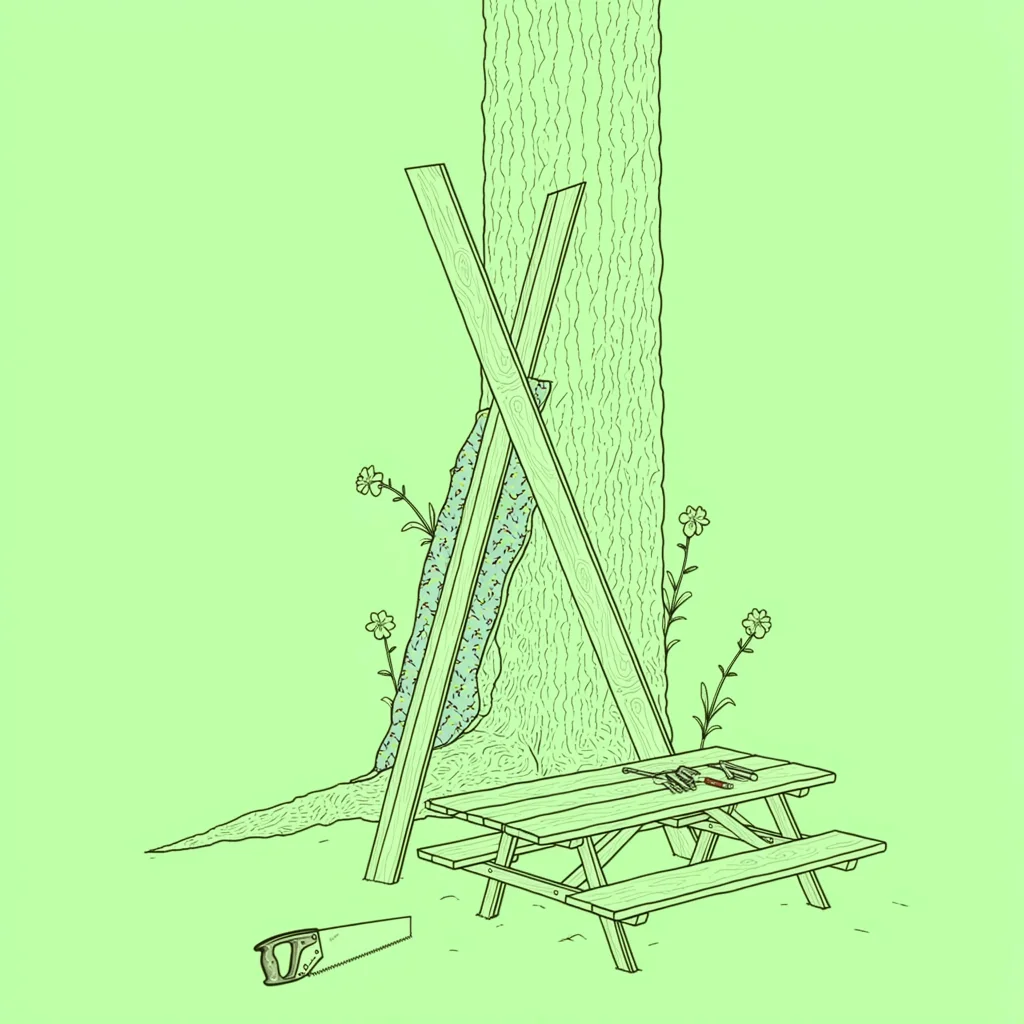
- Blanket swag — Drape a patterned blanket over a tree branch or a simple wooden frame. Add a few wildflowers from a farmer’s market. Total cost: $30–50.
- Candle display — Arrange 20–30 pillar candles of varying heights on a wooden crate. Use battery-operated candles if your venue forbids open flames. Cost: $40–70.
- Potted plant wall — Rent or buy 10–12 potted ferns or snake plants and arrange them in a semicircle behind the couple. Cost: $60–100.
- Simple A-frame — Buy two 2x4s and a crossbeam from a hardware store, wrap with fabric or greenery. Total: under $50 not including fabric.
Step-by-step for the A-frame: cut two 8-foot boards at a 60-degree angle at the top. Attach a crossbeam 6 feet up. Paint or stain. Lean against each other to form an A. Add greenery or fabric with zip ties. Setup time: 1 hour.
Mid-Range Splurges ($500–$1,500)
- Rental arch with floral accent — Most rental companies offer a metal or wooden arch for $150–300, plus a florist adds a half-dozen arrangements for $400–800. Total: $550–1,100.
- Custom macramé backdrop — A large macramé piece (6×8 feet) from an Etsy seller runs $300–600. Add greenery garlands for $100–200. Total: $400–800.
- Chuppah structure rental — Four poles and a canopy top rent for $250–500. Florals for the poles add $300–600. Total: $550–1,100.
Luxury Statements ($2,000+)
- Full floral installation — Expect $2,000–5,000 for a dense flower wall or arch covered entirely in blooms. This is the way to go if flowers are your priority.
- Custom metalwork — A wrought-iron arch with your initials, or a geometric sculpture, can cost $2,000–4,000. Keep it as a keepsake for your garden.
- Suspended garden — Hanging florals from a ceiling or tree structure, with lighting, can run $3,000+. A stunning effect but requires professional rigging.
Renting vs. Building vs. Hiring
If you have a Saturday to spare, building an A-frame is easy. If you want a polished look and have $500+, rent. If you want a showstopper, hire a professional florist or designer. My rule of thumb: anything involving heights, electricity, or heavy structures should be hired out. I once saw a DIY chuppah collapse because the poles were not secured — the couple ended up using chairs as an altar. Not the look they wanted.
Logistics Checklist
- Weather contingency: have a backup plan if wind or rain is forecast. Will the altar be moved indoors? Can it be disassembled quickly?
- Structural stability: test the altar before the ceremony. Shake it. If it wobbles, add sandbags or stakes.
- Transport: can the altar fit in a car? Measure before building or buying.
- Setup time: allow at least two hours for a DIY build, one hour for a rental delivery and assembly.
How Your Altar Connects to Aisle, Seating, and Photography
An altar does not exist in a vacuum. It interacts with everything around it. Ignore these connections, and you end up with a beautiful altar that no one can see well or that clashes with the aisle.
Sightlines. If you choose a low altar (like a blanket on the ground), make sure guests in the back can see. Elevate the couple slightly, or use stadium seating if the altar is ground-level. For a ceremony in the round, keep the altar low enough that guests behind can see over it — but still high enough to create a focal point.
Aisle harmony. Repeat materials or colors from the altar in aisle markers or petals. If the altar uses roses and eucalyptus, scatter rose petals and eucalyptus leaves along the aisle. This creates a visual flow that guides the eye. One couple used the same macramé from the altar as aisle chair decor — seamless.
Photo-friendly design. The altar should frame the couple, not distract from them. Avoid busy patterns that pull the eye. Solid backdrops in neutral tones work best. Also consider light: if the altar is in direct sun, ensure it does not cast harsh shadows on the couple’s faces. A sheer fabric overhead can diffuse light beautifully.
Multi-use after the ceremony. Many altars can be repurposed as photo booths, welcome sign backdrops, or sweetheart table accents. I always tell couples to plan for this. If you rent a beautiful arch, move it to the reception entrance after the ceremony. It saves money and gives guests more photo ops.
What to Avoid When Designing Your Altar
After planning many ceremonies, here are the common mistakes I see most often — and the simple fixes.
- Blocking a stunning view. If your venue overlooks a lake or mountains, do not put a tall solid structure in front of it. Use a low frame or a transparent backdrop. Fix: keep the altitude below the horizon line.
- Choosing a structure too large for the space. A massive arch in a small garden makes everything feel cramped. Fix: measure the width and height before buying. The altar should occupy no more than one-third of the visible space.
- Ignoring wind and sun angles. A sheer curtain that blows into the couple’s faces or a white arch that blinds everyone in late afternoon. Fix: test on site at the same time of day. Use heavier fabric if windy, position the altar so the sun is behind the couple.
- Mismatching altar and aisle styles. A modern black metal arch with a rustic burlap aisle runner looks disjointed. Fix: keep one consistent material or color through both.
- Forgetting the officiant’s sightline. The officiant needs to stand comfortably without blocking the view of the couple. Fix: position the officiant to the side, not directly behind the altar.
Frequently Asked Questions
Can I use my wedding arch for the reception as well?
Yes, often. If the arch is lightweight and easy to move, relocate it to the reception space for a photo booth or entrance feature. Just ensure it matches both ceremony and reception decor. Many couples rent one structure and use it twice.
How far in advance should I set up the altar?
For a DIY altar, set it up the day before or morning of the ceremony, leaving at least two hours for adjustments. For rentals, arrange delivery the day before if possible. Never trust same-day setup if weather is uncertain.
What if my venue already has a beautiful natural backdrop? Should I still add an altar?
Not necessarily. If the natural feature (waterfall, large tree, cliff) is stunning, you can simply mark the spot with a small bouquet or a rug. Adding a full arch can detract. I often suggest a single pillar arrangement on either side — enough to frame the couple without competing with nature.
Do I need a professional florist, or can my planner handle altar decor?
If you want a complex floral installation, hire a professional florist. Planners can handle simple decor like draping fabric or setting up candles. For a moderate design (half-dozen arrangements on an arch), either can work. Discuss with your planner first; they may subcontract a florist anyway.
What’s the best altar shape for a ceremony with a large wedding party?
For a big bridal party (more than 10 people), choose an arch or chuppah that is wide enough to allow the couple and officiant to stand comfortably, with the party flanking them. A round backdrop works well for ceremonies in the round. Avoid a narrow arch that makes everyone squeeze together.
How can I involve family members in building the altar?
Assign a specific task to each person: one family member can paint the frame, another can attach greenery, another can set up candles. I have seen families gather the day before and turn the altar build into a fun potluck. Just have clear instructions and measured cuts prepared in advance so no one gets frustrated.