

If you are searching for a marriage devotional for couples, you have probably seen the same list of eight or ten books recommended over and over. Those lists are helpful, but they skip a bigger question: how do you pick the right devotional for your marriage? And once you pick it, how do you actually make it work without it feeling awkward or forced?
A marriage devotional is not just a Bible study you do side by side. It is a tool designed to help you and your spouse build shared spiritual intimacy. The difference matters. An individual devotional feeds your own faith. A couple devotional creates a third space where both of you meet God together. This guide will walk you through the decision process, the hidden challenges, and the practical habits that turn a devotional from a chore into a lifeline.
Why a Shared Devotional Matters More Than a Shared Schedule

Most couples already struggle to sync calendars. Adding another appointment can feel like pressure. But a shared devotional is not about filling a time slot. It is about creating a rhythm of vulnerability that nothing else quite provides.
When you pray alone, you carry your own concerns. When you pray together, you learn what weighs on your spouse. When you read Scripture alone, you interpret it through your own lens. When you read it together, you discover angles you would have missed. That exchange builds a kind of intimacy that date nights and conversations about logistics cannot reach.
Using marriage devotionals for couples can help spouses establish a consistent rhythm of prayer, Scripture reading, and meaningful conversation.
One common mistake is treating a marriage devotional like a substitute for counseling. If you have deep wounds or ongoing conflict, a devotional can support healing, but it will not replace the work of professional help. The devotional shines in the everyday—keeping your connection alive, reminding you why you said yes in the first place, and giving you a shared language to talk about faith.
How to Choose a Marriage Devotional Based on Your Relationship Stage
The best marriage devotional for you depends entirely on where your marriage is today. A book that works beautifully for a couple celebrating fifty years will likely fall flat for a couple in their second year. Here is a stage-based framework to help you evaluate any resource.
Stage 1 – Newlywed and Early Years
Your goal is bonding and establishing healthy patterns. Look for devotionals that are short (five to ten minutes per reading) and focus on communication, conflict resolution, and building shared routines. The tone should be warm and encouraging, not corrective. Avoid anything that assumes you already have deep habits of prayer together. You are still learning each other’s spiritual language.
Stage 2 – Mid-Marriage and Parenting
Life is loud. Kids, careers, and exhaustion can push your marriage to the margins. A devotional for this stage needs to be realistic about time. Look for readings that can be done in ten to fifteen minutes and include application questions about teamwork, managing stress, and prioritizing your relationship amid chaos. The best ones acknowledge that some days you will read with one eye open and that is okay.
Stage 3 – Crisis or Repair
When trust has been broken or the marriage is strained, a standard devotional can feel hollow. You need a resource that addresses pain directly—forgiveness, trust, rebuilding. Look for devotionals written by authors who have walked through their own marriage crises. The tone should be honest and humble, not preachy. Avoid any devotional that uses guilt to motivate. You need grace, not another burden.
Stage 4 – Empty Nest and Late Marriage
The kids are gone, retirement is near, and you have more time alone together. This stage is about reconnection and legacy. Look for devotionals that focus on shared purpose, generosity, and spiritual legacy. Readings can be longer because you have more margin. The best ones help you dream together about what comes next.
The Hidden Barrier – Spiritual Disparity in Couples

One of the most common frustrations I hear is this: “I am more into our faith than my spouse. The devotional makes them feel inadequate, so they shut down.” If that sounds familiar, you are not alone. Spiritual disparity is normal, and it does not mean you cannot do devotionals together.
The key is to shift the goal from teaching to connecting. Instead of picking a devotional that digs deep into theology, choose one that is story-based and invites conversation rather than correct answers. Start with five minutes. Read a short passage and ask one question: “What stood out to you?” Do not correct their answer. Do not use the devotional as a way to explain what they are missing.
I have seen couples where one spouse is skeptical and the other is devout thrive using devotionals that focus on marriage itself rather than overt doctrine. A devotional about kindness or patience can open a door that a doctrinal study would slam shut. Over time, the skeptical spouse often becomes curious because they see how the practice changes the relationship.
How to Make Your Devotional Time Stick (Beyond the First Week)
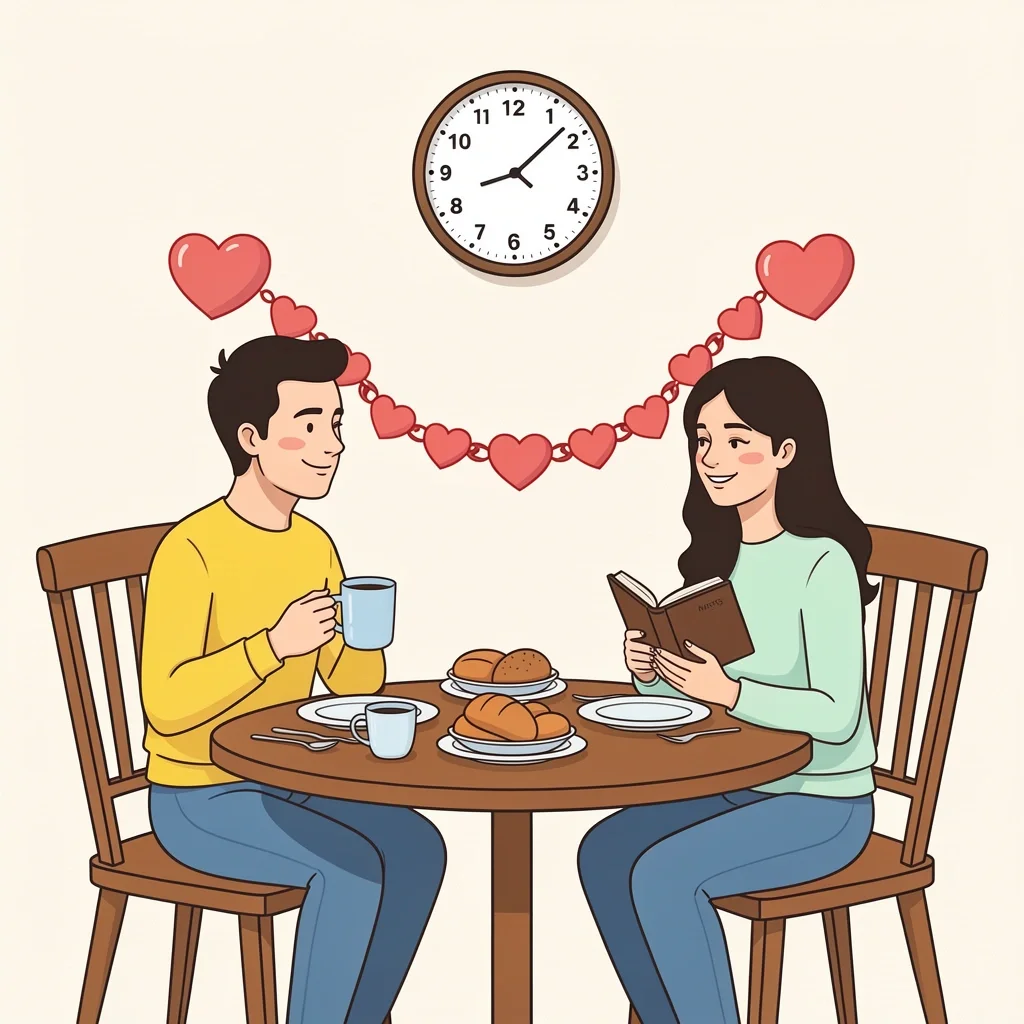
Starting is easy. Sticking with it is where most couples fall off. Here is what actually works.
- Keep it short. Fifteen minutes is the sweet spot. If you have less time, five minutes is still valuable. Do not let perfect become the enemy of done.
- Pick a consistent time and place. Morning works for some, evening for others. The specific time matters less than the cue. Tie it to something you already do, like having coffee or brushing teeth.
- Handle missed days with grace. If you skip a day or a week, do not try to catch up by reading multiple entries. Just pick up from where you left off or start fresh. Guilt kills momentum.
- Turn reading into dialogue. After you read the devotional passage, ask each other one open-ended question. “What did this stir in you?” “How does this connect to something we are dealing with right now?”
- Know when to pivot. If you dread the devotional time, or if you find yourselves arguing after reading, the resource is not working. Switch to a different one. Not all devotionals fit all marriages.
Red Flags – Common Pitfalls That Undermine Couple Devotionals

Even with the best intentions, couples often fall into traps that sabotage the experience. Here are the ones I see most often.
- The checklist trap. Reading without reflecting. You finish the page but cannot remember what you read. Combat this by pausing after each reading and each person says one word that sums up what they heard.
- Using the devotional as a weapon. It sounds like: “See? The Bible says you should be more patient.” That approach turns the devotional into a tool for criticism. Instead, focus on “I” statements: “I realized I need to work on listening better.”
- Expecting emotional breakthroughs every time. Some sessions will feel flat. That is normal. The value of a devotional is cumulative, not instantaneous. Do not measure success by how moved you feel; measure it by whether you showed up together.
- Skipping the prayer prompt. Many devotionals include a short prayer. Couples often rush past it because praying aloud feels awkward. But that prayer is often the most powerful part. It forces you to verbalize your needs and your gratitude in front of each other. Do not skip it. Even a one-sentence prayer is enough.
Frequently Asked Questions
Can we use a digital devotional on our phones, or is a physical book better?
Both work, but a physical book can reduce distractions because you are not tempted to check notifications. If you use a phone, put it in airplane mode during devotional time.
How do we find free marriage devotionals online?
Many churches and ministries offer free email series or app-based devotionals. You can also find short devotionals on sites like YouVersion Bible App, which has hundreds of plans specifically for couples.
For couples looking for a more tailored resource, our Engaged Couples Devotional: The Complete Guide to Choosing and Using One can help you find the perfect fit.
Should we do the same devotional every day or rotate?
Stick with one devotional until you finish it. Rotating mid-stream can feel disjointed. The exception is if the devotional is clearly not working—then switch without guilt.
What if we have very little time? Is five minutes enough?
Five minutes is absolutely enough. Read one verse and one short reflection. Spend two minutes discussing it. End with a one-sentence prayer. Consistency over duration is what builds intimacy.
How do we transition from a devotional to a full Bible study together?
After you finish a few devotionals, you may feel ready to go deeper. Look for a Bible study that covers a book of the Bible or a specific topic you both care about. Treat it the same way—short sessions, conversational, no pressure.