

Getting the number wrong on your wedding hotel block can cost you hundreds of dollars in penalties – or leave your guests scrambling for overpriced rooms. The standard advice from most wedding websites is a generic percentage table: block 30-60 rooms for 100 guests. But that one-size-fits-all approach ignores what actually matters: where your wedding is, what your guests will really do, and which type of block you choose.
After helping dozens of couples negotiate room blocks over the years, I have learned that the number is never just a percentage. It is a calculation based on your unique guest behavior. In this guide, you will get a step-by-step system to find your exact room count, choose between a courtesy and contracted block, and protect yourself from financial risk.
Understanding What You Are Actually Calculating
Most couples start with their total guest count. That is the wrong number. Your starting point should be the number of out-of-town guests who will actually need a hotel room. Local guests who live within driving distance rarely book a room, even if they plan to drink. People who live nearby often crash with friends or drive home after the reception.
The real number you need is: out-of-town guests who will stay overnight. This number is typically much smaller than your total guest list. For a local wedding, only 30-50% of guests may be from out of town. For a destination wedding, that number jumps to 80-100%.
You also need to factor in how many rooms those guests will fill. Couples share a room. Families share a room. Friends often split a room. The average room occupancy for a wedding block is two people per room. So if you have 100 out-of-town guests, you do not need 100 rooms. You likely need somewhere around 50 rooms – but that number will shift based on how many guests book outside your block (Airbnb, staying with family) or how many book inside your block.
The real calculation has three variables: the number of out-of-town guests, the average people per room, and the “take rate” – the percentage of guests who will book through your block versus finding their own lodging.
How to Get Real Data Before Signing Anything

The biggest mistake couples make is guessing. They ask friends and family “are you coming?” and assume everyone who says yes needs a room. But many guests change their minds about travel, or they decide to book an Airbnb instead.
There is a simple way to get accurate data before you sign a contract: run a two-question survey.
- Are you planning to attend the wedding? (Yes / Maybe / No)
- If yes, how will you handle accommodations? (I plan to book a hotel / I plan to stay with family or friends / I plan to use an Airbnb or other rental / I am local and will not need a room)
Send this survey at the same time you send save-the-dates. The responses will tell you how many out-of-town guests need lodging, and how many of those plan to use a hotel.
Once lodging is sorted, you can shift focus to other fun planning details like picking out the best bridal shower games for your celebration.
There is always a “say vs. do” gap. People who say they will book a hotel might not actually book through your block. Based on my experience, expect about 70-80% of those who say “hotel” to actually use your block. The rest will book directly with the hotel at a different rate, use points, or change their plans.
Use the survey results to adjust your estimate. Take the number of guests who said “hotel” and multiply by 0.75. Then divide by 2 (for average occupancy). That gives you a preliminary room count.
Using Your RSVP Timeline to Test Demand
If you have a courtesy block (no financial commitment), you can start with a conservative number and add more rooms as guests book. But if you are considering a contracted block (with an attrition clause), you want to gather real data first. Wait until you have at least 60-70% of RSVPs in before finalizing a contracted block. This way you are not flying blind.
The Multi-Variable Formula (Not Just Percentages)
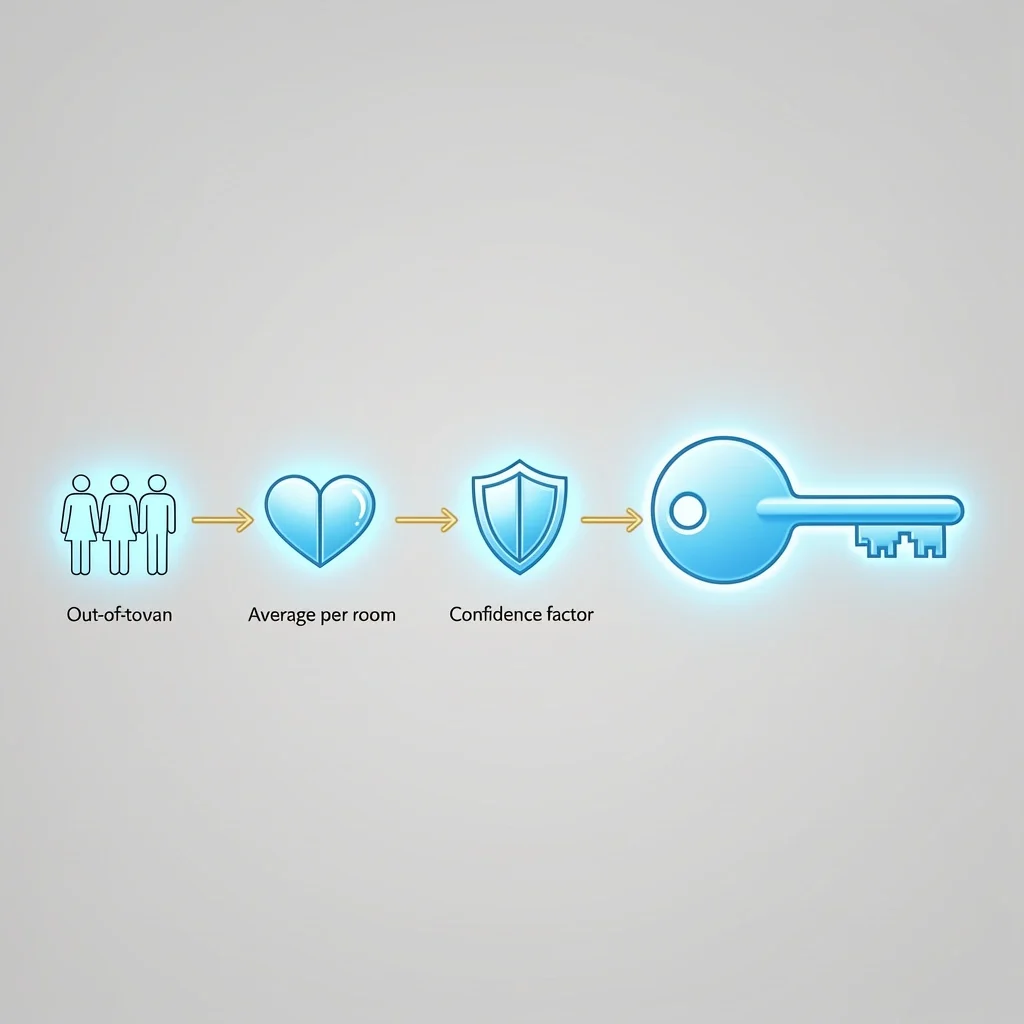
Here is a reliable formula that takes into account your specific situation:
Rooms to block = (Out-of-town guests who need lodging ÷ Average people per room) × Confidence factor
- Out-of-town guests who need lodging: Use your survey data. If you did not do a survey, estimate: for a local wedding, count guests who live more than a 90-minute drive. For a destination wedding, count everyone except the couple and any local family.
- Average people per room: Use 2 for most weddings. If you have many families with kids, adjust to 2.5 or 3. If your crowd is mostly single friends, use 1.5.
- Confidence factor: This is where you adjust for the type of block and your certainty. For a courtesy block with no financial risk, you can use 0.9 (block high, release early). For a contracted block with an attrition clause, use 0.7 to 0.8 to leave a safety buffer.
Let us run an example. You have 200 total guests. 120 are out-of-town. Your survey shows 90 of those 120 plan to use a hotel. You estimate 2 people per room on average. Your base need is 90 ÷ 2 = 45 rooms. If you are doing a courtesy block, block 45 × 0.9 = 40-45 rooms. If you are doing a contracted block with attrition, block 45 × 0.7 = 32 rooms (you can add later).
Special Adjustments
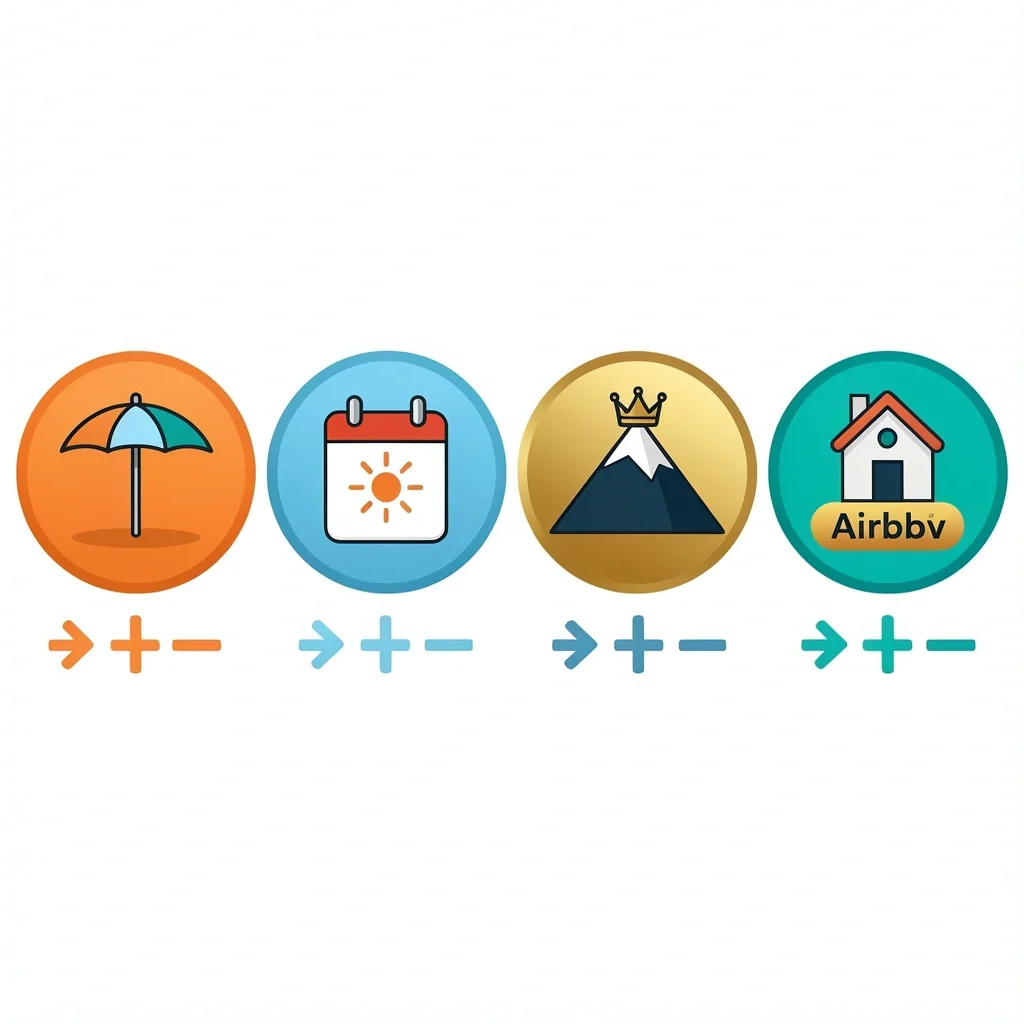
| Factor | How It Changes the Number |
|---|---|
| Destination wedding | Nearly all guests fly in. Add 10-15% to your base need because more people will stay extra nights. |
| Sunday wedding | Fewer overnight bookings. Subtract 30-40% from your base need. Many guests drive home Sunday night. |
| Peak tourist season | Hotel rooms are scarce. Block higher (use confidence factor 0.95) because you need to lock rooms early. |
| Many Airbnb options | Guests will opt out of your block. Reduce your base need by 20-30%. |
Spreading Rooms Across Multiple Hotels
Most couples block rooms at two or three hotels to offer different price points. But if you are not careful, you can accidentally block more rooms than you need, creating confusion and potential attrition penalties across multiple properties.
The smart way to distribute rooms is the “primary plus overflow” method.
- Primary hotel: Block 60-70% of your total estimated need. This is the hotel closest to the venue or with the best rate.
- Overflow hotel: Block 30-40% of your need at a second hotel with a higher rate or farther location. This catches guests who book late or prefer the other option.
- Optional third hotel: Only if you have a very large wedding (200+ out-of-town guests) or a wide range of budgets. Block a courtesy block at a budget property with 10-15 rooms.
When you have multiple blocks, avoid giving guests a list of three hotels and letting them choose. Instead, present the primary hotel as the recommended option and mention the overflow as a backup. This prevents guests from spreading themselves across all blocks, leaving the primary hotel unfilled while the overflow sits empty.
Primary + Overflow vs. Tiered Pricing

If all hotels are roughly the same distance from the venue, use a tiered pricing strategy: block the best rate at the primary hotel, a mid-rate at the overflow, and a luxury option if needed. The goal is to give guests a clear choice – not scatter them.
The Confidence Spectrum: Choosing Between Courtesy and Contracted Blocks
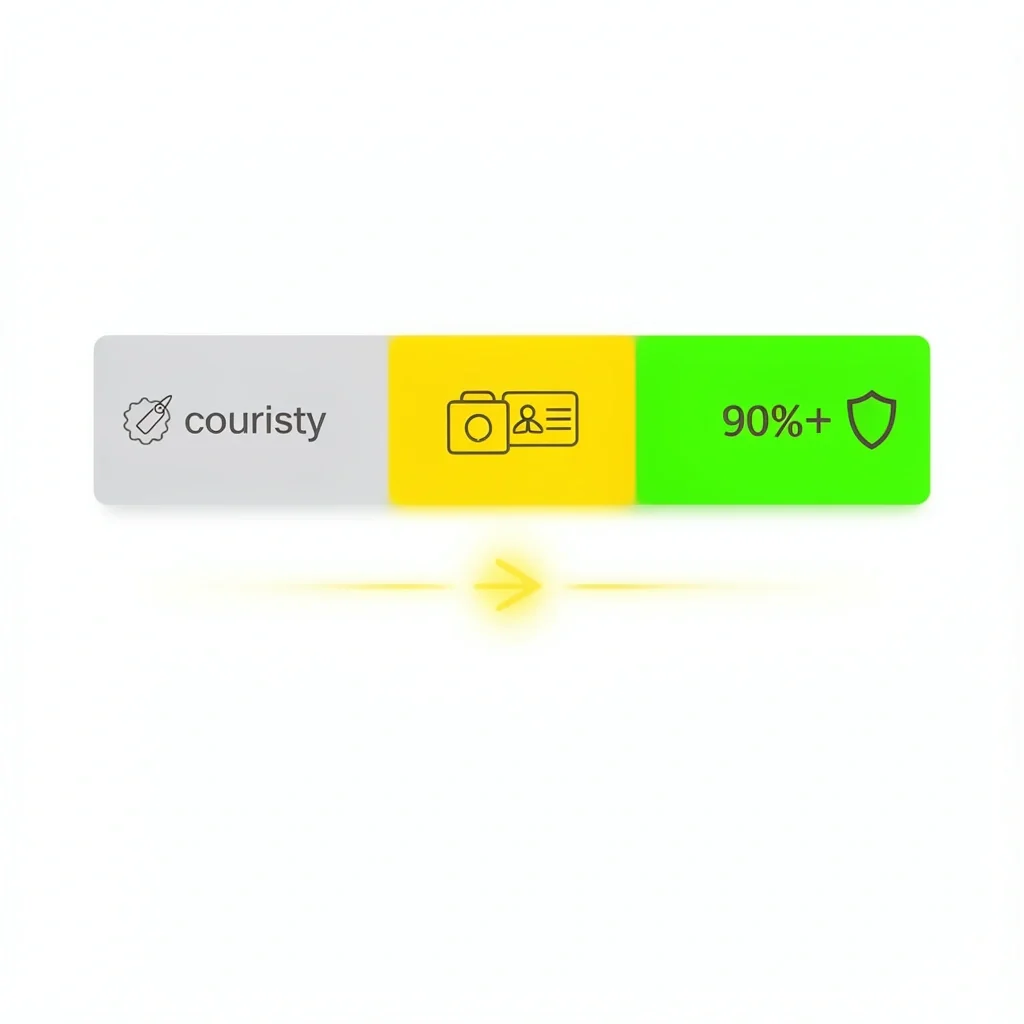
Not all room blocks are equal. The type you choose depends on how sure you are about your numbers.
Here is a decision matrix to help you decide:
| Confidence Level | What That Means | Best Block Type | How Many Rooms to Block |
|---|---|---|---|
| 90% or higher | You have hard RSVPs from out-of-town guests who confirmed they will book the hotel. You have a contract signed. | Contracted block | 85-90% of estimated need. You can add rooms later. |
| 70-89% | You have good survey data but some may change plans. A few guests may use Airbnb. | Contracted block with low attrition (10-15%) OR a courtesy block | 70-75% of estimated need for a contracted block; 80-90% for a courtesy block. |
| Below 70% | You are guessing. Many guests are local, or you have not sent save-the-dates yet. | Courtesy block only | Block 50-60% of estimated need. No financial commitment. |
If you choose a courtesy block, you have the option to convert it to a contracted block later if demand is high. Hotels often allow this at a small rate increase. The key is to start conservatively.
Contract Clauses That Protect You From Bad Guesses

Even with the best formula, you might miscalculate. That is why you need to understand the clauses in your hotel block contract.
Allowable Shrinkage
This is the percentage of rooms you can release without penalty before the cut-off date. Aim for 10-20%. For example, if you block 30 rooms and your shrinkage clause is 20%, you can release up to 6 rooms (30 x 0.2) without paying anything.
Attrition Clause (Minimum Commitment)
This is the percentage of your block you must fill to avoid paying a penalty. Negotiate for 80% or lower. If your attrition is 80% and you block 30 rooms, you need 24 rooms booked. If only 20 book, you pay for 4 unused rooms.
Mitigation Clause (Resell Clause)
This clause says the hotel must try to sell your unused rooms to the public. If they sell them, you are not charged. Always ask for this. It protects you from paying for rooms that the hotel ends up renting anyway.
Cut-Off Date
This is the last day guests can book at your group rate. Standard is 30 days before check-in. Negotiate for 21 days if you have a shorter planning timeline. After the cut-off date, any unbooked rooms are released to the public.
Add-As-You-Go Strategy
Instead of blocking a large number upfront, start small and add rooms as guests book. Most hotels allow you to add rooms to a block – even a contracted one – as long as space is available. The downside is that you may not get the same low rate for additional rooms. But it is often safer than blocking too many and paying attrition fees.
Frequently Asked Questions
Should I include the wedding party in my room block count or book them separately?
Separate. The wedding party often needs different room types (suites, rooms close together) and may have different budgets. Handle their accommodations individually outside the general block. This keeps your block simple and avoids confusion.
What if guests want to arrive earlier or stay later than my block dates?
Ask the hotel about “extend stay” policies when you negotiate. Some hotels allow early or late arrivals at the group rate even if they fall outside the block dates. Most do not advertise this, but it is often possible if you ask.
How do I handle a guest who wants a room type I did not block (like a suite)?
Ask the hotel if they can add a small allocation of a different room type without changing your minimum commitment. Some hotels will create a separate mini-block of suites (2-3 rooms) with no attrition. If they cannot, the guest can book a suite at the regular rate – just let them know.
My wedding is on a Sunday. Does that change how many rooms I need?
Yes, significantly. Sunday weddings see 30-40% fewer overnight bookings because guests take Monday off work or drive home Sunday night. Reduce your block number by about a third.
What is the minimum number of rooms that makes a block worthwhile?
Most hotels require at least 10 rooms for a contracted block. For smaller weddings under 50 guests, use a courtesy block or skip the block entirely. Instead, recommend a few nearby hotels on your wedding website without formal arrangements.