

If you are planning a wedding and considering hiring a videographer, the first thing you want to know is the cost. Based on data from The Knot and WeddingWire, the national average for a wedding videographer falls between $1,700 and $2,300. But that number only tells part of the story. I have worked with dozens of couples as a wedding planner, and I have seen prices range from $800 to over $8,000. The real question is not just the average but what you actually get for your money. In this article, I break down the factors that drive price, what different budgets deliver, and how to avoid common mistakes.
What the National Average Actually Means

The $1,700 to $2,300 figure comes from large studies surveying couples after their weddings. The Knot Real Weddings Study reports an average of $2,300. WeddingWire puts it closer to $1,799. Both numbers are useful as a starting point, but they hide huge variation.
Here is what those averages look like when you split couples into budget groups:
| Budget Group | Average Spent on Videographer | Typical Coverage Level |
|---|---|---|
| Lower 25% of budgets | Around $1,000 | One shooter, 4-6 hours, basic highlight reel |
| Middle 50% of budgets | $1,900 | One or two shooters, 6-8 hours, highlight + full ceremony |
| Upper 25% of budgets | Around $3,300 | Two shooters, 8-10 hours, cinematic film + trailers + raw footage |
These tiers help you understand where your budget falls. But the number alone does not tell you if a $2,000 quote is fair. That depends on factors we cover next.
Why Wedding Videographer Prices Vary So Much

Five key variables explain why two couples with similar weddings can get wildly different quotes.
Your Location
Videographers in cities with a high cost of living charge more. A professional in New York City or San Francisco typically asks 40 to 60 percent above the national average. The same videographer in rural Ohio or Texas might charge half that. Local competition also matters: areas with many wedding vendors tend to have more price options.
Hours of Coverage
Most packages are priced by the hour. A standard 8-hour coverage from getting ready to first dance costs more than a 4-hour ceremony-only package. Every extra hour adds between $100 and $300 depending on the videographer’s rate.
Package Level and Deliverables
A basic package usually includes one shooter, a 5-minute highlight reel, and maybe raw footage. Mid-range packages add a full-length edit, a shorter social media clip, and a second shooter. Luxury packages often include a cinematic film with custom music, drone footage, and multiple versions for different platforms.
Number of Shooters
A second shooter adds perspective and backup. It is essential for weddings with over 150 guests or multiple locations. Expect to pay 30 to 50 percent more for a second camera angle.
Editing and Post-Production
This is the most overlooked cost. A skilled editor spends 40 to 80 hours on a single wedding film. That time shows up in the price. Cheap videographers often outsource editing to cut costs, which can lead to delays and lower quality.
What Your Money Actually Buys at Different Price Tiers
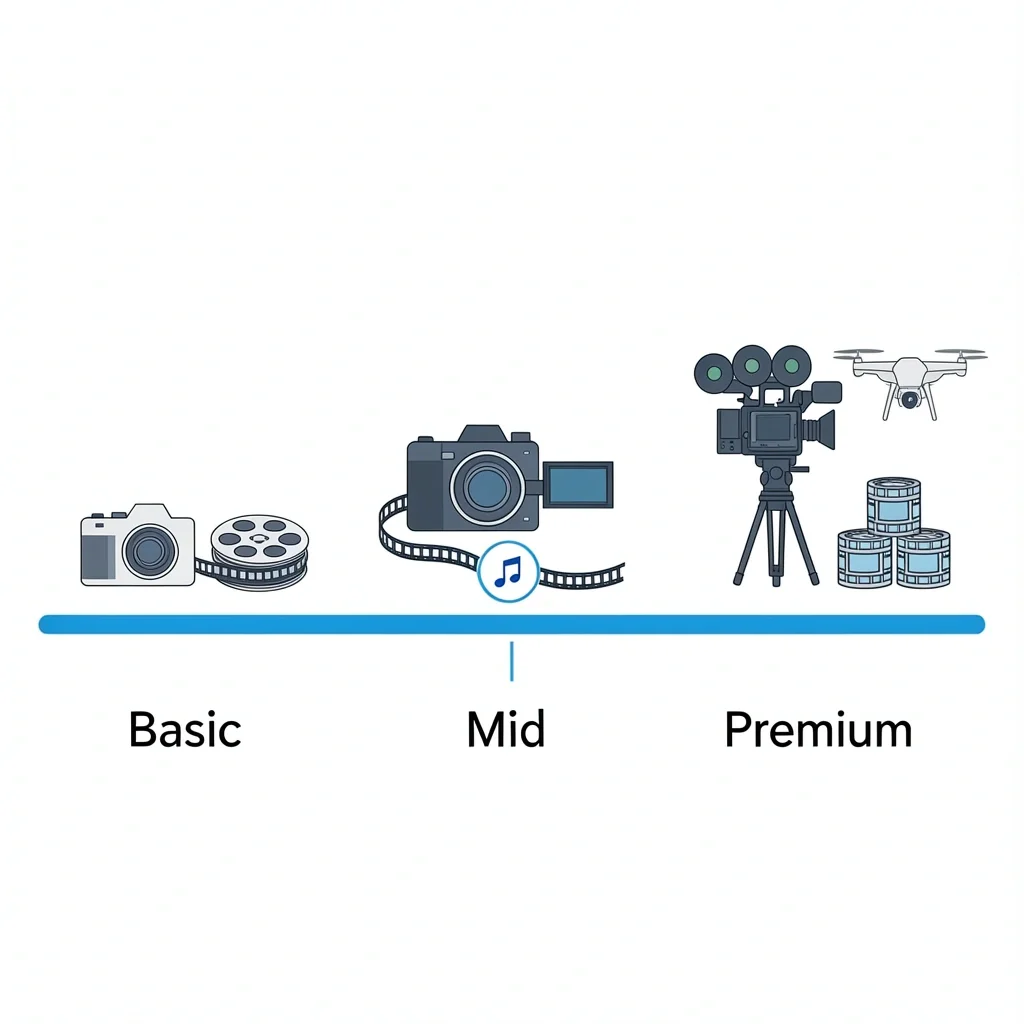
To help you compare quotes, here is a realistic breakdown of what to expect at three common price points. These examples assume an 8-hour wedding with one shooter unless noted.
| Price Point | $1,000 – $1,500 | $2,500 – $3,500 | $5,000+ |
|---|---|---|---|
| Shooters | One | Two | Two or three |
| Hours covered | 4 to 6 | 8 to 10 | 10 to 12+ |
| Deliverables | 5-minute highlight reel, raw footage | 15-20 minute cinematic film, 3-minute trailer, raw footage | Full feature film, multiple trailers, social media clips, drone footage, raw files |
| Equipment | DSLR or mirrorless camera, basic sound | Professional cinema camera, multiple mics, gimbal | Red or Sony cinema cameras, pro audio, drone, backup gear |
| Editing style | Simple cuts, music overlay | Cinematic color grading, custom music, audio clean-up | Hollywood-level editing, narrative structure, multiple revisions |
| Insurance and backup | Rarely | Usually | Always |
I once had a couple who paid $1,200 for a videographer that looked great in their portfolio. On the wedding day, the shooter was late, used a single camera with no backup, and delivered a film that looked exactly like every other cheap wedding video. They regretted not spending more for reliability and a cohesive story. On the other hand, a $2,800 package with two shooters and a thorough editor gave another couple a film they watch every anniversary.
Regional Price Benchmarks for 10 US Cities
Because national averages hide local differences, here is what you can expect to pay in 10 major cities. These ranges are based on cost-of-living data and reported prices from real couples. Remember that these are rough estimates; individual quotes will still vary.
| City | Typical Cost Range |
|---|---|
| New York City, NY | $3,000 – $5,000 |
| Los Angeles, CA | $2,800 – $4,500 |
| Chicago, IL | $2,200 – $3,800 |
| Dallas, TX | $1,800 – $3,200 |
| Atlanta, GA | $1,700 – $2,900 |
| Denver, CO | $2,000 – $3,500 |
| Seattle, WA | $2,500 – $4,000 |
| Miami, FL | $2,200 – $3,700 |
| Nashville, TN | $1,900 – $3,200 |
| Portland, OR | $2,000 – $3,400 |
If you are getting married in a smaller town or rural area, expect prices 30 to 40 percent lower than these city benchmarks.
Why Post-Production Is the Real Price Driver

Many couples think the main cost is the time the videographer spends filming on the wedding day. In reality, editing takes two to three times longer than filming. A single wedding day of 8 hours of footage can require 40 to 80 hours of editing time. That includes cutting, color grading, audio balancing, and assembling a coherent story.
Similarly, the cost of a day-of wedding coordinator is frequently underestimated, with many forgetting to factor in pre-wedding planning hours and vendor coordination fees.
Low-cost videographers often outsource editing to freelancers overseas to keep prices low. This can lead to turnaround times of six months or more, and the final product may not match the style in their portfolio. Ask any potential videographer: “Who edits your films and how many revisions do you offer?” If they are vague or say “we use a team,” ask to see a full-length wedding film, not just a highlight reel. A 5-minute reel hides a lot.
Another hidden issue: raw footage is not a good substitute for a polished edit. When a videographer offers raw footage as the main deliverable, it often means they are not confident in their editing. Raw clips are unwatchable for most couples because they include long pauses, bad audio, and unflattering angles. If you are on a tight budget, consider hiring a videographer for a short highlight film and then paying an independent editor to craft a longer version from the raw files. But check the contract – some videographers do not allow third-party editing of their footage.
Red Flags in Cheap Videographers When Affordable Costs More Later

A low price can be tempting, especially when you are trying to stick to a budget. But certain warning signs should make you think twice. Here is what to watch for:
- No written contract. A professional always has a contract that spells out deliverables, timeline, payment schedule, and cancellation policy. Without one, you have no recourse if they fail to show up or deliver poor work.
- No insurance. Most venues require vendors to carry liability insurance. If a videographer cannot provide proof, you may be refused entry or held liable for damages.
- Generic or overly polished portfolio. If every wedding in their gallery looks the same – same music, same angles – they may be using stock footage or stolen work. Ask for a full wedding film, not just a highlight reel.
- Unwilling to share contact info of past clients. A reputable videographer will happily connect you with previous couples for references.
- Overemphasis on raw footage. As mentioned, raw footage alone is not a complete product. If they push it as the main value, the editing is likely poor or nonexistent.
- Vague about gear and backup. Ask: “What cameras and microphones do you use? Do you bring backup equipment?” A professional always carries backups.
That said, affordable does not always mean bad. Some talented videographers are new to the market and charge lower rates to build their portfolio. To vet them, ask for a full-length sample and check reviews on multiple platforms. A couple of hundred dollars saved is not worth a stressed wedding day or a missing film.
How to Find the Right Videographer for Your Budget

Once you have a realistic idea of costs, follow these steps to narrow your options:
- Define your must-haves. Do you need a full ceremony edit, or is a 5-minute reel enough? Does a second shooter matter for your wedding size? Write these down before you start shopping.
- Get at least three quotes. Compare not just price but what is included. Use the table above to see if each quote matches its price tier.
- Ask the right questions. Besides the post-production question, ask about turnaround time, deposit amount (usually 30 to 50 percent), and whether travel or accommodation is extra. Many contracts include a meal clause – most venues require you to feed the videographer if they are working through dinner.
- Check reviews beyond the company website. Look at Google, WeddingWire, and local Facebook wedding groups for honest feedback.
- Trust your gut. The best videographer is someone you feel comfortable with and who communicates clearly. If a quote seems too good to be true, it probably is.
Frequently Asked Questions
Should I hire a videographer and photographer from the same company?
Often yes. Some studios offer a discount when you book both. But make sure each artist has their own style. A photographer who doubles as a videographer may lack the editing skills needed for video. Ask to see samples of both services.
Can I negotiate the price down if I book on a weekday or off-season?
Absolutely. Many videographers offer 10 to 20 percent discounts for Friday, Sunday, or winter weddings. Be upfront about your budget and ask if they have any special rates.
How far in advance should I book a videographer?
Popular videographers are booked 6 to 12 months ahead. If you have a specific person in mind, start reaching out at least 9 months before your wedding. For less busy dates, 4 to 6 months can still work.
What is the typical deposit amount and payment schedule?
Most require a 30 to 50 percent deposit to secure the date. The balance is due 2 to 4 weeks before the wedding or on the day. Avoid paying the full amount upfront.
Do I need to feed the videographer?
Many contracts include a clause requiring a vendor meal. Some couples skip this to save money, but a hungry videographer is not going to perform their best. Budget an extra $30 to $50 per shooter for meals.
Is travel or accommodation covered in the quote, or is it extra?
It depends. If your wedding is more than 30 miles from the videographer’s base, expect a travel fee ranging from $50 to $200 per hour of travel time. Some also charge for overnight stays if the total travel time exceeds 4 hours. Always clarify this before signing.
What if my wedding is a small elopement – do videographers offer mini packages?
Yes. Many videographers offer elopement or micro-wedding packages covering 2 to 4 hours for $800 to $1,500. These usually include a short highlight reel and sometimes raw footage.
How do I know if I need a second shooter?
Consider a second shooter if your ceremony has over 150 guests, you are getting ready in one location and the ceremony in another, or you want multiple angles of the first kiss and vows. For smaller, single-location weddings, one shooter is often enough.
Final Thoughts

Knowing the average cost of a wedding videographer is the first step. The real value lies in understanding what that number includes and whether it fits your specific needs. Whether you spend $1,200 or $5,000, the most important thing is to hire someone whose skills and style match your vision. Use this guide to set a realistic budget, ask smart questions, and choose a videographer you trust. Your wedding film will last a lifetime – it is worth getting right.