

This decision feels heavier than it should. You sit down to build your guest list, and suddenly a simple question turns into a knot of logistics, emotions, and family politics. The short answer is yes, kids absolutely factor into your wedding guest list. Every child you invite counts as a separate attendee, affecting your budget, venue capacity, and the overall vibe of your celebration. But the real weight of this decision is about relationships—how you handle it determines whether your day remains joyful or becomes a source of lasting tension.
This guide walks you through everything that most articles skip. We will cover the hidden factors that make this hard, the full spectrum of policies you can choose, how to decide what is right for you, and—most importantly—how to communicate and enforce your decision without damaging the relationships that matter most.
The Five Hidden Factors That Make This Decision Hard

Most listicles cover surface-level pros and cons. But the real friction comes from five deeper forces that couples rarely anticipate.
Financial contributors and their expectations. Your parents or in-laws may be paying for part of the wedding. If they insist that certain grandchildren attend, your budget and guest count are no longer solely your own. This creates a negotiation that requires separating the financial conversation from the guest list conversation.
Cultural and family pressure dynamics. In some families, excluding children reads as a rejection of the family itself. In others, it is seen as practical. Understanding where your family falls on this spectrum matters more than any generic advice.
The age spectrum complexity. A newborn, a toddler, a 10-year-old, and a 16-year-old all impact your wedding differently. Yet most articles treat “kids” as a single category. This is where nuance saves you from blanket policies that create unfair exceptions.
Guest perception and resentment management. Some parents will feel judged if you say no kids. Others will be relieved. A few will assume their children are invited regardless of your stated policy. Managing these perceptions requires timing and consistency.
Enforcement reality. People will test your policy. Not out of malice, but because they genuinely assume their situation is special. You need a plan for when a guest RSVPs with kids anyway, or when a family member offers to “just watch them in the corner.”
The Full Spectrum of Children Policies—Not Just Yes or No
The decision is not binary. Here are the realistic options, with their tradeoffs.
- Fully inclusive. All children are welcome. This feels warm and inclusive, but expect increased costs for meals, seating, and potentially a need for entertainment. The atmosphere will be lively, which suits some couples perfectly.
- Age-restricted (e.g., 12+ only). This is a smart middle ground. Older children are easier to integrate, require no special menus, and are less likely to disrupt a ceremony. The downside is that parents of younger children may feel singled out.
- Immediate family children only. Your siblings’ kids are welcome, but cousins’ and friends’ kids are not. This works best when you are prepared to explain the distinction privately to anyone who asks.
- Ceremonial participants only. Only the ring bearer and flower girl attend, and only for the ceremony. This is common but can create confusion about whether they stay for the reception.
- Kids welcome at ceremony, adults-only reception. A kind compromise that lets parents include their children in the meaningful part of the day. The logistical challenge is that parents need to arrange childcare for the reception.
- On-site childcare provided. You hire licensed sitters and set up a separate room near the venue. This is a generous option that costs money but removes the biggest barrier for parents.
- Fully adults-only. The cleanest policy to communicate and enforce, but potentially the most emotionally charged. It works best with clear, early, and consistent communication.
How to Choose: A Decision Framework Based on Your Specifics
Use these criteria to find your best option.
Venue capacity vs. target guest count. If your venue holds 100 people and your must-invite adult list is already 95, including kids forces hard cuts. Calculate children as full seats unless they are infants who can sit on a parent’s lap.
Budget impact beyond per-plate. A child’s meal costs less than an adult’s, but they still need a seat, a name card, a favor, and potentially entertainment or activity bags. Estimate $30–75 per child depending on your catering and rentals.
Time of day and formality level. Evening formal weddings are naturally less suitable for young children than a daytime backyard celebration. A child’s presence changes the atmosphere more at a black-tie event than at a casual brunch.
Number of parents with young children on your list. If 80% of your guest list has kids under 10, excluding them means many parents decline. If only three couples have children, the impact is minimal.
Your personal relationship with the children. If you are close to your nieces and nephews but distant from your coworker’s kids, you have a natural reason to include some and not others—but you must explain it consistently.
Financial contribution strings. If a parent paying for the wedding insists that their grandkids attend, you have three options: accept the condition, offer a compromise (like a separate family dinner), or decline the financial help and pay for the wedding yourselves.
The Age Spectrum Tier System—Why All Kids Are Not Created Equal
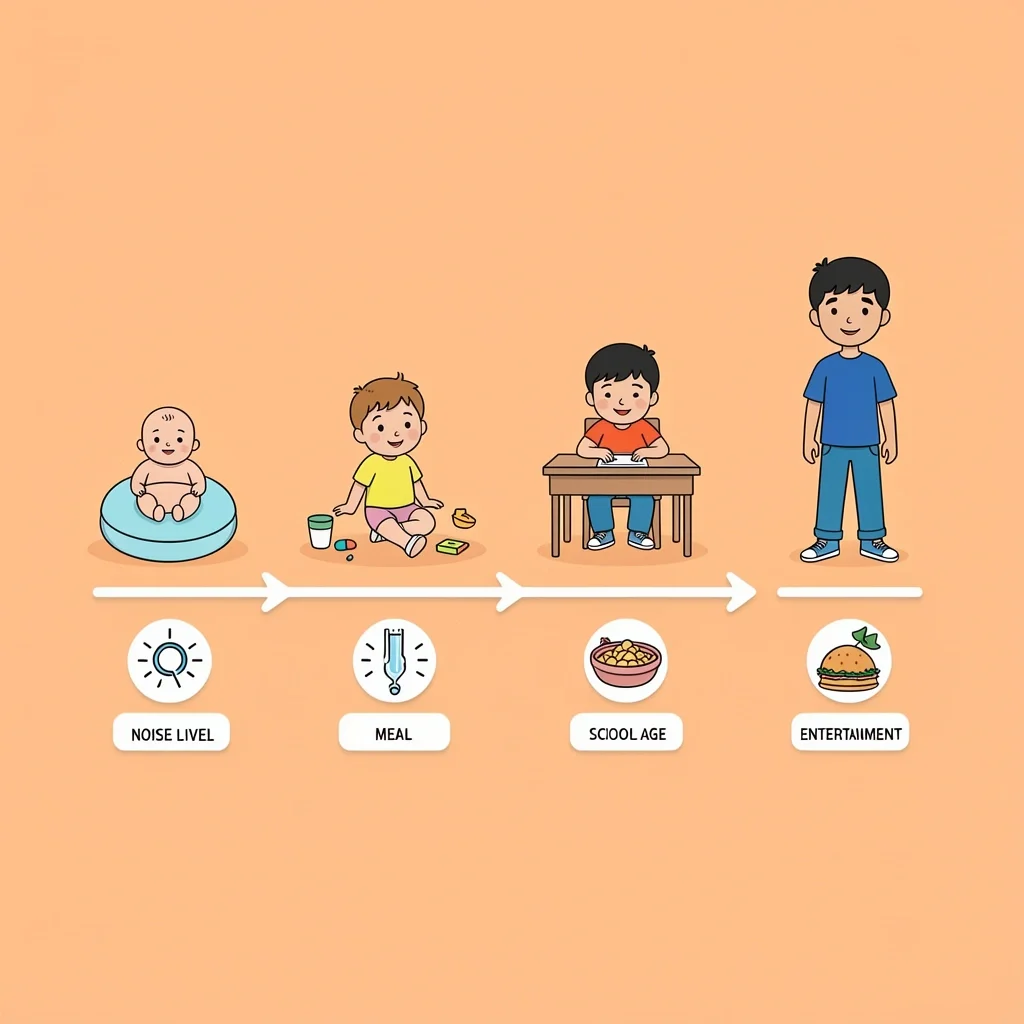
A one-size-fits-all policy ignores reality. Here is a practical breakdown of how children at different ages affect your wedding.
| Age Range | Replaces an Adult Seat? | Affects Ceremony Noise | Needs a Separate Meal | Needs Entertainment | Atmosphere Impact |
|---|---|---|---|---|---|
| 0–2 years | Not typically (lap child) | Yes (crying risk) | No | No | Minimal if with parent |
| 3–6 years | No (lap child possible) | Possible | Usually (kid’s meal) | Yes (activity bags) | High if multiple |
| 7–11 years | Yes (needs own seat) | Less likely | Yes (child menu or half-portion) | Sometimes | Moderate |
| 12–17 years | Yes (full adult seat) | Rarely | Yes (adult menu or teen option) | No | Minimal—integrate with adults |
This tier system helps you see that a 16-year-old cousin is essentially an adult guest, while a 3-year-old requires a different set of considerations. Use this to decide whether a single “no kids” policy is the right fit, or whether an age cutoff makes more sense for your situation.
Communication Strategy by Timeline and Relationship
When you say it matters as much as what you say.
Save-the-date stage
You can signal your policy without stating it explicitly. On the save-the-date, address it only to the adults in a household. When a parent asks, say “We are still finalizing our guest list and will let you know soon. This plants the seed without causing conflict.
Invitation stage
Be precise. On the outer envelope, write only the parents’ names. On the inner envelope or RSVP card, state the exact number of seats reserved: “We have reserved 2 seats for you. Avoid vague phrasing like “and family.” Include a line on your wedding website that says “Adults-only celebration” with a brief, warm explanation.
Wedding website FAQ
Create a dedicated FAQ question: “Are children welcome?” Answer clearly: “While we love your little ones, our wedding is an adults-only celebration. We hope you will enjoy a night off and celebrate with us.”
Word-of-mouth
When you see parents in person before the wedding, say casually: “We just wanted to let you know our wedding is adults-only so you can plan ahead. We completely understand if that changes things.” This shows consideration.
Bridal party kids
If your wedding party has children, communicate privately with the parents: “Your child is welcome as our ring bearer and to stay for the reception. We are not making other exceptions, but we wanted you to know you are included.”
Out-of-town guests
These guests face the toughest logistics. Offer to connect them with local sitters or provide a list of trusted providers. Acknowledge the difficulty: “We know traveling without your kids adds complexity. We are happy to help with recommendations.”
The Enforcement Escalation Playbook
This is the section no other article covers. Here is what to do when your policy is tested.
Tier 1: Preemptive clarity
Review your guest list for “likely violators”—guests who have historically ignored boundaries, have large families, or who have not yet responded. Before invitations go out, call them: “We wanted to let you know personally that our wedding is adults-only. We love your kids but hope you can make arrangements.”
Tier 2: The gentle correction
If someone RSVPs with children after your policy was stated, assume good intent. Call them: “We noticed you RSVPed for four instead of two. We just want to confirm you saw our adults-only note. We completely understand if that changes your plans.” This approach leaves the door open for them to adjust without shame.
Tier 3: The firm boundary
If they push back, you hold the line without escalating. Say: “We love you and understand this is hard. Our decision was made after careful consideration of our venue’s capacity and the experience we are creating. We hope you can still join us. If not, we will celebrate with you another time.”
Tier 4: The financial/family complication
When a parent paying for the wedding insists on including kids, separate the financial conversation from the guest list conversation. Say: “We appreciate your support. Can we talk about the guest list separately? We want to make sure we are aligned on our vision for the day.” Offer alternatives, like hosting a separate family dinner for kids the night before or accepting a compromise (e.g., immediate family kids only). If no compromise works, you may need to decline the financial contribution. This is hard, but it preserves your autonomy.
Handling the Hardest Scenarios

These situations test even the best-laid plans.
Parents who offer to pay for their grandkids’ attendance. This is a common tactic. Your response: “We appreciate the offer, but it is not just about cost. It is about the atmosphere and venue capacity we are committed to. We would love to have you with us.”
Blended families where one side’s kids are perceived differently. If your partner’s children from a previous relationship are invited but your sibling’s kids are not, be transparent: “These children are part of our immediate family. We know this is not equal, and we apologize for any discomfort.” Consistency is not always perfectly fair—honesty is the best policy.
Guests who bring children without RSVPing them. At the door, have a point person (a planner, a family member, or your partner) handle this: “We have you down for two seats. I am sorry, but we cannot accommodate additional guests. Would you like to leave the kids with our sitter, or would you prefer to go home?” This is uncomfortable, but it protects the integrity of your event for everyone else.
Family members who volunteer to “watch the kids in the corner.” This rarely works as planned—the kids still need attention, and the volunteer misses the ceremony. Say: “We appreciate the offer, but we want all our guests to enjoy the day. We would rather have the sitters handle it.”
Your own wedding party members who have children and are offended. Acknowledge their feelings: “We value your role in our wedding so much. We had to make a difficult decision for the whole guest list, and we hope you can still be part of our day.” If they refuse to attend without their kids, accept their decision with grace.
Frequently Asked Questions
What if my venue has a strict capacity limit and including kids pushes us over?
Calculate infants on laps as partial capacity only if your venue allows it. For all other children, count them as full seats. Use the 75–85% attendance rate for all invitees, including kids, to estimate total headcount. If still over, consider a separate kids’ table that shares space with parents or a partial-sitting arrangement.
Should I provide on-site childcare if I want an adults-only ceremony but kids are welcome at the reception?
Yes, this is a gracious compromise. Hire licensed sitters—not volunteers—for a separate room near the venue. Cost is typically $20–35 per hour per child. Communicate this option on your website so parents know their kids are safe nearby.
What do I do about a guest who has a service animal or emotional support animal for their child?
Service animals are federally protected and must be accommodated. Emotional support animals are not protected under the ADA for event spaces. Check your venue’s policy and consult your planner. A child who requires an ESA for medical reasons may need special accommodation or may be best served by having a parent stay home.
How do I handle children of the wedding party when other guests’ kids are not invited?
Be transparent: “Our wedding party children are participating in the ceremony.” Parents of excluded kids may still feel slighted. Mitigate this by explaining the children’s specific ceremonial role and that no other exceptions are being made. Expect some tension and hold the line gracefully.
What if a guest decides not to attend because of my kids policy—should I feel bad?
No. You made a decision that serves your day. A gracious guest will understand. If they do not, that reflects their priorities, not your hospitality. Send a sincere note: “We will miss you at the wedding. Let us celebrate together soon.”
Final Thoughts: The Goal Is Not Universal Approval

Your wedding, your values, your decision. The goal is not to make everyone happy—that is impossible. The goal is to execute your decision with consistency and grace. Some relationships will strain. That is okay. The most successful policy is the one you commit to fully, with no apologies and no exceptions that create confusion.
If you need more guidance, our resource on how to trim your wedding guest list without losing your sanity provides additional strategies.
Trust your gut. You know your family, your budget, and your vision. Use this guide as a tool, not a rulebook. And when you are second-guessing yourself, remember: a clear and kind approach wins over a wishy-washy one every time.