
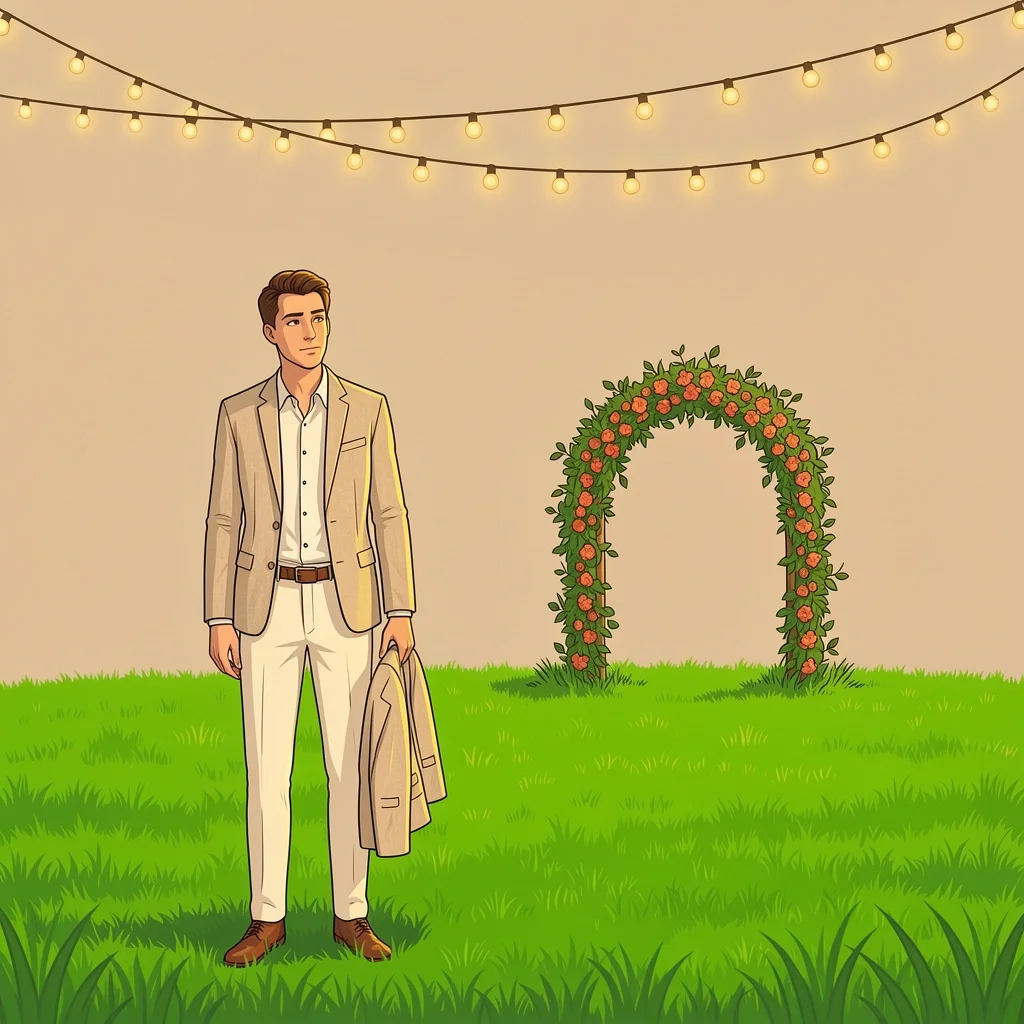
You open the invitation. It says “ceremony in the backyard, reception under string lights.” Your first thought: what do I wear? Not a full tuxedo — too stiff for grass and sunshine. Not jeans and a button-down — the couple clearly wants something special. The truth is, backyard weddings live in a strange in-between space. They feel personal and grounded, but they also carry the weight of a real ceremony. The wrong outfit stands out. But the right one makes you feel like you belong, both to the moment and to the ground you’re standing on.
Here’s the straight answer: a traditional black-tie tuxedo is usually too formal for most backyard weddings, unless the invite explicitly says “black tie” or the evening reception is a seated, multi-course dinner with champagne. A business suit is too corporate and misses the celebratory note. The sweet spot is a semi-formal upgrade — a tailored sport coat or suit jacket in a textured fabric like linen or lightweight wool, matched with dress trousers, a good shirt, and accessories that say “special occasion” without saying “ballroom.”
Understanding the Setting’s Demands
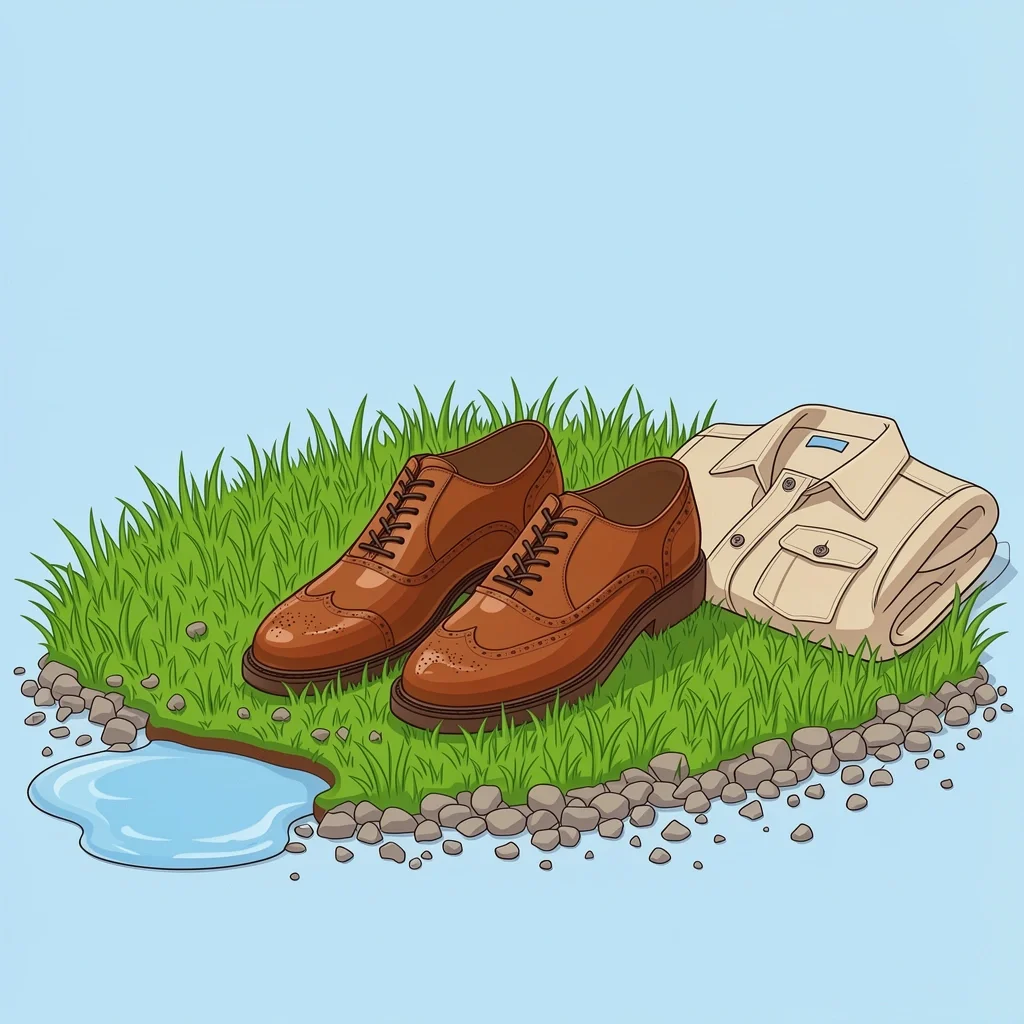
Before you pick a jacket, look at the ground. Backyard weddings happen on grass, gravel, decking, or concrete. Each surface changes what works. Grass soaks up moisture and stains cuffs. Gravel chews up delicate leather soles. Concrete radiates heat. The first rule of a backyard wedding tux is survivability, not just style.
- Fabric choice: Linen, cotton, or lightweight wool. These breathe in the sun and won’t leave you drenched. Avoid polyester or heavy wools — they trap heat and wrinkle badly when you sit on the lawn.
- Jacket cut: Unstructured or lightly structured shoulders. You want to move freely when you hug the couple or dance to a live band. A stiff, padded blazer feels like armor on a soft lawn.
- Shoes: Leather oxfords or loafers with rubber soles. The rubber grips the grass so you don’t slip. Avoid suede — one dew-soaked morning and they’re ruined. Whole-cut oxfords or monk straps look sharp without being flashy.
- Temperature arc: Afternoon ceremonies can be 85 degrees (29°C) while the same evening drops to 65 (18°C). Plan for both. A jacket you can remove and carry, a shirt that looks good on its own, and a pocket square that adds weight inside the jacket to keep it from flapping in the wind.
Navigating the Day-Night Transition
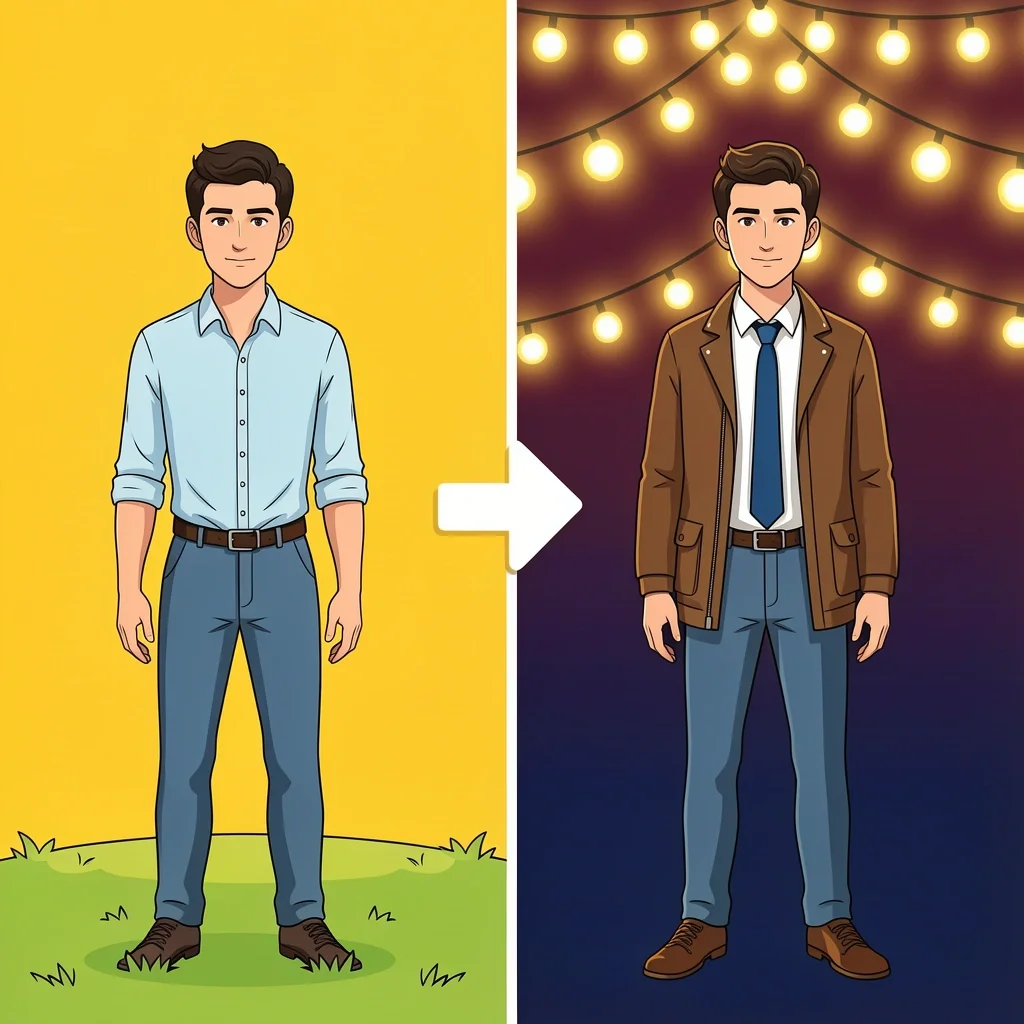
Most backyard weddings start in the late afternoon — golden hour for photos — and stretch into a dinner-and-dancing evening under lights. That means your outfit needs to work in two completely different visual and thermal environments.
- Afternoon phase: You’re outside, often standing. The sun is bright. You can lose the jacket and roll your sleeves once or twice. Choose a shirt with a spread collar or button-down collar that stays crisp when open. White is safe, but a subtle micro-check or stripe adds personality without screaming for attention.
- Evening phase: The sun drops, string lights come on, and the temperature cools. Put the jacket back on. Add a tie or bow tie if the vibe allows. This is where fabric texture matters — linen or cotton looks relaxed in daylight but catches the light nicely at night. Navy, light gray, beige, or olive all transition well. Black looks too severe under warm bulbs and feels funeral-adjacent in a backyard.
- The loose-layer trick: If you start the day wearing the jacket, you can take it off for the hot ceremony and carry it. But if you start without it, you can’t add it later unless you brought it. Solution: keep the jacket in your car or at a nearby table until the sun goes down. I’ve seen too many guys sweat through a ceremony because they felt they had to wear the jacket to look “dressed.”
- Lighting shift: Colors you choose should photograph well in both direct sun and soft evening glow. Neutrals work best. Avoid neon or very dark tones. A cream or light gray jacket will make you stand out without being loud.
The Social Calculus: Respecting the Host
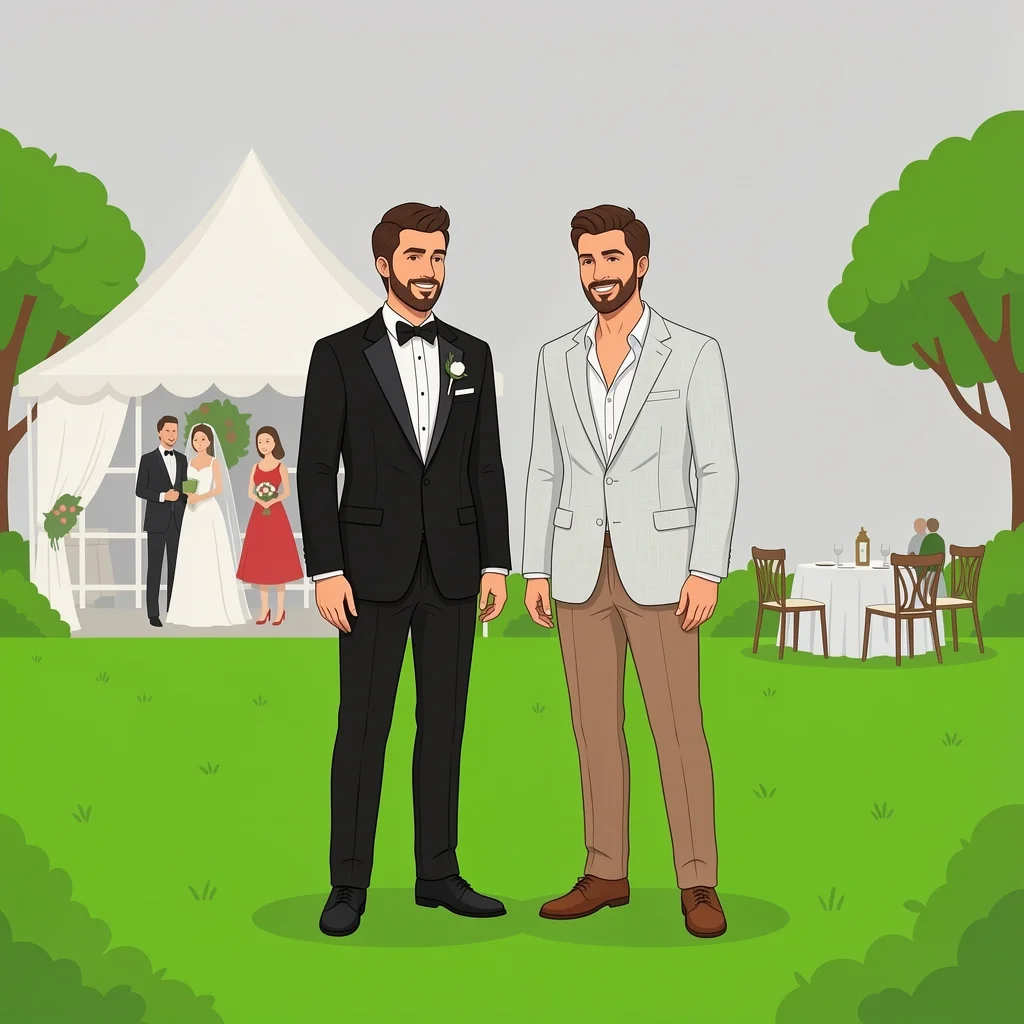
Unlike a hotel ballroom where the couple is a distant figure on a stage, backyard weddings put you face-to-face with the hosts — the homeowner, the bride’s parents, or the couple themselves. Your outfit sends a message about how much you value their effort.
- Know the groom’s level: If the groom is wearing a full tuxedo with a bow tie, you can wear a tuxedo too — but only if the overall event matches that formality. If the groom is in a linen blazer with no tie and rolled sleeves, your full tux will look like you misunderstood the dress code. Match the intention of his outfit, not just the labels.
- The host’s signal: Look at the wedding website or the invitation’s wording. “Cocktail attire” means you should wear a jacket and tie but no need for tails. “Semi-formal” or “dressy casual” means a jacket is fine, tie optional. If there’s no dress code listed, assume the couple wants you comfortable but elevated. Ask a mutual friend if you’re unsure — it’s better than guessing wrong.
- Your role matters: If you’re a close family member, you can be slightly more formal than a plus-one. A father of the bride might wear a three-piece suit while a friend of the groom wears a sport coat and chinos. You don’t have to match your spouse exactly, but avoid clashing: if your partner is in a vibrant floral dress, pick a neutral jacket like beige or navy. If you’re both neutrals, add a pop of color with a pocket square or tie.
- The “too casual” risk: Backyard weddings are not backyard barbecues. I’ve seen guests show up in cargo shorts and t-shirts because they assumed “backyard” meant “lazy.” It doesn’t. The couple spent months planning, decorating, and renting tables. Show up looking like you take the event seriously. That means at minimum a collared shirt and trousers. A jacket elevates you from “guest” to “honored guest.”
The Practical Wardrobe Construction
Now let’s build the outfit piece by piece. Each item has a job: keep you comfortable, photograph well, and survive grass, wind, and hors d’oeuvres.
The Jacket
Linen or cotton in light gray, beige, olive, or navy. Avoid black. Unstructured shoulders let you move. If you can’t decide between a sport coat and a full suit, go with a sport coat — it pairs with different trousers and looks more intentional. A navy blazer with gold buttons can work if the wedding leans preppy or nautical, but skip it if the vibe is rustic or boho.
The Trousers
High-waisted, straight-leg or slightly tapered. Match the weight of the jacket but not necessarily the color. Contrast separates look sophisticated: navy jacket with cream or light gray trousers; beige jacket with dark navy trousers. Avoid jeans even if the couple is casual — they pull the whole outfit down.
The Shirt
Lightweight cotton in white or a subtle pattern. Spread collar or button-down. If it’s hot, roll the sleeves. If it’s cool, keep them long. A French cuff shirt is too formal for most backyard settings — stick with standard barrel cuffs unless you’re in the wedding party.
The Tie or Bow Tie
Optional but recommended for evening. A knit tie adds texture without stiffness. A silk knit in navy or burgundy works with almost any jacket. Bow ties are risky unless the event is clearly playful or formal. If you’re not a bow tie person, don’t start now.
The Shoes
Leather oxfords or loafers. Rubber soles. Suede is a gamble with grass or damp ground. Whole-cut oxfords look sleek. Monk straps add character. Clean white leather sneakers can work only if the dress code explicitly says “casual” — otherwise stick to proper shoes.
The Accessories
A pocket square is mandatory if you wear a jacket — even a simple white linen square signals intentionality. Leather strap watch, not a smartwatch. Cufflinks only if your shirt has French cuffs. Socks should match your trousers, not your shoes. A belt that matches your shoes in color and leather type ties the outfit together.
The Formality Paradox Resolved

You’ve probably heard two conflicting pieces of advice: “don’t overdress for a backyard wedding” and “it’s a wedding, dress up.” Which one wins? Neither, exactly. The paradox is that backyard weddings are personal ceremonial spaces. They are not casual gatherings, but they are also not ballrooms. The guest’s job is to elevate above everyday wear without jumping to black-tie.
The test I use is simple: ask yourself two questions. First, would you wear this outfit to a nice restaurant for a birthday dinner? Second, would you wear it to a job interview? If the answer to both is yes, the outfit is either too casual or too corporate. The backyard wedding sweet spot is something you’d wear to a milestone celebration at a high-end restaurant — special, but not costumed. If you feel like you’re wearing a costume, you’re too dressed. If you feel like you’re going to the office, you’re too boring.
Full tuxedos do have a place in backyard weddings — but only under specific conditions: the ceremony starts after 6 PM, the invitation says “black tie optional,” and the event includes formal elements like a seated dinner, champagne service, or live classical music. Without those signals, dial it back to a well-fitted sport coat.
The True Cost of Looking Good
You can spend anywhere from $200 to $1,500 on a backyard wedding outfit. The budget breakdown below is realistic for a guest who wants to look sharp without breaking the bank. Renting a full tuxedo typically runs $200–$350, but for the semi-formal look described here, buying separates often costs the same and gives you a jacket you can wear again.
| Item | Cost Range (Buy) | Cost Range (Rent) |
|---|---|---|
| Jacket (linen or cotton) | $150–$400 | $50–$80 (if available) |
| Trousers | $80–$150 | $40–$60 |
| Shirt | $50–$100 | $30–$50 |
| Shoes | $100–$250 | $40–$70 |
| Tie/Pocket Square | $30–$80 | $10–$20 |
| Total | $410–$980 | $170–$280 |
What to splurge on: the jacket and the shoes. The jacket is in every photo. The shoes must be comfortable for hours on grass. What to save on: the shirt — launder it instead of tailoring it — and accessories, which can be inexpensive or borrowed. If you attend multiple weddings per year, buying a versatile linen jacket and a pair of rubber-soled oxfords pays off quickly.
The Uncontrolled Environment
Backyard weddings come with surprises. Here are the hidden pitfalls that no style guide mentions, and how to handle them.
- Grass stains: They happen most often on trouser cuffs and the seat of the pants. Roll your trousers slightly at the ankle — a half-inch or so — to keep the hem off the grass. This looks intentional (think ’70s style) and saves your trousers. If you must sit on the lawn, stand up periodically to let the fabric dry and avoid permanent green marks.
- Wind: String lights, tablecloths, and your pocket square all blow. Keep your jacket buttoned. Use a pocket square to add weight to the breast pocket. Avoid hats unless they’re secured with a chin strap. A windy backyard can turn a sharp outfit into a mess in seconds.
- Humidity and heat: If the wedding is in summer and the temperature hits 90°F (32°C), don’t wear the jacket for the ceremony. Keep it in the car or on a hanger. Wear a crisp shirt with sleeves rolled once. Add the jacket for the evening portion. Nobody will judge you for being comfortable.
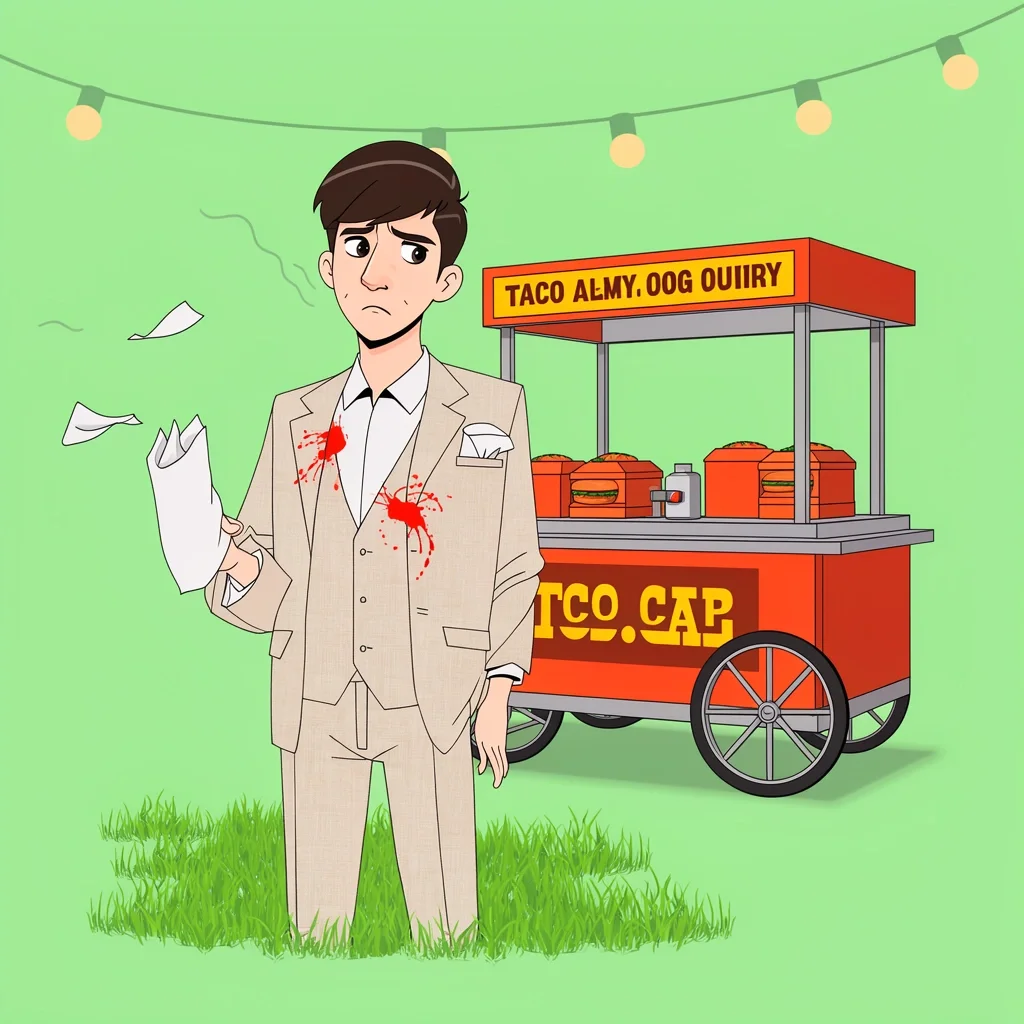
- Food proximity: Many backyard weddings have food stations — pizza ovens, taco carts, ice cream trucks (like the $12,000 backyard wedding featured in the reference data). Stand near messy food only if you’re careful. A darker shirt or jacket hides drips better than white. A napkin tucked in your pocket isn’t stylish, but it’s practical. I’ve seen a guest in a beige linen suit walk away from a taco cart with a splash of salsa on his lapel — he spent the rest of the night hiding it with his hand.
Frequently Asked Questions
Can I wear a tuxedo vest without the jacket?
Only if you’re part of the wedding party and the groom’s style explicitly includes that look. As a guest, a vest without a jacket can appear incomplete or costume-like. If it’s too warm for a jacket, skip the vest entirely and wear a well-fitted shirt with rolled sleeves.
Are sneakers ever acceptable?
Only when the dress code says “casual” or “lawn party.” Clean white leather low-top sneakers can work with contrasting separates (jacket, no tie) if the overall vibe is relaxed. But when in doubt, wear loafers or oxfords. Sneakers risk making your outfit look like an afterthought.
How do I coordinate with my spouse or date?
There’s no rule that says you must match. But avoid clashing. If your partner wears a bright floral dress, your jacket should be a neutral like beige or navy. If both of you stick to neutrals, one of you can add a pop of color via tie, pocket square, or socks.
Does the season matter as much as the time of day?
Season affects fabric weight — summer = linen, fall/winter = wool. But time of day is a stronger signal for formality. A 2 PM October backyard wedding is still afternoon-casual. A 7 PM June backyard wedding is evening-formal. Prioritize the hour over the month.
What if the groom wears a full tuxedo?
Then you have permission to wear a tux too — but only if the groom’s style is genuinely formal, not costume-like. If the groom wears a tux with sneakers, don’t take fashion cues from him. Match the intention of the event, not his personal quirks.
Should I bring a backup outfit?
If the forecast is uncertain — rain, sudden temperature drop — yes. A lighter jacket for daytime, a heavier one for evening. A backup shirt is wise if you tend to sweat or if you’re eating messy food. I’ve seen guys regret not having a dry shirt when a sudden drizzle soaked the ceremony.
The right outfit for a backyard wedding tux isn’t about following a rulebook. It’s about honoring the setting, the couple, and your own comfort. Choose breathable fabrics, plan for the day-night shift, and don’t be afraid to take your jacket off when the sun is high. When you look good and feel relaxed, you’ll enjoy the wedding more — and that’s the whole point.