
That question keeps you up at night. You are planning a wedding in the United States, and the one thing that matters more than the cake or the flowers is having your parents, siblings, or close family there to see it. The short answer is yes, they can apply for a visitor visa. But there is a catch. The approval is never guaranteed, and the consular officer focuses on one thing above all else: will they go back home after the wedding.
I have helped several families through this process. One friend’s parents were denied twice before we changed the strategy. Another friend’s sister got the visa on her first try with almost the same paperwork. The difference was not luck. It was understanding what the consulate actually looks for. This guide walks you through every step so you know exactly what to do, what to avoid, and what to expect.
Yes, Your Family Can Apply – But Approval Depends on These Key Factors

Your family members can apply for a B-2 tourist visa specifically for attending your wedding. The B-1/B-2 category covers temporary pleasure visits, and a wedding qualifies. There is no special “wedding visa.” The process is the same as for any other tourist visit, but the wedding context adds urgency and emotional weight. Consular officers see hundreds of wedding invitations a year. They are not impressed by the invitation alone. They want proof that each applicant has strong reasons to return to their home country.
Three pillars support every B-2 visa application:
- The visit is temporary (they will leave after the wedding).
- They have enough money to pay for travel and stay (or you are covering it).
- They have a residence abroad that they intend to return to.
If any of these pillars is weak, the visa will likely be denied. The wedding invitation helps with the first pillar, but it does almost nothing for the other two.
What Documents You Must Provide as the Host
Whether you are a student on an F-1 visa, an H-1B worker, or a green card holder, you play a supporting role. Your documents show that you have a legitimate reason for the visit and that you can support your family if needed. Here is what you should prepare:
- Formal invitation letter – Write a letter addressed “To Whom It May Concern” at the U.S. consulate. Include your full name, your status in the U.S. (student, work visa, resident), the wedding date and venue, your relationship to the guest, and a clear statement that you invite them to attend. Sign it. Attach a copy of your passport, visa, or green card.
- Proof of your legal status – A copy of your I-20 (F-1 students), DS-2019 (J-1), employment letter and visa (H-1B), or permanent resident card. This shows you are legally present.
- Evidence of financial support – If your family cannot prove they have enough funds, you can offer to pay. Provide your bank statements from the last three months, pay stubs, or tax returns. You can also write a letter saying you will cover all expenses.
- Optional but helpful – A letter from your university or employer confirming your status and the wedding date. For students, a certificate of attendance can strengthen the invitation.
One mistake I see often is sending a generic invitation letter downloaded from the internet. Consular officers recognize those templates. Write your own. Keep it honest and specific. Do not promise things you cannot deliver.
Remember: the invitation letter is supportive, but it is not the deciding factor. The officer will focus on your family’s ties to home.
What Your Family Members Need to Prepare on Their End
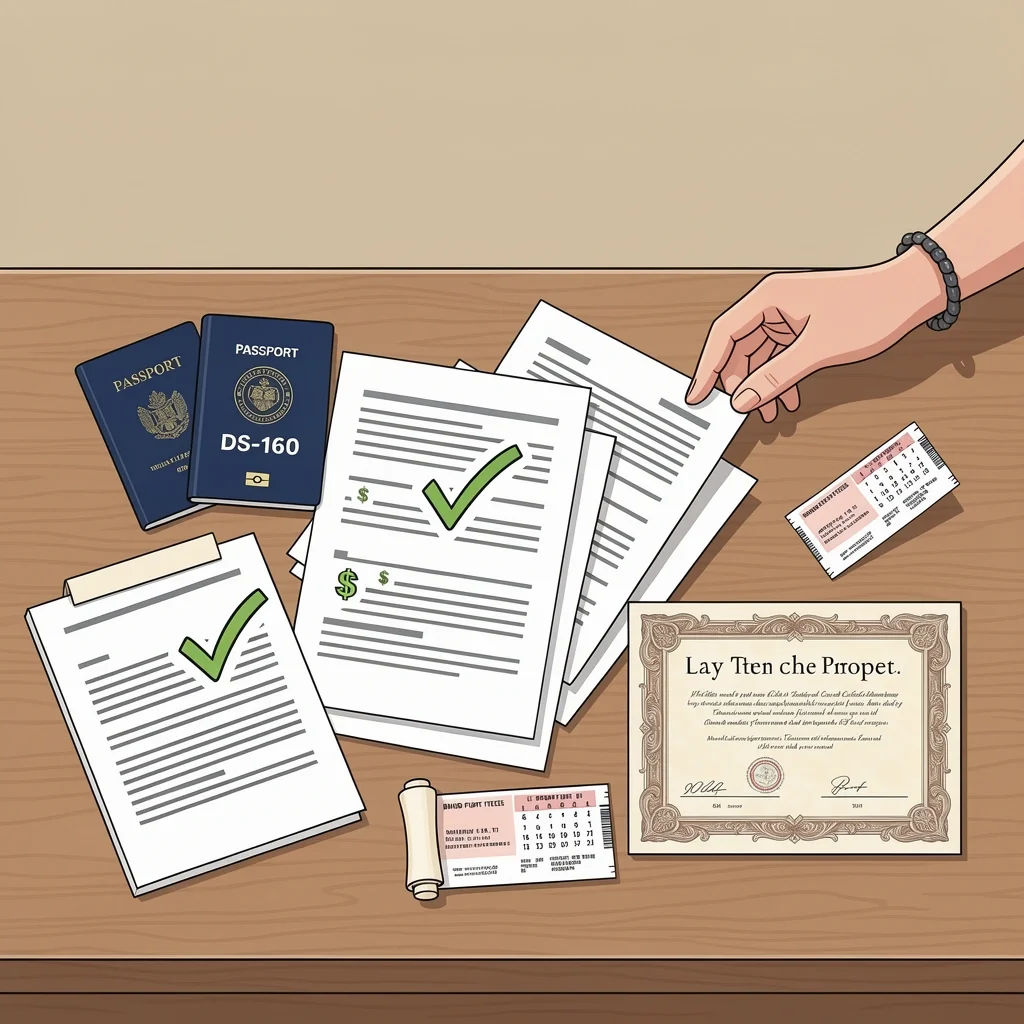
This is where the real work happens. Your parents or siblings must prove they have reasons to return after the wedding. The consulate does not care about your wedding as much as they care about your family’s life back home. Each applicant must prepare:
- Form DS-160 – Online visa application. Fill it out correctly. Double-check the spelling of names and dates.
- Valid passport – Must be valid for at least six months beyond the intended stay in the U.S.
- Visa fee payment receipt – Non-refundable. Pay it and keep the receipt.
- Interview appointment confirmation – After submitting DS-160, schedule the interview at the U.S. embassy or consulate in their home country.
- Proof of strong ties to home – This is the most important. Documents can include:
- Employment letter showing salary, position, and approved leave for the trip.
- Property deeds or rental agreements.
- Bank statements showing savings sufficient for travel (not just the invitation letter).
- Family records – for example, if parents have other children or elderly parents at home.
- Return flight reservations (do not buy non-refundable tickets until the visa is approved).
- Proof of relationship to you – Birth certificates, marriage certificates (for parents), or family registration documents.
If your family member is retired, they need to show pension statements, property ownership, and other family ties. If they are a young sibling with no job, it becomes harder. They might need to show enrollment in school or a job offer for after the trip. The officer will suspect they might stay and work illegally if they cannot show strong ties.
Timing Is Critical – Apply 3 to 6 Months Before the Wedding
Visa appointment wait times vary by country and season. In some places, appointments are available within a week. In others, you may wait several months. Apply as soon as you have a confirmed wedding date. Do not wait until two months before.
If the wedding is less than 60 days away and no appointment is available, you can request an expedited appointment. Contact the U.S. embassy or consulate directly. Provide proof of the wedding date – a venue contract, invitation, or marriage license. Expedite requests are not guaranteed, but they are often approved for weddings, funerals, and medical emergencies.
One reality: if your family is denied and you have to reschedule, the wedding may need to move. I have seen couples postpone because parents could not get visas in time. Plan ahead and build in a buffer. If possible, give yourself six months.
Why Many Wedding Visa Applications Are Denied – And How to Avoid It

Consular officers deny B-2 wedding visas for specific, predictable reasons. Know them so you can prepare against them.
- Lack of strong ties to the home country – This is number one. If the applicant is retired, unemployed, or a young single adult, the officer assumes they might overstay. Counteract by showing property, a job, family obligations, or a business.
- Insufficient funds – The applicant must prove they can pay for travel or that you are covering it. If you are paying, your bank statement must show enough funds for multiple people. Do not rely on a small balance.
- Suspicion of immigration intent – If you are a U.S. citizen or permanent resident, the officer may worry that your family will come and then adjust status. This is especially true for siblings or parents who have no reason to go back. A strong return plan helps.
- Previous visa violations or travel history – Overstays, denied entries, or criminal records will hurt. Sometimes past denials can be overcome with new evidence, but it is harder.
- Inconsistent or vague interview answers – If your father says he will stay for two weeks but the invitation letter says one month, the officer sees a red flag. Prepare your family for the interview questions – where will you stay, how long, who pays, what is your job.
Countermeasures: For retired parents, make a list of assets and family members back home. For a sibling with no job, show enrollment in university or a job offer after the trip. If your family has a previous denial, write a cover letter explaining what has changed since then (new job, property, marriage, etc.).
Special Considerations Based on Your Immigration Status
Your own visa status affects how the officer sees the application. Here is what changes for each situation.
If You Are an F-1 or J-1 Student
Your family cannot use your SEVIS record or any student visa document to apply. You can only provide a letter of invitation and a copy of your I-20 or DS-2019 as proof you are a student. The consulate knows you have limited income. Your family must prove they have their own funds or you must show you can support them from your savings (not just your student loan). Do not assume your student status gives any advantage – it does not.
If You Are on H-1B or O-1 Work Visa
Your stable employment and income help. Provide an employment letter, recent pay stubs, and tax returns. An affidavit of support (I-134) is not required but can help if you are covering expenses. However, the officer still focuses on your family’s ties, not yours.
If You Are a U.S. Citizen or Permanent Resident
You have the strongest position to support your family. Submit an affidavit of support (I-134) if you are paying their way. Your status shows you are established in the U.S. But it also raises the greatest suspicion of immigration intent. The officer will assume they have a path to stay through you. Your family must have very strong ties to home – property, business, other family – to overcome that suspicion.
Alternative Entry Options – ESTA and Visa Waiver Program
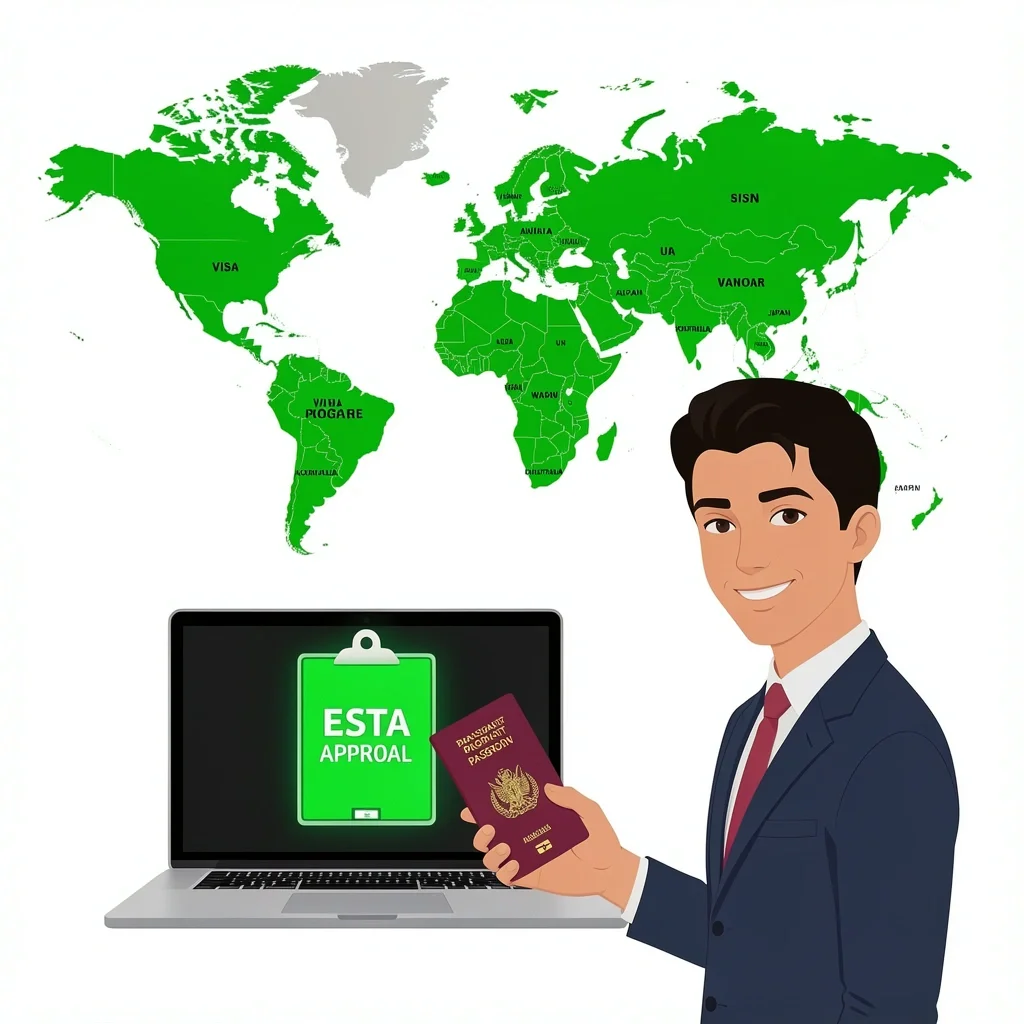
If your family is from a Visa Waiver Program country (e.g., United Kingdom, Australia, Japan, South Korea, many European countries), they can travel without a visa under the Electronic System for Travel Authorization (ESTA). ESTA allows stays up to 90 days for tourism, and attending a wedding qualifies. It is faster and cheaper than a B-2 visa.
Important limits of ESTA:
- They cannot extend their stay beyond 90 days or change status.
- If they overstay even one day, ESTA is likely revoked permanently.
- They cannot work or study while in the U.S.
- If they have a criminal record or have been denied a visa before, ESTA may not be an option. They would need a B-2 visa instead.
If your family qualifies for ESTA, use it. It is much simpler. Apply for ESTA online at least 72 hours before travel. Approval is usually instant but can take a few days. Print the approval confirmation.
Frequently Asked Questions
Can my fiancé(e) attend on a B-2 visa and then get married without leaving the U.S.?
Yes, they can enter on a B-2 visa and get married while in the U.S. But they cannot adjust status to permanent residence immediately. The U.S. expects that if someone enters on a tourist visa, they intend to leave. If they marry and then file for a green card without leaving, it looks like fraud. The safest path: enter on a K-1 fiancé visa if you plan to marry and stay. If you marry on a B-2, your fiancé should return home and then apply for a CR-1 spousal visa from abroad. Do not try to “adjust status” from a B-2 unless you have very compelling circumstances – and consult an immigration lawyer first.
What if my family member’s visa interview is scheduled after my wedding date?
Contact the consulate immediately to request an expedited appointment. Provide your wedding invitation, venue contract, and proof of the date. If the appointment cannot be moved, your family will have to miss the wedding or you will need to reschedule the wedding. I have seen couples push the ceremony back a few weeks to accommodate visa timelines. Plan ahead.
Can I pay for my family’s visa fees and travel expenses?
Yes, you can gift the money. The visa application fee must be paid by the applicant, but you can reimburse them. For travel, show that you have enough funds to cover their costs. Provide your bank statements and a signed letter stating you will pay. This is especially helpful if your family has limited income. But the officer will still check if the applicant has their own ties – money from you does not prove they will leave.
My parents are elderly and don’t work – do they have enough ties?
Yes, if they own property, receive a pension, have other children or family in the home country, or have a return ticket booked. The key is to show that their entire life is not dependent on staying in the U.S. A letter from you explaining that they will return to their home, friends, and doctor appointments can help. Include property deeds, pension statements, and evidence of any other family that remains behind.
This is a great article. I’m assisting my sister in planning her wedding at Victory North Savannah ) and was wondering how our family from other locations could attend this significant event. Thank you for sharing your thoughts.
We are always glad to help! This will be monumental. Thank you also for sharing!
How many visas can you get for family members to come to your wedding?
Hi Basha, this is a great question. I don’t see any limit on the website www state gov visas but you may find more information on this website. I would recommend that you apply for as many family members as you would like to attend the wedding in advance to give plenty of time for the application process and for travel. Thanks!
Hi Aaron,
I have a wedding coming up in September what kind of invitation letter do I need to send so that my brother can apply for a visa from Africa?
Hi Joane it is completely up to you what kind of invitation you would like to send. The key is getting the visitor visas approved ahead of time. Then, you are welcome to invite them in whatever creative and fun way that you would like.
Is there any other documents to send to someone in Nigeria who I want to attend my wedding abroad apart from the invitation letter?
I would ask the local authorities in Nigeria however for inviting guests to a wedding in the United States you may use the steps in this article but most importantly the steps at this web address
Thank you for this!
May I ask too, can we do that also to our closest friends and relatives?
Hello, you would follow the same steps in this article however if you want to make it special for them it would be up to you to coordinate when you send any approvals that you get for them along with your personal invitation to attend the wedding.
Hi Aaron,
My wedding is coming up in May 2023 and I want to invite relatives from Pakistan. What kind of form should they fill out. I already sent them an invitation card.
Hi Yursa,
I would recommend that each family member attending the wedding to complete the process for the B-Visa. You can find the link to the link to the application in this blog post. Thanks so much for your question!
Hi, I am getting married in July 2023. My mom and brothers are in Dominican Republic. Can I get visas for them to attend the wedding? What application should I fill out?
Hi! Here is the link where you can find the application for your family to obtain wedding visas:
The maximum number of friends/family members can one invite to attend one’s wedding in the USA?
Hello, thank you for your question. There is no limit listed however each person traveling would need to apply separately for the travel visa.
Am married to American citizen am from Africa can I invite my family members to our marriage anniversary? And secondly am inviting my step brothers which we dont have same surname is it possible to invite them for the anniversary am a green card holder
Thanks I will really appreciate your response
That is a really great question. I have not found specific documentation on the referenced website for anniversaries as compared to a wedding, however, I would encourage you to follow the same procedure to ask for approval. Thanks so much for reaching out and please feel free to share your findings here for others to see as well.
Hi Mr. Smith, my cousin is trying to send an invitation for me to attend her wedding on July 8 of this year but I m not in my home country presently. I m in Morocco studying presently and I don’t know if it will be possible. I am a Liberian
Hello and thank you for your comment. For this, I would recommend contacting the following link as soon as possible:
Then begin gathering documents and start the process due to the shortened timeframe.
Hello Mr. Smith!
My brother is getting married next year (May) and I requested a Visa, but my appointment is on November 2024. Is there any way we can get a shorter permission for me to travel and attend de wedding (before my appointment)?
Hello! I would recommend checking out this visitor visa page with the application to apply before your appointment. Thanks!
I want to invite my family for my daughter’s wedding .other than invitation card and proof of banquet booking what else I need to do . Should I have to write invitation letter and notarize it and send my family? Too. If this is the case then I have to write a letter for each person separately. And I have to write letter for us consulate too for each person separately please help me thnx
Hi there. You can help your family to prepare for submitting their applications however they will need to apply separately in their own country and then schedule interviews separately as well.
As far as inviting them, you can follow your individual preferences because this is separate from the application for the visa to attend the wedding. You could invite by household or by individual persons depending on your preference
Hope this was helpful!