
Your groomsmen want to look sharp. They also do not want to spend $500 each. Here is exactly how to balance style, budget, and group uniformity without resentment.
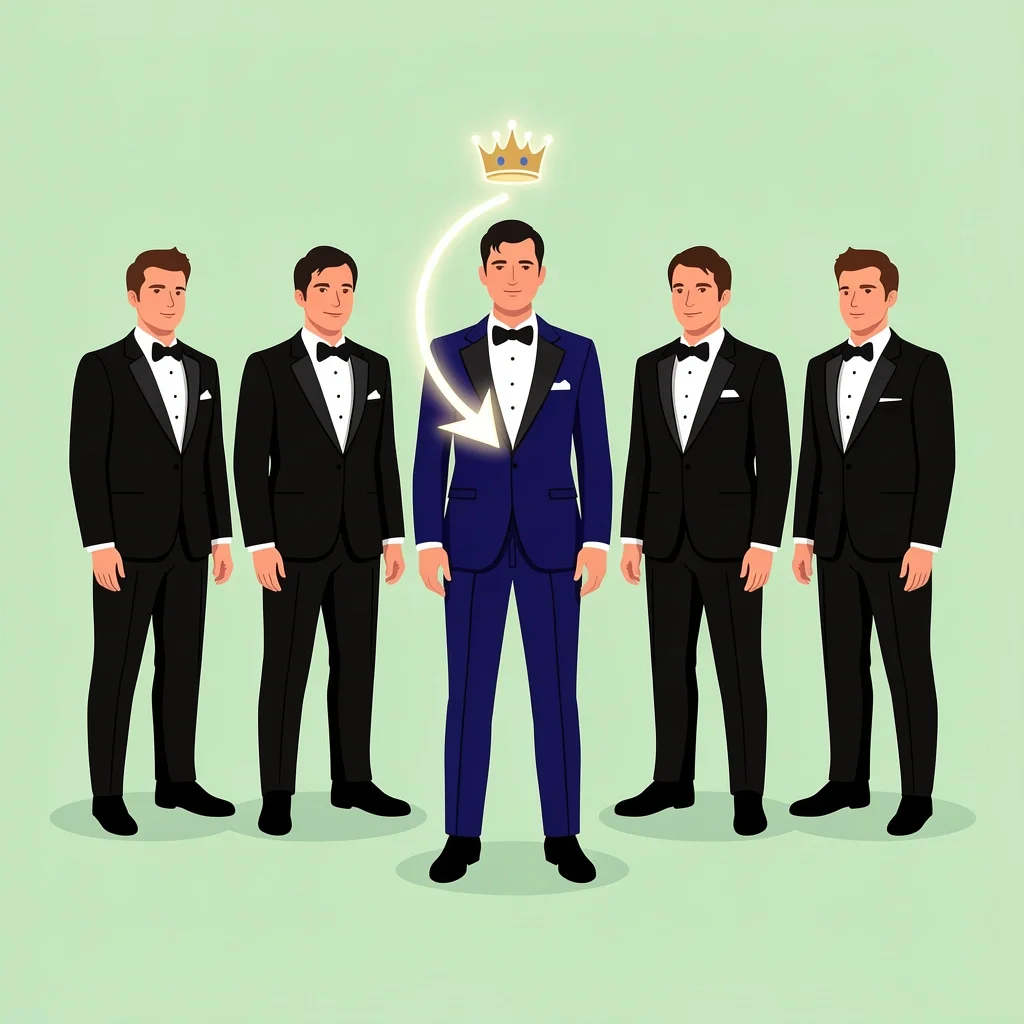
The single most important truth is this: the choice between all matching, groom different, or suit versus tuxedo is not about fashion. It is about hierarchy and practicality. For 90 percent of weddings, putting groomsmen in standard tuxedos and the groom in a distinct style is the optimal move. A different lapel shape, a different color, or a different fabric weave. That small change keeps the groom as the center of attention while making the whole party look intentional.
Part 1: The Style Decision
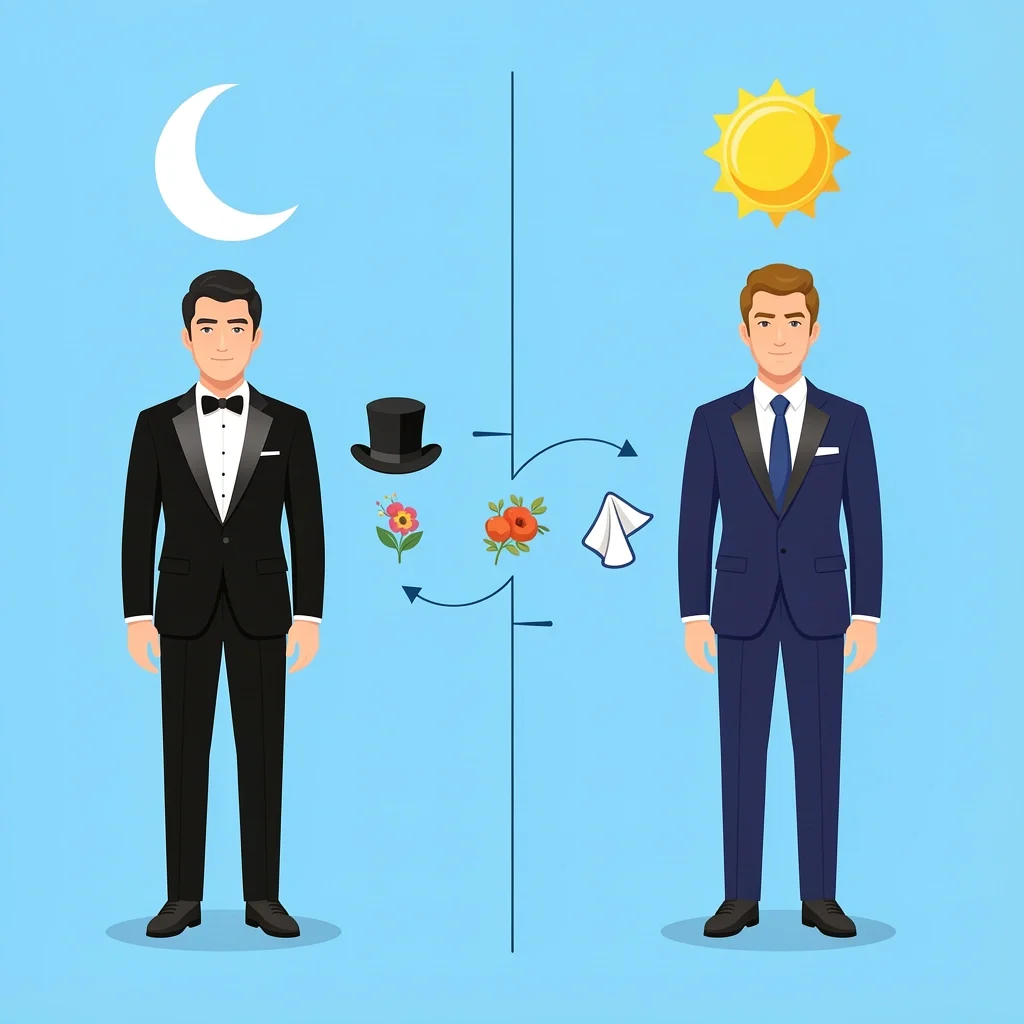
Your first concrete choice is formality. Do you go with a tuxedo or a suit for the groomsmen?
A tuxedo has satin lapels, formal trousers with a stripe, and usually requires a bow tie. A suit has self faced lapels, standard trousers, and can wear a necktie. The setting of your wedding dictates which one works best.
Here is a simple decision matrix based on your wedding type:
- Evening or black tie wedding: A tuxedo is required for the groom and all groomsmen. No exceptions.
- Afternoon or garden wedding: Suits work better for groomsmen. The groom can still wear a tuxedo if he wants more formality.
- Mixed formality: Use accessories like a vest or a pocket square to bridge the gap between a suit and a tuxedo.
The Groom’s Distinction Strategy
Many grooms worry their groomsmen will look like clones. The solution is simple. Do not just give the groom a different tie. Change the lapel shape. For example, the groom could wear a peak lapel tuxedo while groomsmen wear a shawl lapel version. Or change the color slightly. The groom in midnight blue, the groomsmen in black. Or change the fabric. The groom in a textured wool, the groomsmen in a smooth worsted wool.
For more ideas on balancing personality with polish, check out our guide to wearing a fun wedding tuxedo without compromising on sophistication.
Two approaches work well. First, same silhouette, different color. Second, same color, different cut. Either one creates visual separation without chaos.
Part 2: Rental Versus Purchase
Once you know what you want, you need to decide how to get it. Renting and buying have different strengths.
| Factor | Renting | Buying |
|---|---|---|
| Upfront cost | Lower, around $100 to $200 per person | Higher, around $200 to $500 per person |
| Tailoring | Minimal, most rentals come pre hemmed | Required, adds $50 to $100 |
| Customization | Limited to what the service offers | Full control over every detail |
| Future use | None, you return it | Groomsmen keep the suit for future events |
| Damage risk | Fee for stains or tears | None, you own it |
Apply the group budget rule. If the average groomsman earns $40,000 per year, do not ask them to spend more than $150 on a rental or $300 on a purchase. That keeps the cost reasonable for everyone.
The 5 Week Timeline
Logistics are the real challenge when coordinating a group. Use this schedule to avoid last minute panic:
- Week 5: Decide on style and send out group invitations to the rental service or tailor.
- Week 4: All groomsmen submit their measurements.
- Week 3: Place the main order or schedule individual tailoring appointments.
- Week 2: Receive the rentals or finished suits. Try everything on at the same time if possible.
- Week 1: Final adjustments. Any minor changes like hemming or button replacement happen now.
This timeline works even if your groomsmen live in different states because online rental services handle shipping directly to each person.
Part 3: Getting the Fit Right Across a Group
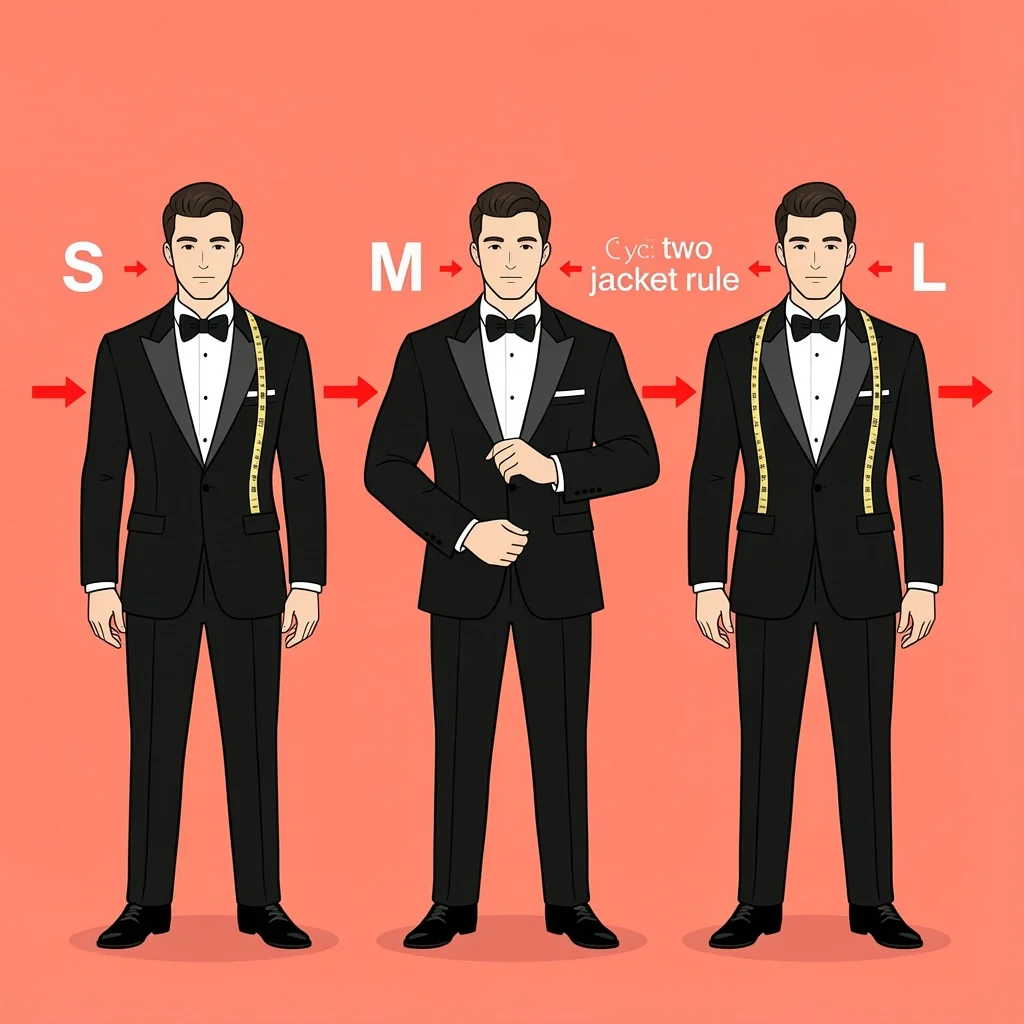
Fit is where most wedding parties fail. Five men in the same tuxedo can look completely different if the sizes are wrong.
The hail mary tip is to use a centralized rental service that offers free home try ons and group invitations. This prevents the five different shades of black disaster. The service sends each groomsman their assigned outfit directly. Everyone gets the same jacket, same pants, same shirt, and same shoes.
For body type accommodation, choose a cut that works for the majority. Slim fit works for most men under 30. Regular fit works for older or broader men. The two jacket rule helps. Order one jacket in slim and one in regular for the group. Each man tries both and uses the one that fits best. Return the unused sizes.
When one groomsman is a 2XL and another is an XS, do not force a full suit. Use separates. Order the jacket and pants separately from different size pools. Most rental services offer this option. It costs a little more but avoids awkward fitting issues.
Part 4: The Groomsmen’s Unofficial Role in the Wedding Aesthetic
Matching but not uniform creates cohesion without feeling sterile. The psychology is simple. When groomsmen look coordinated but not identical, the wedding party photograph has depth. It looks intentional, not factory made.
The second tier rule applies here. Groomsmen should complement the groom, not upstage him. Use specific color guidelines. If the groom wears black, put groomsmen in charcoal. If the groom wears midnight blue, put groomsmen in navy. If the groom wears white, put groomsmen in a light grey.
Accessories give each groomsman a subtle personal touch. Use boutonnieres to reflect each man’s personality. One man gets a white rose, another a blue cornflower. Watch styles can vary. Some men wear leather straps, others wear metal. Shoe color can change slightly. Oxblood shoes on one man, black on another. These small differences keep the group looking unified but not robotic.
Part 5: Real World Groomsmen Tuxedo Examples
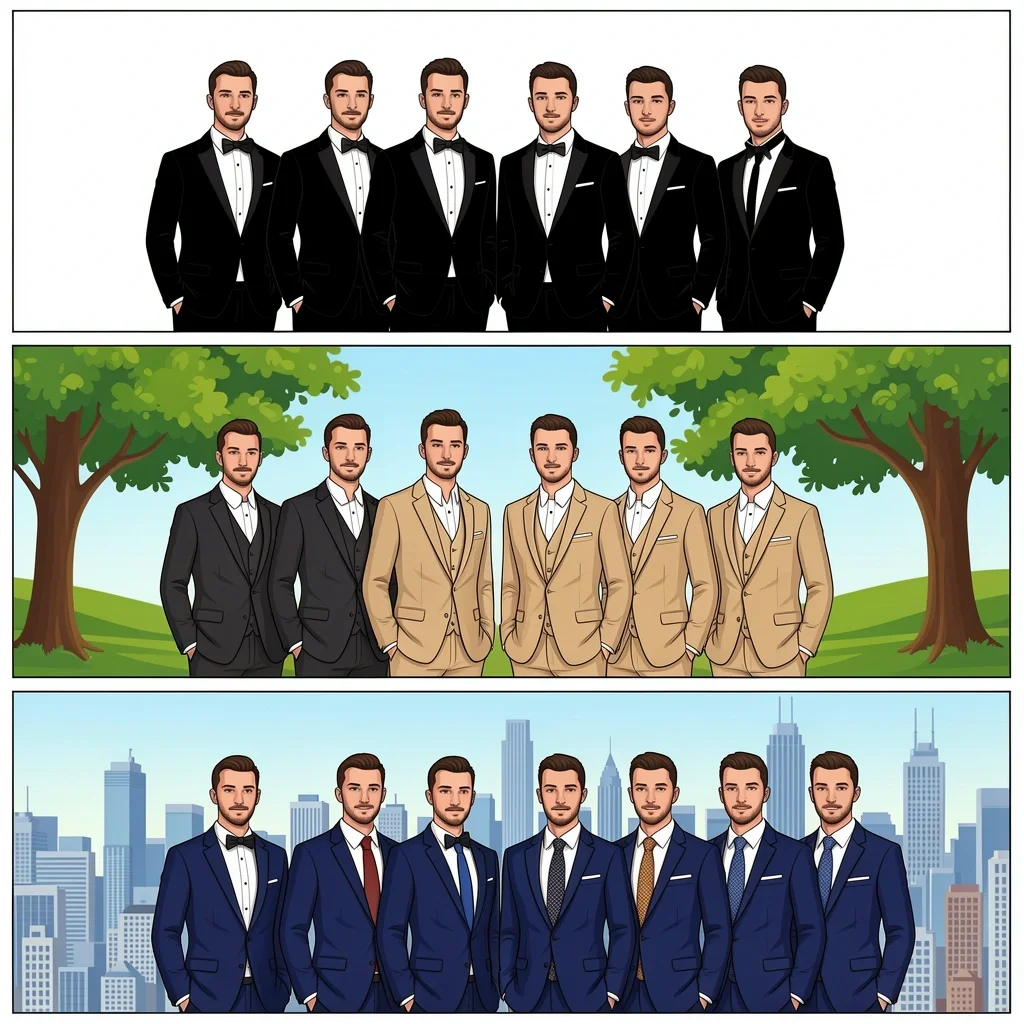
Here are three common wedding archetypes with their corresponding tuxedo solutions.
- The Classic Black Tie Wedding: Groom in a peak lapel black tuxedo with a white pleated shirt. Groomsmen in a shawl lapel black tuxedo with a white pleated shirt. All wear black bow ties and black patent leather shoes.
- The Rustic Outdoor Wedding: Groom in a charcoal grey suit with a vest. Groomsmen in tan linen suits with no ties. All wear brown leather boots or loafers. The contrast between dark and light works well against natural backdrops.
- The Modern City Wedding: Groom in a midnight blue tuxedo with a slim bow tie. Groomsmen in matching navy suits with a slim knit tie. All wear black leather dress shoes. The navy tones create a sophisticated monochrome look.
Frequently Asked Questions
Do groomsmen have to wear the same tuxedo as the groom?
No. They often should not. Differentiation via lapel, color, or fabric is recommended to preserve the groom’s visual hierarchy. A different lapel shape or a slightly different color keeps the groom as the focus.
Can groomsmen wear black tuxedos if the groom wears a white one?
Yes. But ensure the groom’s jacket has a distinct texture or lapel to avoid confusion in photos. A textured white wool versus a smooth black satin makes the difference obvious when photographed.
How do I handle a groomsman who cannot afford a tuxedo rental?
Offer to pay for their rental as part of the wedding budget. Or designate a best man outfit that is less expensive and provide it as a gift. This removes the financial burden entirely.
Should groomsmen wear the same shoes as the groom?
Ideally yes. But a slight variation in shoe color is acceptable if the groom’s footwear is clearly distinct. For example, groomsmen in black shoes and the groom in oxblood shoes works well.
What if my groomsmen live in different countries?
Use a service with international shipping or centralized online measurement guides. Consider allowing each groomsman to buy a similar style locally. Then have a tailoring session together 48 hours before the wedding to ensure uniformity.