

The Real Cost of an Unplanned Wedding Budget
Most couples start planning a wedding by looking at venues and picking colors. They fall in love with a space, then try to make the numbers work. That is backward. It is also how people end up with credit card debt that takes years to pay off.
I have worked with dozens of couples who came to me after the wedding, stressed about the bills. One couple spent $40,000 on a single Saturday. They put $25,000 on credit cards because they could not say no to the extra floral arrangements and the premium bar upgrade. Five years later, they still owed $12,000. They had not bought a house. They had not taken a vacation. They were still paying for a party that was over.
That is the hidden cost of ignoring responsibility. The wedding day ends. The payments do not.
Know Your Financial Reality First
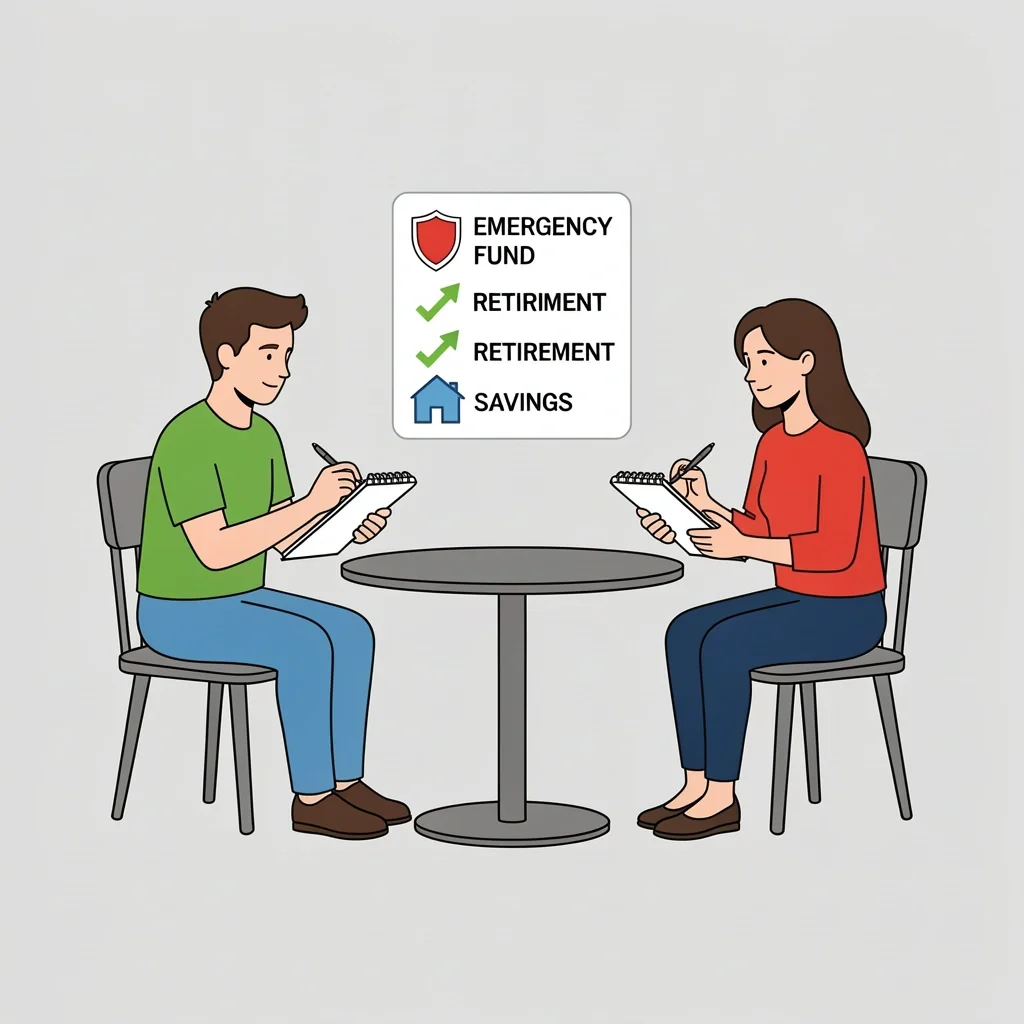
Before you look at a single vendor, sit down with your partner and answer these questions honestly:
- What is your combined take-home pay each month?
- How much do you owe in student loans, car payments, or credit card debt?
- Do you have an emergency fund that covers at least three months of expenses?
- How much are you saving for retirement each month?
- How much are you saving for a house or other major goal?
If you do not have an emergency fund, stop. That is your first priority. A wedding is not an emergency. If you lose your job next month, an extra $5,000 in the bank matters more than a fancy table setting.
Once you know your baseline, decide how much you can save each month for a wedding without touching your other savings goals. That number, multiplied by how many months you have until the wedding, is your budget. It is that simple.
A Real Example
Two partners earning $80,000 combined. They save 15% for retirement. They put $500 a month toward student loans. They have a $10,000 emergency fund. They want to get married in 18 months.
After all obligations, they have $600 extra per month. That means they can save $10,800 total for the wedding. That is their responsible number. If they want more, they have to either extend the timeline or cut something else permanently.
Value-Based Spending Works Better Than a Dollar Amount

A responsible wedding is not about a fixed number like $15,000 or $30,000. It is about how you allocate what you have.
Most couples waste money on things they do not actually care about because tradition says they should have them. Think about the last five weddings you attended. Can you describe the table centerpieces? Probably not. But you remember if the food was good and if the music was fun.
The Priority Exercise
Make a list of ten common wedding categories:
- Venue
- Food and drink
- Photography and videography
- Music or DJ
- Attire (dress, suit, accessories)
- Flowers and decor
- Invitations and stationery
- Cake or dessert
- Transportation
- Favors
Each partner ranks them from most important to least important. Compare your lists. Find where you agree. Spend the most money on the things you both rank high. Spend the least on the things you both rank low.
This exercise alone can cut your budget by 30% without reducing your happiness. You stop paying for things you do not value.
A Simple Allocation Framework
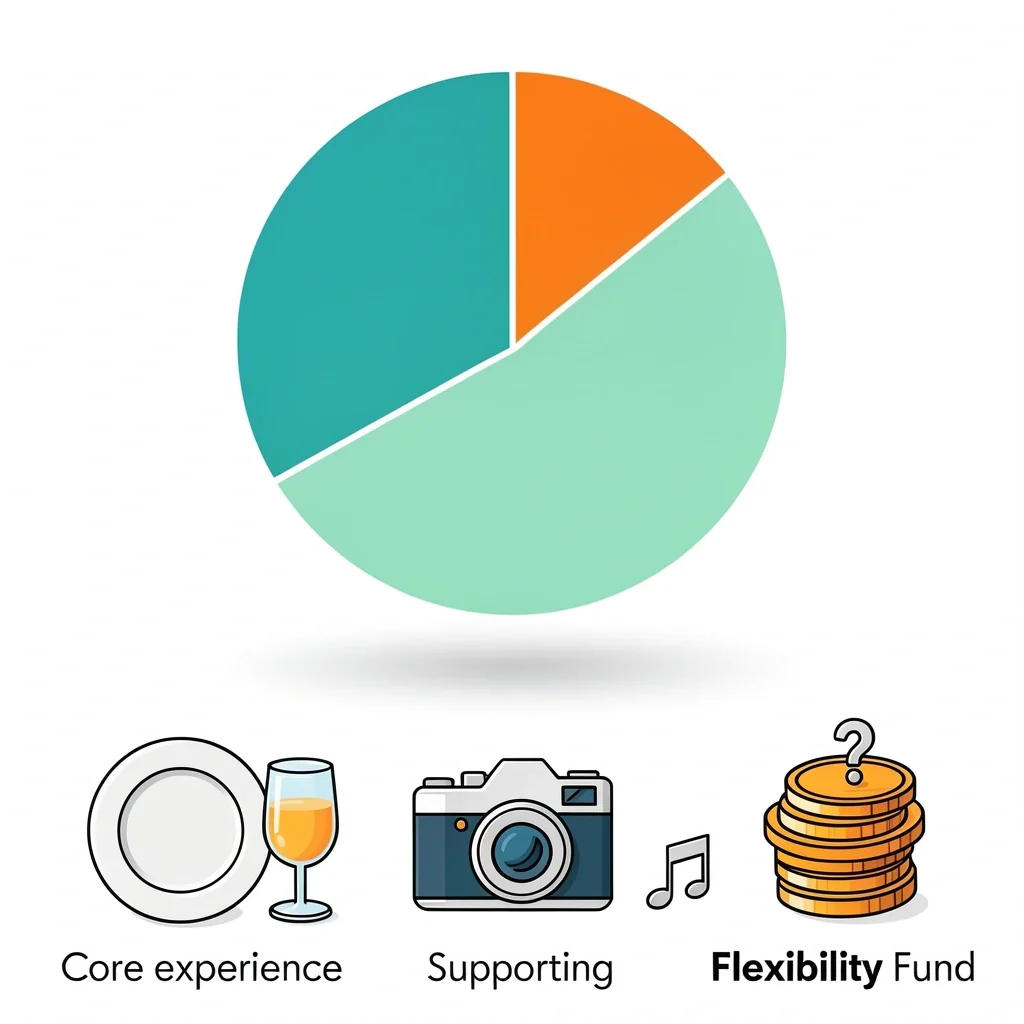
Once you know your total budget, use a simple split to avoid overspending on low-value items:
| Category | Percentage | Why |
|---|---|---|
| Core experience (venue, food, drinks) | 50% | This is what guests actually remember. Spend here. |
| Supporting elements (photography, attire, music) | 30% | These enhance the day but do not define it. |
| Flexibility fund (unforeseen costs, guest gifts, adjustments) | 20% | Things will surprise you. This buffer prevents panic spending. |
This is not a rigid rule. It is a guardrail. If you spend too much on the dress and not enough on the venue, you will feel the squeeze later.
How to Handle Money from Family

Parental contributions can help a lot, but they often come with invisible strings attached. A mom who pays for the flowers might also insist on specific flower types. A dad who covers the venue might expect a say in the guest list.
Before you accept money, have a direct conversation. Ask: “If you give us this money, do you expect to make decisions about how it is spent?” If the answer is yes, decide if that trade-off is worth it.
If the answer is no, get it in writing. Even a short text message counts. It protects your relationship when disagreements arise later.
What to Say
If a parent wants to add guests you cannot afford:
“We love that you want to include your friends. Our venue has a hard limit based on our budget. If you want to add 20 more people, would you be willing to cover the additional cost? Otherwise, we need to keep the list where it is.”
This reframes the conversation from “you are being difficult” to “here is a solution that respects both sides.”
The Opportunity Cost of Every Dollar

Every dollar you spend on your wedding is a dollar that cannot go toward something else. That is opportunity cost. It is the most important concept for responsible wedding spending.
Think about what you give up:
- $1,000 spent on a wedding is $1,000 less for a house down payment.
- $1,000 invested at age 30 grows to about $7,600 by age 60, assuming a 7% return.
- A $10,000 wedding costs you roughly $76,000 in future retirement money.
This is not meant to make you feel guilty. It is meant to help you decide consciously. If knowing that fact makes you want to cut the floral budget, do it. If you still think the flowers matter that much, then you are making an informed choice, not a reckless one.
Navigating Partner Disagreements
It is rare for two people to want exactly the same wedding. One person might want a big party. The other might want a small elopement. This tension is normal.
The solution is not to split the difference. That leads to a mediocre wedding that neither of you really wants and a budget that is larger than either of you planned.
Instead, use the priority exercise from earlier. Each partner gets a set number of “non-negotiable” items. For example, you each pick three things you absolutely must have. Everything else is open to compromise. This gives each person control over what matters most to them without letting the budget balloon.
Myths vs. Reality
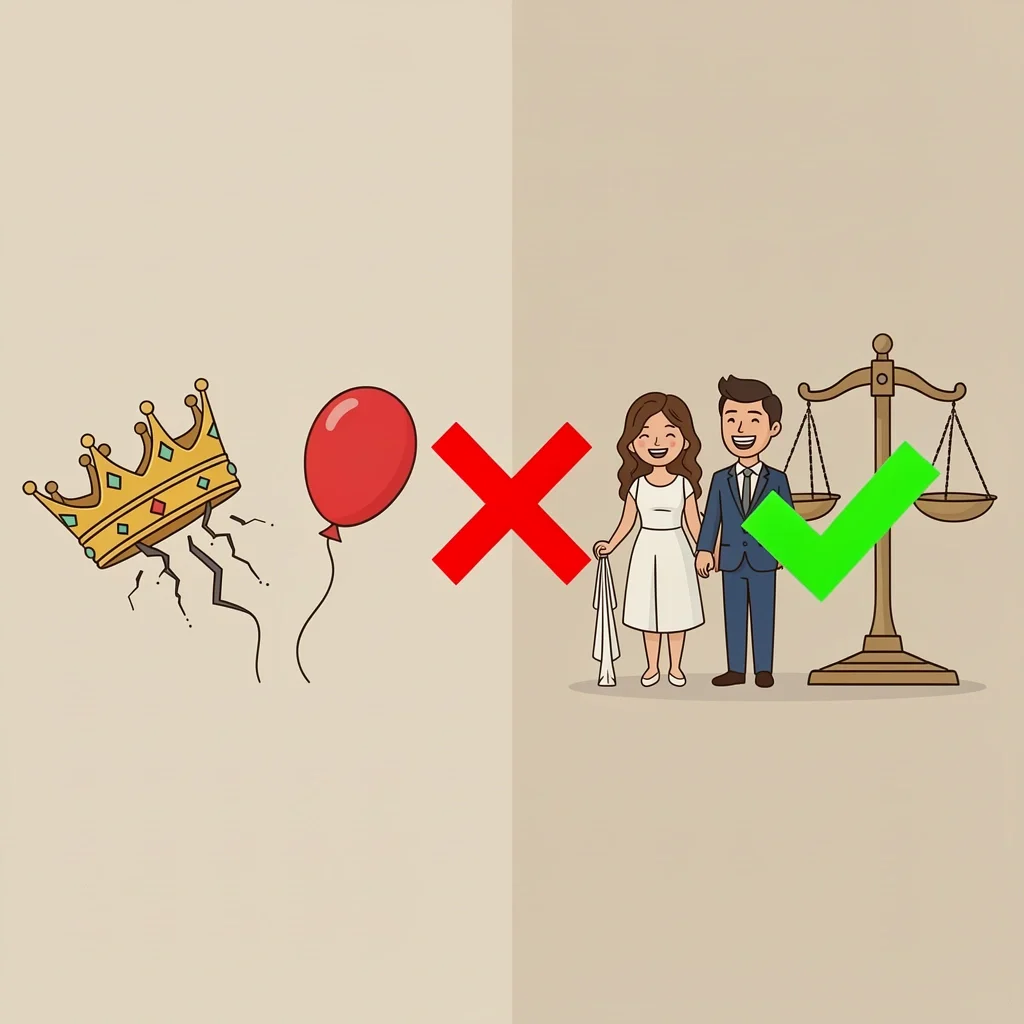
Some common beliefs about wedding spending are simply wrong. Here is the truth:
| Myth | Reality |
|---|---|
| You only get married once, so spare no expense. | A one-day event does not define your marriage. Your financial health does. |
| A bigger budget means a better wedding. | Guest experience comes from thoughtful details, not a high price tag. A cold buffet and loud DJ are the same regardless of cost. |
| You must match the average cost in your area. | Averages include top-tier events. A responsible wedding is one you can afford, not one that matches a statistic. |
The 80/20 Rule for Weddings
You may have heard of the 80/20 rule. It is a prioritization tool, not a strict formula.
The idea is to spend 80% of your budget on the things that create the most meaningful experience for you and your guests. That usually means good food, a comfortable venue, and a skilled photographer. The remaining 20% covers everything else: favors, decor, extra details.
For those aiming to keep guest lists small without sacrificing depth, learning how to plan a small wedding that feels big on meaning offers a perfect framework.
It works because most couples spend too much on the last 20% and not enough on the first 80%. If you can only afford one thing to be excellent, make it the food. Hungry guests remember nothing else.
Is $10,000 a Good Amount for a Wedding?
That depends entirely on your income and financial situation. A general rule of thumb from financial planners is to spend no more than 10% of your combined annual gross income on the wedding.
If you earn $100,000 together, $10,000 is reasonable. If you earn $50,000, $10,000 might be too much, especially if you have debt or no emergency fund.
A better question is: “Can I pay for this without borrowing money?” If the answer is yes, and you are still meeting your other savings goals, then the number is fine.
What About Wedding Gifts?
The question of how much to give as a wedding gift is separate from how much to spend on your own wedding. But it is related because couples often feel pressure to “receive” a certain amount.
If you are attending a wedding as a guest, the standard gift is between $100 and $150 per person, depending on your relationship with the couple and your own budget. But if you are the couple getting married, do not plan your budget around expected gifts. Some guests will give less than you hoped. Some will give nothing. Counting on gift money to pay your vendors is a recipe for stress.
Instead, plan your spending based only on your own savings. Consider any gifts as a bonus, not a necessity.
Do You Regret Spending Money on a Wedding?
Yes, many couples do. A survey found that about 60% of couples who spent over 20% of their annual income on their wedding later regretted it. The regret is not about the wedding day itself. It is about ignoring long-term goals for a single day.
The couples who do not regret their spending are the ones who set a responsible budget, stuck to it, and focused on what actually mattered to them. They did not try to impress people. They did not let family pressure dictate their choices. They planned a day that reflected their values, not their credit limit.
Frequently Asked Questions
What is the 80/20 rule for weddings?
Spend 80% of your budget on what creates the most meaningful experience for you and your guests: good food, a comfortable venue, and a skilled photographer. Spend the remaining 20% on everything else like favors, decor, and extra details. It is a prioritization tool to prevent overspending on low-value items.
What is the 50/30/20 rule in marriage?
For wedding budgeting, the 50/30/20 approach means allocating 50% to the core experience (venue, food, drinks), 30% to supporting elements (photography, attire, music), and 20% to a flexibility fund for unexpected costs. This prevents overspending on peripheral items and keeps your budget balanced.
Is $500 a generous wedding gift?
Yes, $500 is a generous gift for a single person or couple attending a wedding. Standard gifts range from $100 to $150 per person. The amount depends on your relationship to the couple and your own financial situation. Do not go into debt to give a gift.
Is $10,000 a good amount for a wedding?
It depends on your income. A common guideline is to spend no more than 10% of your combined gross annual income on the wedding. For a couple earning $100,000, $10,000 is reasonable. For a couple earning $50,000, it may be too high, especially if you have debt or no emergency fund. The key is to pay with cash and not disrupt other savings goals.
Should we accept financial help from parents?
Yes, but only if the money comes with no strings attached. Have a clear conversation first about what, if any, expectations come with the contribution. If a parent wants control over decisions, you must decide if that trade-off is worth it. Otherwise, it is better to decline politely than to risk your relationship over budget disagreements.
How do we split wedding costs with our partner fairly?
Agree on a total savings target first. Then each partner contributes proportionally based on their income. Avoid splitting 50/50 if one person earns significantly less. That approach can create resentment. Focus on a plan that both of you can afford comfortably without sacrificing other financial goals.