
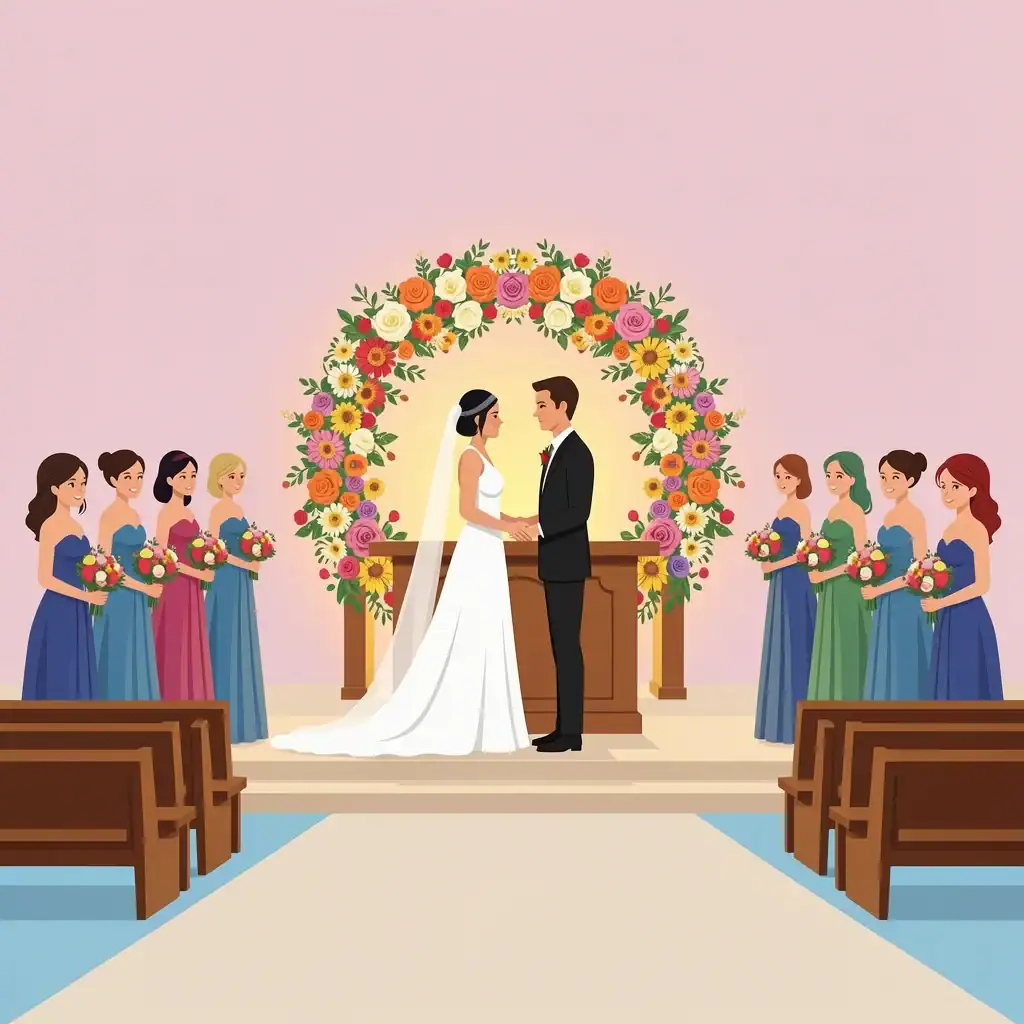
You want your three best friends standing next to you on the big day. Your partner does not want anyone standing next to them. That is the situation, and it is a good one. Because you are making a choice based on real relationships, not on what a wedding magazine from 1985 said you have to do.
Here is the short answer: yes, this works. It works well. But you need a plan for each part of the wedding day, because some parts change when one side is empty. This guide walks you through every stage — ceremony, photos, seating, speeches, and preparation — so you can hand this to your photographer, your planner, and your partner and say “this is what we are doing.” No guesswork required.
Why Couples Choose Asymmetrical Bridal Parties

The most common reason is simple: your partner does not have three or four guys they feel close enough to ask. Forcing them to pick groomsmen just for symmetry creates fake relationships that show up in photos and fade after the wedding. That is not worth it.
Other reasons include a partner who is introverted and does not want the attention of a group, a small wedding where a large wedding party feels oversized, or a situation where the bride has sisters or cousins she wants included and the groom does not have the same.
Whatever the reason, you are making a decision based on honesty. That is always the right call. And guests do not care nearly as much as you think they do. They came to see you get married, not to count how many people are on each side of the altar.
How the Ceremony Processional Works With Uneven Sides
This is the part most articles skip, and it is the part that causes the most anxiety. Here is exactly how to handle every moment from the start of the music to the first kiss.
The Groom’s Entry
Your partner has three good options here. First, they can walk down the aisle with both parents. This looks natural and gives the parents a meaningful moment. Second, they can enter from the side and take their place at the altar before the processional starts. Guests are looking at the aisle, not at the altar area, so this happens without anyone noticing. Third, they can walk down with a close friend or sibling who is not a groomsman. This friend simply sits in the front row after escorting the groom to the altar.
None of these look awkward. The key is to choose one option and tell the officiant and the wedding coordinator exactly what you decided. No improvisation on the day.
The Bridesmaid Processional
With no groomsmen to pair them with, bridesmaids can walk single file. This is the standard approach and it works well. Another option is to have them walk in pairs if you have an even number of bridesmaids or in a group of three. A third option is to have each bridesmaid walk with a significant other or family member. This adds people who matter without creating a formal role.
Your bridesmaids can walk to the same song, or you can stagger their entrances across two songs. Talk to your musician or DJ about timing so there is no dead silence between walks.
The Altar Formation
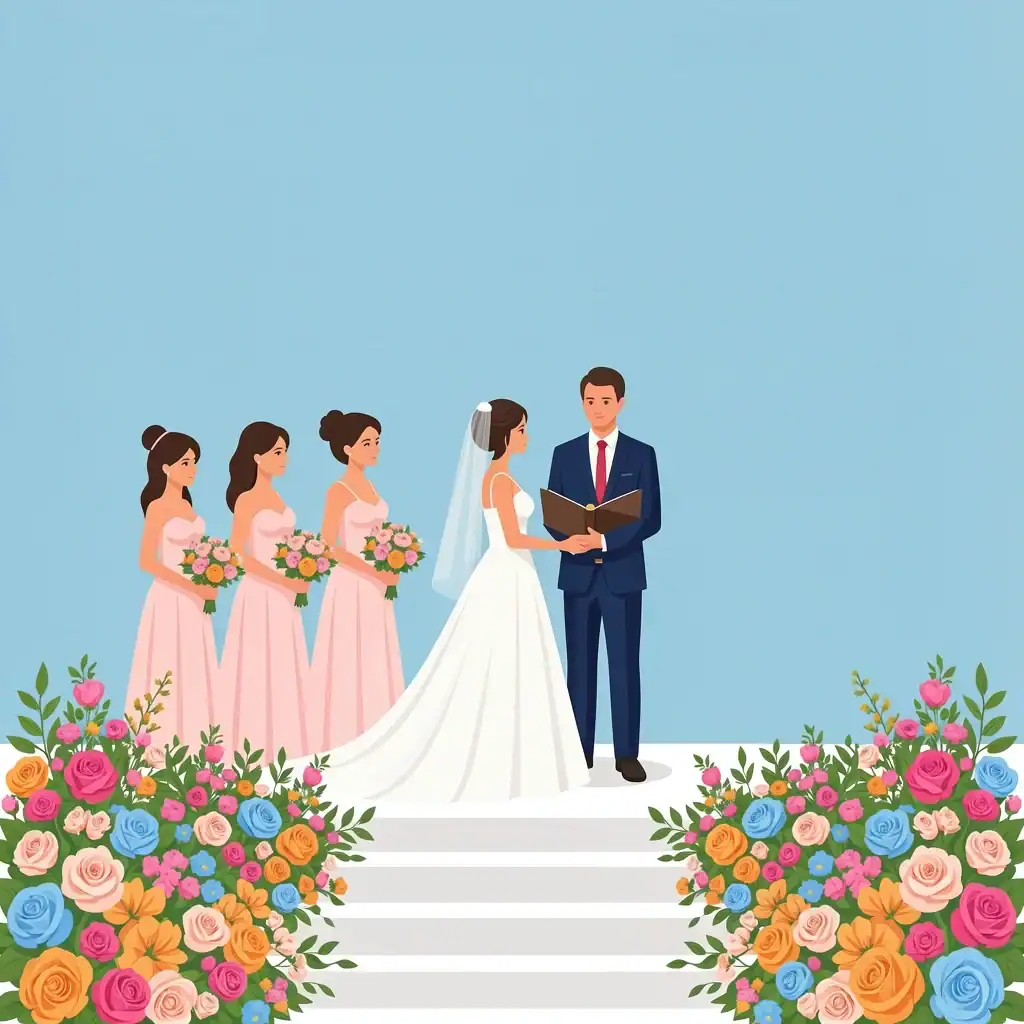
This is where asymmetry becomes visible. Here is how you handle it. Have your bridesmaids stand on one side of the altar, staggered so they are not perfectly lined up. Instead of standing in a straight row parallel to the guests, position them at a slight angle. This creates visual depth and fills the space differently than a straight line would.
Your officiant can stand closer to the groom’s side of the altar. This visually balances the space without adding bodies. If your officiant is comfortable with it, they can stand between the couple during the ceremony, which naturally centers the focus on the two of you rather than on the wedding party.
If your partner is standing solo at the altar, they can hold their hands in front of them or rest one hand on the altar edge. This looks natural. The photographer can also position the shot wider to include more of the ceremony backdrop, which makes the solo groom look intentional rather than lonely.
Photography That Embraces Asymmetry

Great wedding photographers shoot asymmetrical parties all the time. They know it looks modern and honest. What matters is how you brief them. Use these three sentences when you talk to your photographer:
- “We have bridesmaids and no groomsmen. Please use cluster techniques rather than straight lineup shots.”
- “For the full group photos, fold in close friends and family to fill the groom’s side naturally.”
- “Focus on candid shots of the couple and the bridesmaids together rather than trying to force symmetry.”
Two framing techniques work best. The cluster technique groups people in organic arrangements. You stand in the center with bridesmaids clustered around one side and two or three close friends or family on the other side. The lineup technique puts everyone in a straight row, which works when you have enough bodies on both sides to look balanced. For an asymmetrical party, you want the cluster technique most of the time.
Prop usage can also fill empty space. A bouquet, a flower arch, or even the groom holding a prop like a sign can visually balance the frame. Environmental framing uses the background — a tree, a doorway, a window — to naturally balance the shot so the empty side does not feel empty.
One specific shot to add to your list: the bridesmaids surrounding both of you in a semi-circle. This looks incredible because it centers the couple and shows the support system without creating a side imbalance. Another add: the groom with your bridesmaids in a casual laughing shot. The groom standing in a group of women reads as charming, not awkward.
One shot to skip: the formal symmetrical lineup where the groom stands alone on one side and three bridesmaids stand on the other. That shot highlights the imbalance. Your photographer should know to skip it unless you specifically want it.
Seating Plans That Eliminate Awkwardness
A traditional head table with the wedding party sitting on one side and the couple in the middle looks lopsided when one side has three people and the other side has zero. You have better options.
The Sweetheart Table
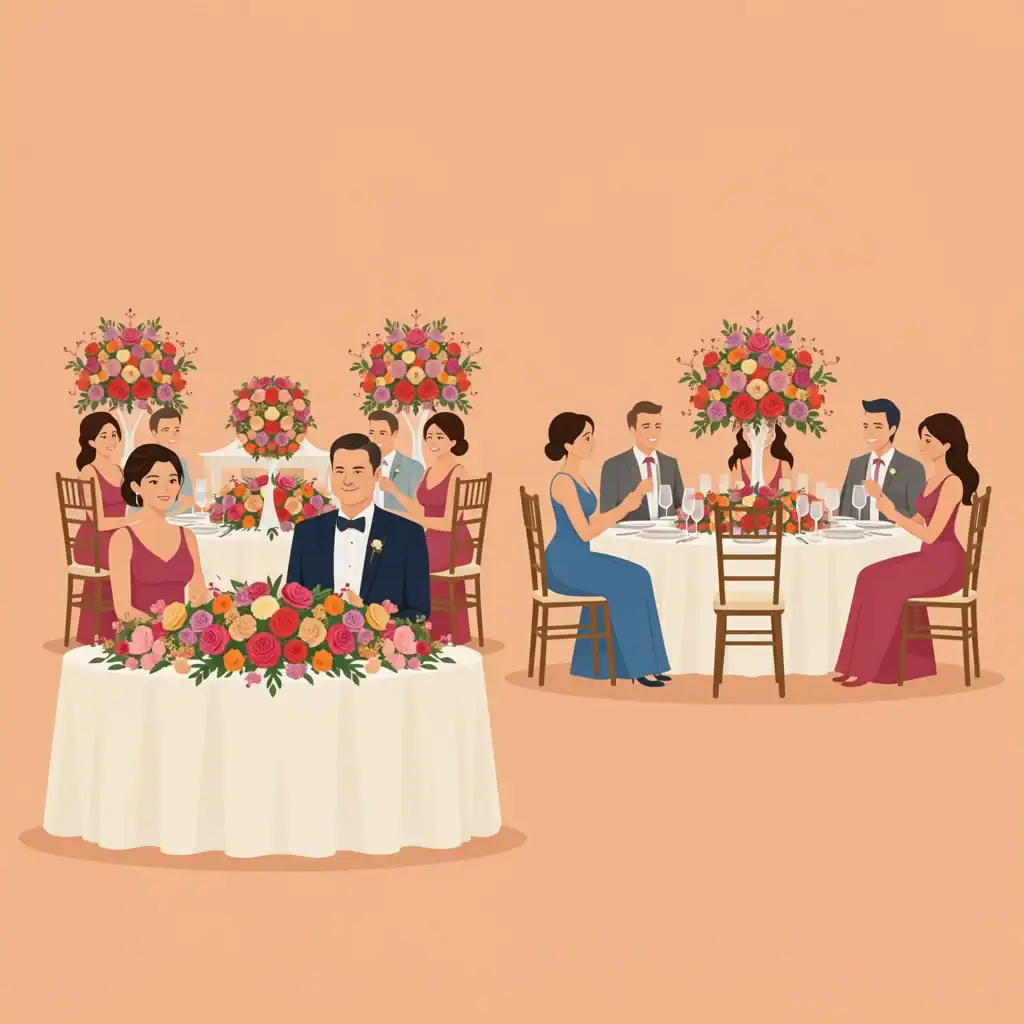
This is the most common fix and it works well. Just the two of you sit at a small table. Your bridesmaids sit at a nearby table with their partners or friends. The groom’s close friends sit at another table. No one notices the imbalance because there is no head table to compare against. The downside is that you are separated from your bridal party during dinner, so plan to visit their table afterward.
The L-Shaped Head Table
This is a middle ground. Your bridesmaids sit along one side of a long table. You and your partner sit at the corner or end of the table. The groom’s close friends or family sit on the other side. This creates an L shape that feels organic rather than forced. It also lets you face your guests while staying connected to your bridal party.
The Mixed-Gender Bridal Party Table
If your bridesmaids have male partners, seat them together at one long table. The groom’s close friends sit at the same table. This creates a full table that looks balanced without anyone needing a title. Assign name cards or table signs so people know where to go.
The Family-and-Friends Table
Skip the concept of a wedding party table entirely. Seat everyone — bridesmaids, their partners, the groom’s friends — at a larger table or multiple tables mixed with family. This removes any visual imbalance and creates a warmer, more inclusive atmosphere. It also means your bridal party sits with people they know and enjoy.
If you want a head table but need balance, seat the groom’s parents on one side of the table and the bride’s parents on the other. This fills the space with family and makes the table look full from every angle.
Redistributing Groomsmen Responsibilities
Groomsmen have jobs. When there are no groomsmen, those jobs still need to happen. Here is who does what.
Best Man Duties
Three specific tasks need assigning. The speech or toast can go to a close friend of the groom, a brother, or the groom’s father. Choose someone who speaks comfortably in public and who actually knows the groom well enough to say something genuine. Ring security goes to one of your bridesmaids or a trusted friend who will be near the groom before the ceremony. Witness signing goes to any guest over 18. Your officiant or wedding coordinator will tell you who can legally witness in your location.
Bachelor Party Planning
Your bridesmaids can plan the bachelor party if the groom is close with them. More often, the groom’s friends handle this without any title. They just organize a night out or a weekend trip. No one needs to be a groomsman to plan a party. The groom should pick one or two people to lead the planning and give them his calendar.
Ushering and Guest Management
Ushers direct guests to their seats before the ceremony. Without groomsmen, you have two options. First, ask a few volunteers — cousins, family friends, or close work colleagues — to arrive early and help seat people. Second, eliminate formal ushering entirely and let guests seat themselves. Most weddings today skip formal ushering anyway. It saves stress and feels more relaxed.
Groom’s Getting-Ready Support
The groom still needs someone to help with the bow tie, calm nerves, and share a drink before the ceremony. He can invite his dad, a brother, a best friend, or even his mother. This is not a formal role. It is just company during the hours before you walk down the aisle. The groom should think about who makes him feel calm and ask them to arrive early. No title needed.
The Groom’s Side — What to Expect and How to Prepare
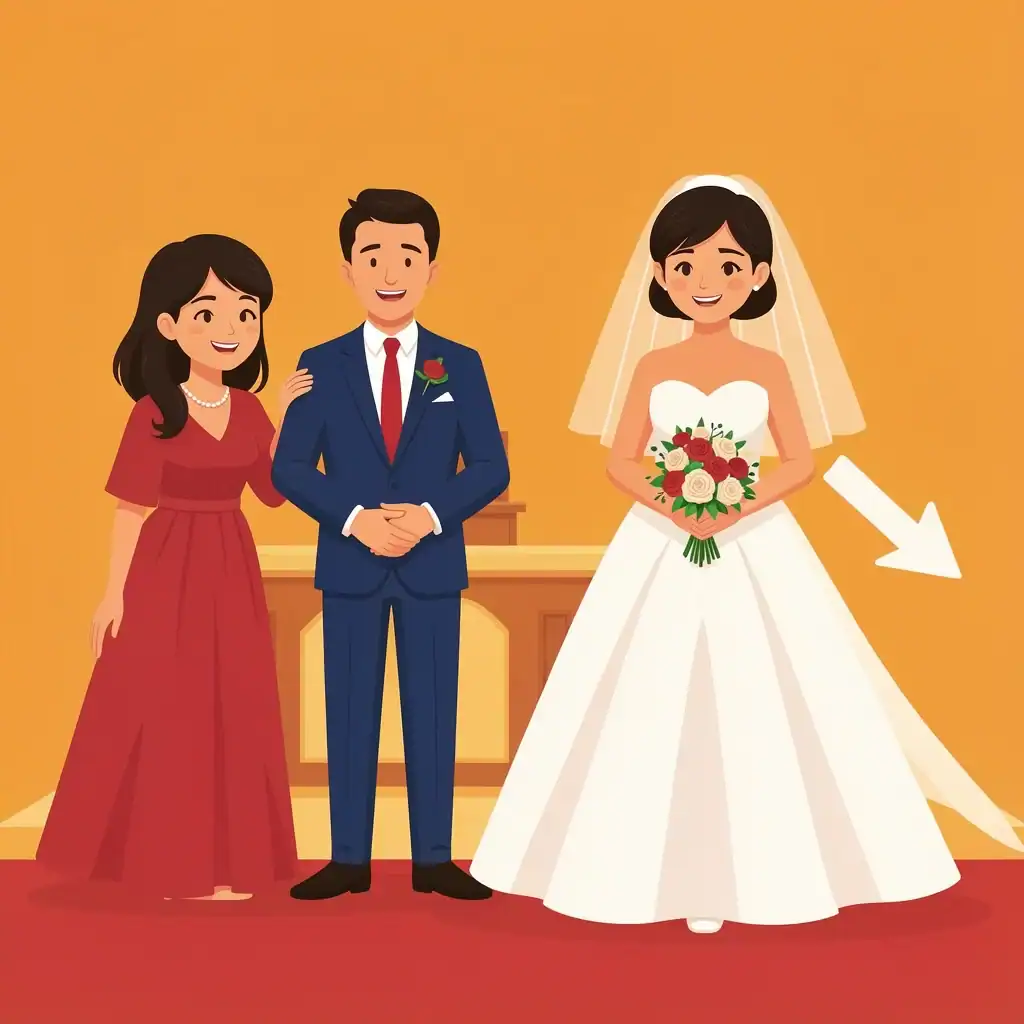
This is the part that does not get talked about enough. Your partner may feel awkward standing alone at the altar. That is normal. Here is how to handle it together.
First, talk about it openly. Ask your partner: “How do you feel about standing at the altar with no one next to you?” Listen without fixing. The answer might be “fine” or “weird” or “I honestly do not care.” All are valid. The goal is to make sure you both understand each other’s feelings before the day arrives.
Second, give your partner permission to have a support system without calling it a wedding party. Maybe they want one person to stand with them — a brother, a friend, a parent. That person does not need a matching suit or a title. They just stand on the groom’s side of the altar. This is often called a groom’s attendant or witness, but you do not have to call it anything. It is just a person who stands with your partner.
Third, practice the altar formation at the rehearsal. Everyone will feel awkward once before the actual ceremony. That is normal. Once you see it in real space, the anxiety drops because you realize it looks fine.
Fourth, let your partner choose their own pre-ceremony routine. Some grooms want quiet time alone. Others want a crowd around them. Respect what they need and plan the day around it. The groom’s experience matters just as much as yours.
What Wedding Guests Actually Notice (And What They Don’t)
Here is the truth from people who have shot hundreds of weddings: guests watch the couple. They are focused on you walking down the aisle, on your facial expressions during the vows, on your first kiss. They do not count how many people are on each side of the altar. They do not notice if the groom is standing alone unless something dramatic draws attention to it.
In photography, the asymmetry blindness effect is real. When guests look at wedding photos later, they see the people they know. The bride. The groom. Their own family. They do not scan the wedding party to check for balance. Multiple real wedding examples show that asymmetrical parties produce more memorable photos than symmetrical ones because the focus stays on the couple instead of spreading across a large group.
The speech test proves this. After the wedding, guests remember the toasts that were funny or heartfelt. They do not remember whether the best man was a groomsman or a friend of the groom. The title does not matter. The words do.
Frequently Asked Questions
Can I ask someone to walk down the aisle who is not a bridesmaid or groomsman?
Yes. You can have parents walk with the couple. You can have children walk down as flower kids or ring bearers. You can have a close friend escort the groom or walk a bridesmaid. These people do not need a formal role. They just participate in the ceremony in a meaningful way. Your officiant can include any of these options in the processional without changing the wedding party structure.
Does the website need to list both sides equally?
No. On your wedding website, list your bridesmaids separately from the groom’s party. If there are no groomsmen, simply do not list a groom’s party section. Or list it as “Groom’s Support Team” and include the friends or family who helped him prepare. You can also skip listing roles entirely and just list the people who matter to you both. No one checks the website for symmetry.
What if the groom wants groomsmen later but does not now?
This is pressure from family or from comparing with other weddings. Talk through it honestly. If your partner does not want groomsmen, do not push. Forcing them to add people now creates stress and fake relationships. If the pressure comes from in-laws, the bride can handle that conversation directly: “We decided to keep our wedding party focused on the people we feel closest to. This decision makes us both happy.” That ends the discussion.
Should bridesmaids wear different styles to emphasize asymmetry?
Not necessary, but an option if you want to lean into the asymmetry. Having bridesmaids wear different dress colors or styles can make the imbalance look intentional and editorial. Matching bridesmaids works fine too because the asymmetry comes from the party size, not the clothing. Choose what makes you and your bridesmaids feel confident.
How do I announce this on our wedding website?
Simple wording works best. Write: “Our wedding party includes [Name], [Name], and [Name] as bridesmaids. The groom will be supported on the day by close family and friends. We cannot wait to celebrate with everyone.” This does not apologize or explain. It just states the facts. If anyone asks, you say “This is what feels right for us.” That is the complete answer.
What happens during the receiving line?
The receiving line traditionally includes the couple and both sets of parents. You can add your bridesmaids if you want, but you do not have to. Without groomsmen, the receiving line is shorter and faster, which guests actually prefer. Stand in order: bride, groom, then parents of the bride, then parents of the groom. Your bridesmaids can stand nearby or mingle with guests. This is not a formal part of the day that requires symmetry.
The Final Word
Having bridesmaids and no groomsmen is not a problem to solve. It is a choice to own. The ceremony, the photos, the seating, the speeches, and the preparation all have clear solutions that work. The only thing you need is a plan and the confidence to follow it.
Talk to your photographer with the three sentences from this guide. Talk to your officiant about the altar formation. Talk to your partner about how they feel standing at the altar. Then let the rest of the day happen exactly as it should — centered on the two of you and the people you actually love.
That is what matters. And that is what everyone will remember.
I believe the wedding can go without the groomsmen. However, it would be ideal if you could arrange for groomsmen to attend the wedding. As a result, communication should be prioritized ahead of time. All of my bridesmaids and groomsmen are present at my wedding at Victory North Savannah ).