
Writing your own wedding vows sounds romantic until you sit down with a blank page and your heart feels too big for words. You want something personal, not a generic template. You want it to be beautiful, but not fake. The pressure can freeze you.
Here is the one thing you need to hear: Your vows don’t need to be perfect. They need to be true. That shift in mindset is what unlocks everything. This guide walks you through the whole process — from talking with your partner about tone, to getting your messy thoughts out, to polishing them into something you can deliver with confidence. No fill-in-the-blank formulas here. Just real steps you can follow.
Agree on a Vow Strategy First
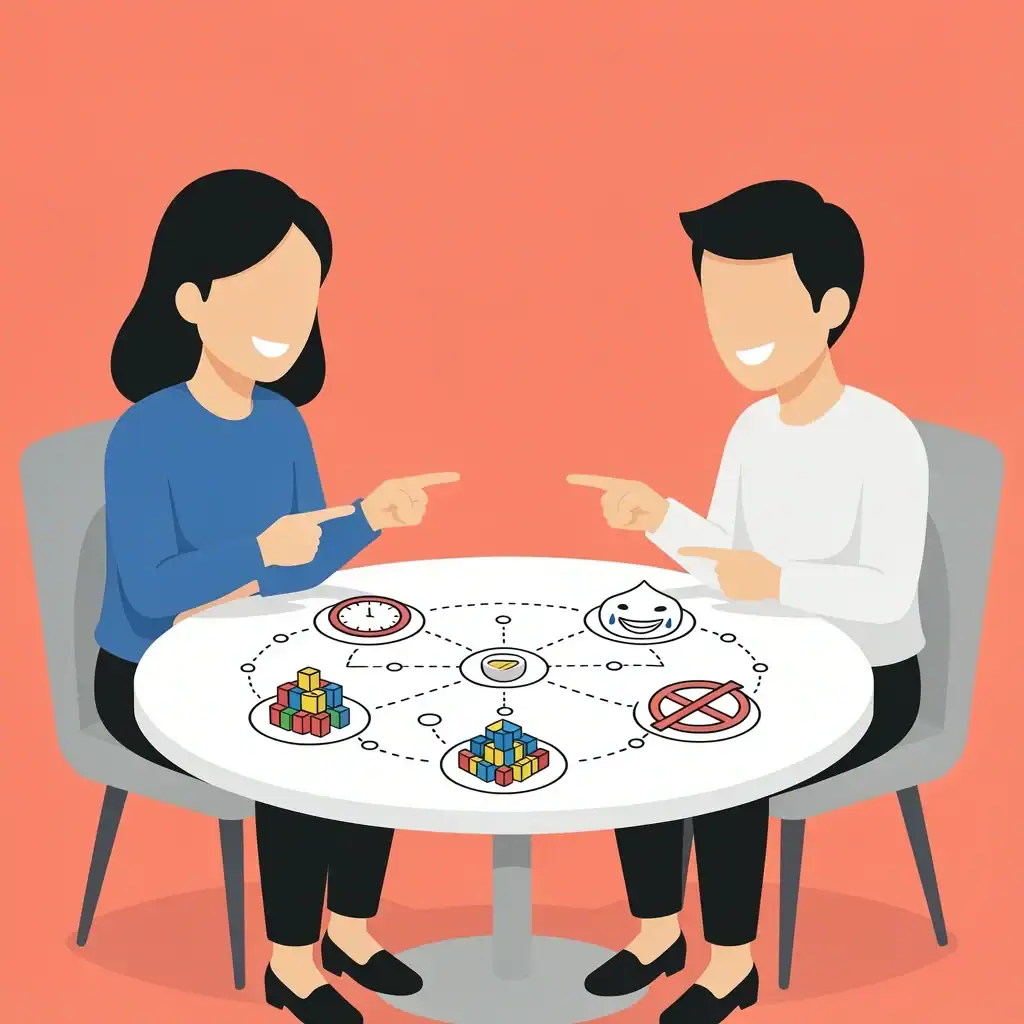
Before you write a single word, you and your partner need to agree on the big picture. This strategy conversation prevents awkward surprises on the wedding day.
Sit down together and answer these questions:
- How long should each set of vows be? Most personal vows run between one and three minutes when spoken aloud. Pick a range you both feel good about.
- What tone fits you both? Funny, sentimental, serious, or a mix? If one of you wants to crack jokes and the other wants pure poetry, you need to find middle ground. It’s okay to have different styles as long as you both know what’s coming.
- What structure works? Will you tell a short story, or stick to a list of promises? Maybe a blend. Decide together so your vows feel balanced ceremony-wise.
- Set boundaries. Are there topics you want to avoid? Embarrassing childhood stories, exes, religious content, or inside jokes that would leave guests confused? Get clear now and save yourself rewrites later.
After you agree, keep the actual content a surprise. That way the ceremony moment stays fresh and emotional.
Overcome Writer’s Block with a Total Brain Dump

Staring at a cursor is the worst part. The cure is to stop trying to write vows and just dump everything onto the page. You can shape it later. First, you need raw material.
Use the “Shoebox Method.” Grab a box or a digital folder and fill it with anything that reminds you of your relationship: old photos, ticket stubs, letters, screenshots of funny texts, a playlist, or notes you’ve saved. Spend ten minutes looking through it. Let memories surface.
Then open a blank document and answer these prompts. Don’t edit. Don’t judge. Just write whatever comes:
- What did I think of you the first time we met?
- When did I first realize I loved you?
- What do I miss about you when we are apart?
- What is one small thing you do every day that makes my life better?
- What challenge have we faced together that made us stronger?
- What do I look forward to most in our future?
Keep going until you have at least a page of raw thoughts. This is your Draft 1. It will be chaotic, and that is exactly what you need.
Refine Your Raw Material into Powerful Prose
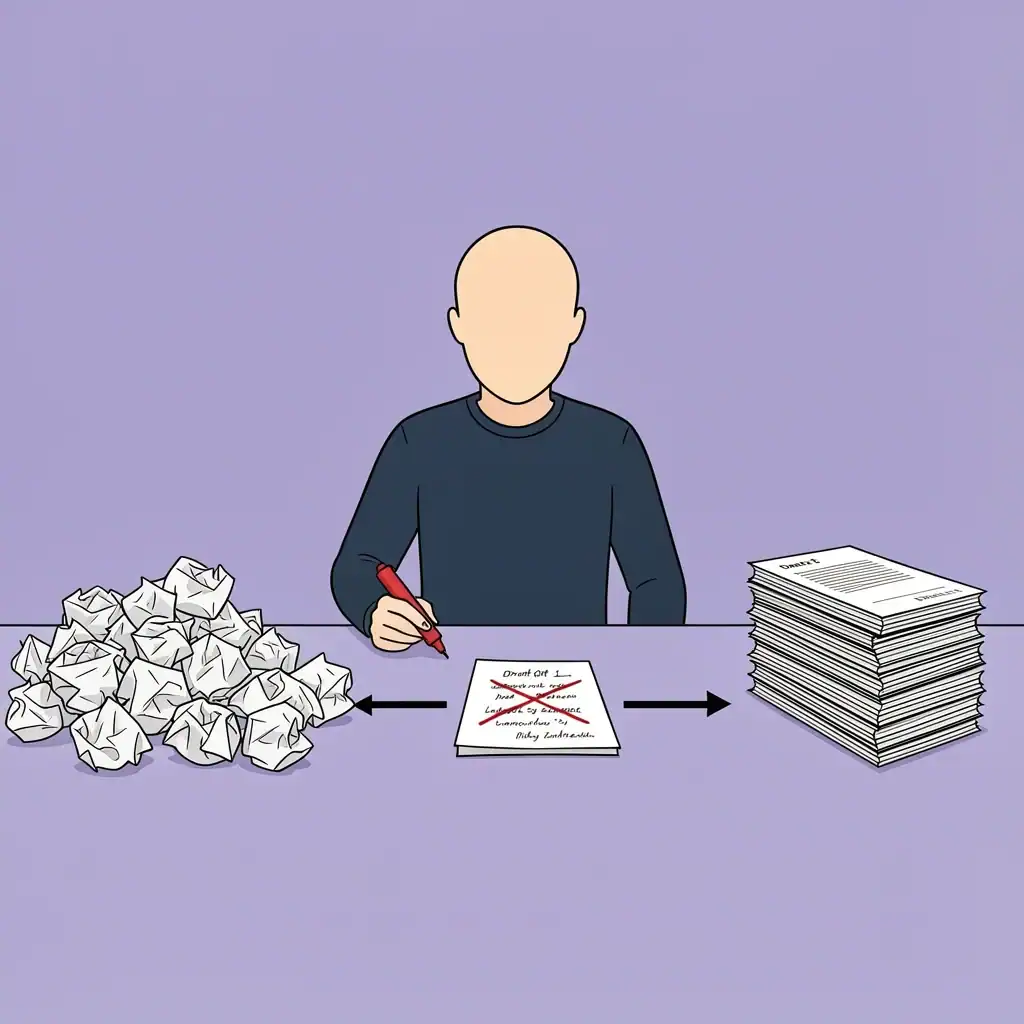
Now you turn that messy brain dump into actual vows. Use the Three Draft Method to go from feelings to finished words.
Draft 2: The Architecture
Read through your brain dump and pick the strongest sentences. Look for moments that feel real and specific. Now arrange them into a rough order using the structure in the next section. You are not polishing yet — just getting the flow right.
Draft 3: The Line Edit
Read your draft out loud. This is non-negotiable. As you speak, notice which sentences sound clunky or too long. Cut anything that doesn’t feel honest. Tighten every promise so it uses the fewest words possible. Swap vague words (“always,” “everything”) for concrete details (“every morning I make you coffee,” “I promise to laugh with you even when I’m hangry”).
After you finish, read it aloud two more times. Each time you will hear new ways to improve rhythm and clarity. If a line makes you stumble, rewrite it until it flows.
Tip: Record yourself reading the vows and listen back. Your ear catches problems your eyes miss.
Build Your Vows with a Clear Structure
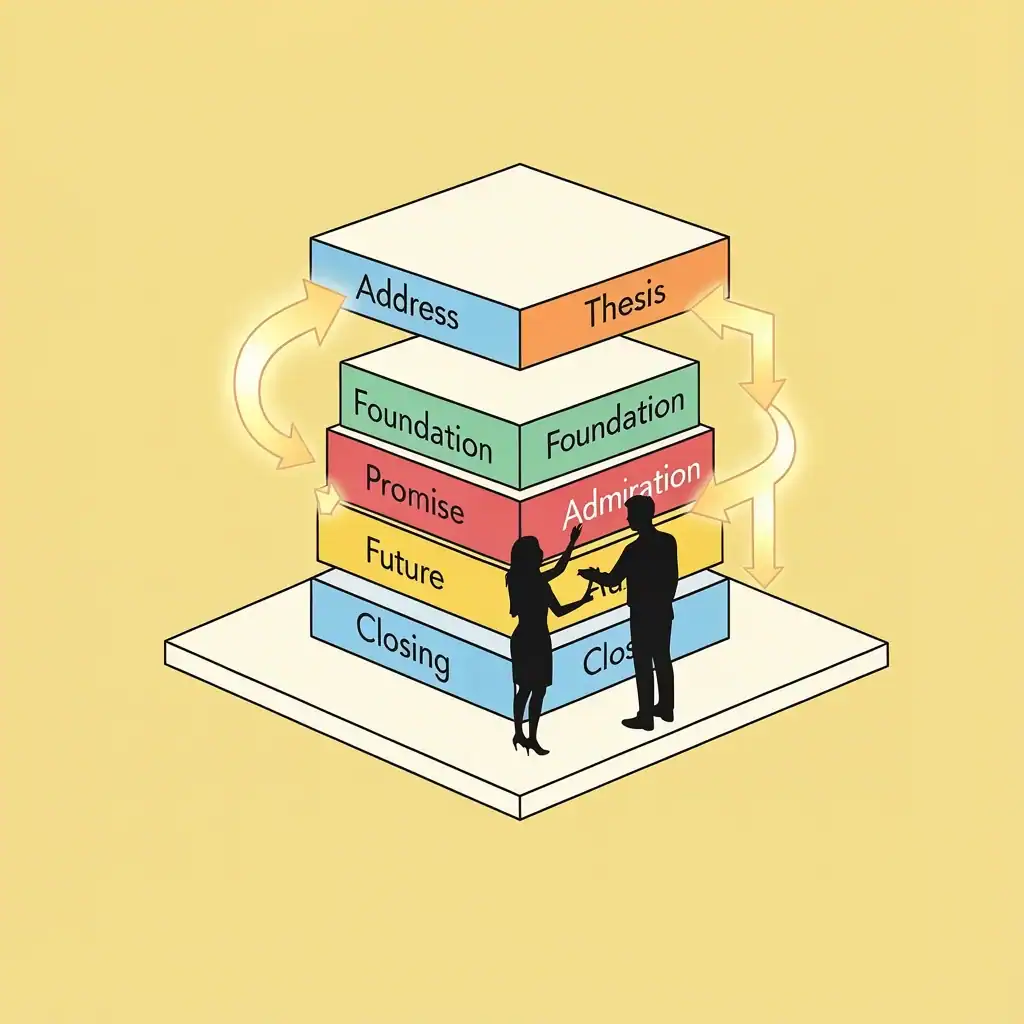
Most powerful vows follow a natural arc. You don’t have to include every element, but having a framework keeps you on track. Here is a proven anatomy:
- The Address. Start with your partner’s name or a special nickname. This grounds you both in the moment.
- The Thesis. One sentence that sums up how they changed your life. Example: “Before you, I didn’t know what it meant to feel completely home.”
- The Foundation. A short look back at your story. One or two sentences about where you started — the first date, the early days.
- The Admiration. What you love about them. Be specific: not just “you are kind,” but “you call your grandma every Sunday just to check in.”
- The Promise. The vows themselves. This is where you make commitments. Use the next section to craft promises that stick.
- The Future. A glimpse ahead. “I can’t wait to build a garden with you,” or “I look forward to growing old and still stealing your fries.”
- The Closing. End with a strong statement of love or commitment. “With all that I am, I choose you.” Or traditional lines like “As long as we both shall live.”
Fill in each section using the best material from your brain dump. You can skip or rearrange parts if it suits your voice. The structure is a guide, not a cage.
Write Promises Designed to Keep
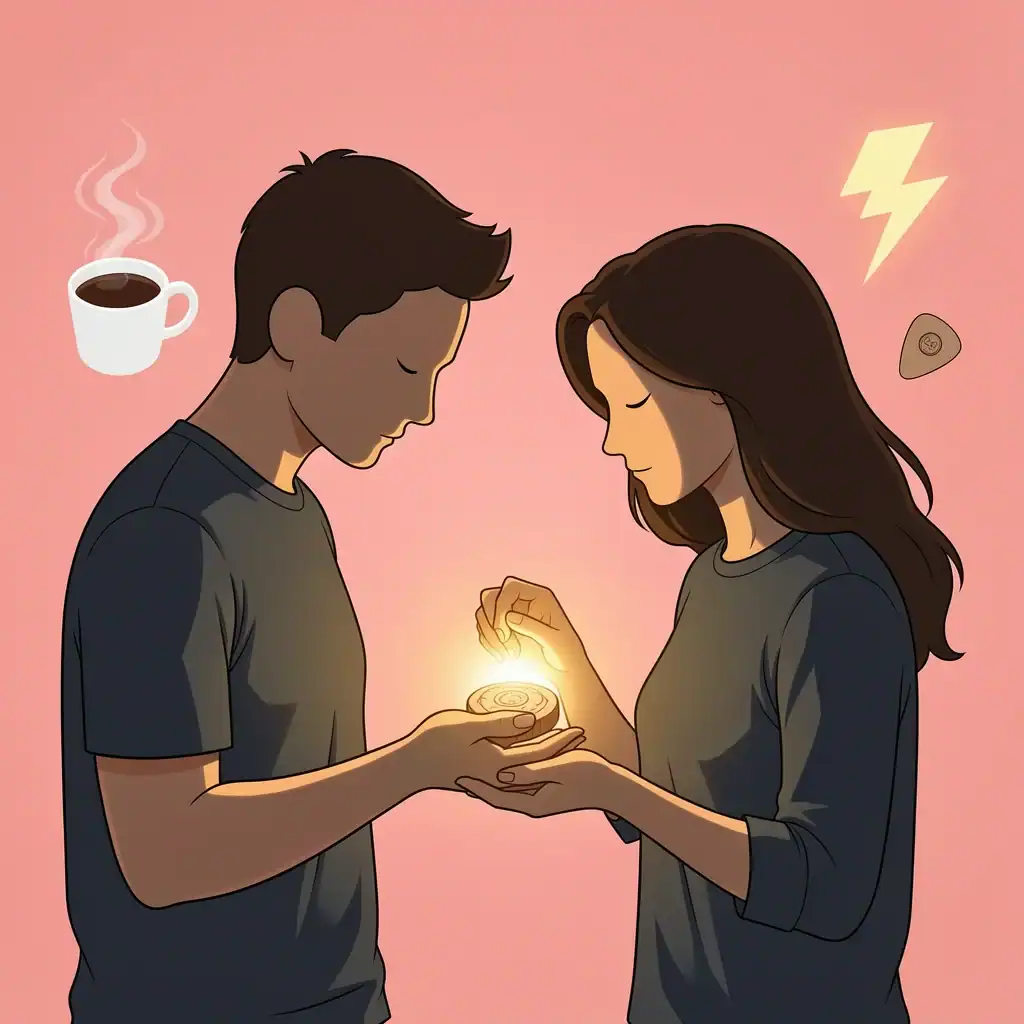
Generic promises feel hollow. “I promise to love you forever” is nice, but it doesn’t sound like your relationship. Specific small promises carry weight because they show you pay attention.
Use the Rule of Three Specifics: connect a specific memory or habit directly to a promise.
- Instead of “I promise to support your dreams,” say “I promise to help you practice your guitar every Tuesday, even when the notes go wrong, because I love watching you light up when you finally nail a song.”
- Instead of “I promise to always be there,” say “I promise to hold your hand during thunderstorms, because I know you hate them, and I will never make you face the cracks alone.”
When you tie a promise to a real moment, it becomes unforgettable. The guests will nod. Your partner will cry. That is the power of specificity.
Deliver Your Vows with Confidence
Writing great vows is half the battle. The other half is saying them without losing your cool. Here is what actually helps on the day:
- Use a vow book. Write or print your final vows in a nice notebook. Do not read from your phone. A book looks better in photos, and you won’t accidentally swipe to another screen.
- Practice out loud at least ten times. Say them to your mirror, to your dog, to a trusted friend. The more you say them, the more natural they feel. You won’t need to memorize perfectly, but familiarity calms nerves.
- Plan for tears. Your voice will crack. That is okay. Pause. Take a slow breath. Look at your partner. The pause feels like an eternity to you, but to everyone watching, it adds emotion. Do not rush through it.
- Hold your book in one hand. Hold it below your chin so you can glance down and then look up often. Keep both hands free if you can, but a small book is fine.
- Reframe nervousness. If your hands shake or your voice wavers, remember that your anxiety is proof you care. Honest emotion is more powerful than a flawless performance. Let the imperfections be part of the moment.
Avoid These Common Vow Writing Pitfalls
Knowing what not to do saves you from embarrassing rewrites. Here are the biggest mistakes people make:
- The Novelist Problem. You write three pages of backstory. Keep it under two minutes when spoken. Cut anything that isn’t essential. Your guests will thank you.
- The Generic Vow. “I promise to be your best friend.” That could apply to anyone. Replace generic phrases with concrete details from your life.
- The Inside Joke Monologue. One inside joke can be charming. A string of them leaves the audience cold. Make sure 95% of your vows are understandable to everyone in the room.
- The Repetitive Promise. Don’t say “I promise to love you. I promise to cherish you. I promise to always be by your side.” Say one strong promise instead of three weak ones.
Browse Wedding Vow Examples for Inspiration
Reading examples can spark ideas, but do not copy them. The best vows are the ones that sound like you. Here are a few annotated samples that show the principles in action.
Short and Sweet Vows
“Alex, you walked into my life and made everything brighter. Before you, I thought love was a feeling. Now I know it is a choice. I choose to laugh with you, to rest with you, and to stand beside you through every season. With all I have, I am yours.”
Why it works: It moves from concrete (walked in, made brighter) to profound (love as a choice). It uses short, rhythmic sentences. It ends strong.
Funny but Heartfelt Vows
“Jake, you are the only person I want to share my pizza with forever. I promise to never steal your pillow unless you snore too loud. More seriously, I promise to be the person you can count on when things get hard. You make even the boring days feel like an adventure, and I cannot wait for a lifetime of them.”
Why it works: Starts with a specific, funny promise (pizza, pillow). Then pivots to genuine commitment. The humor doesn’t overpower the emotion.
Deeply Personal Vows
“Maya, I remember the night you stayed up until 3 AM helping me practice for a presentation I was terrified of. You didn’t have to, but you did. That is who you are. I promise to be that same person for you — the one who shows up, even when it’s inconvenient. I promise to hold your hand when you need it, and to give you space when you need that. You are my home.”
Why it works: Uses a specific memory to show character. The promises are tied directly to that memory. The closing line is simple but powerful.
Frequently Asked Questions
How long should wedding vows be?
Most personal vows are between one and three minutes when spoken at a normal pace. That translates to roughly 150 to 300 words. Aim for that range and adjust based on your comfort level.
Can we write our vows together?
Yes, but it is more meaningful to keep them a secret until the ceremony. You can agree on structure and tone together, but write the actual words separately. That way each set feels authentic to the person saying them.
What if I write my vows the night before?
It is risky, but possible. The night before is high stress, so you might not think clearly. Ideally give yourself at least a week to write, edit, and practice. If you must write the night before, use the brain dump method and keep it short.
What if my partner’s vows are better?
That comparison will steal your joy. Your partner is marrying you for who you are, not for a performance. Your vows only need to be true to your relationship. If they are longer, shorter, funnier, or more poetic — none of that matters. What matters is that they come from you.
Should I memorize my vows or read them?
Most people read from a vow book. Memorization adds pressure and you risk forgetting lines under emotion. Reading is perfectly acceptable and helps you stay calm. Just practice looking up often to connect with your partner.
Can I include a song lyric or poem?
Yes, but keep it brief and relevant. A single line that captures how you feel can work beautifully. Just make sure it fits your voice and doesn’t sound like a quote for the sake of a quote.
What is the difference between a wedding vow and a wedding speech?
Wedding vows are the promises you make to each other during the ceremony. A wedding speech (or toast) is given at the reception by someone like the best man or maid of honor. Vows are for the couple alone; speeches are for everyone.
How do I write vows for my wife versus my husband?
The structure is the same. The difference is what feels natural to you. Use “my wife” or “my husband” in the address if that feels right. Focus on the unique things about your partner — their gender doesn’t change how you write from the heart.