

I’ve been to more weddings than I can count, and I’ve lost sleep over the gift question every single time. Should I give cash? How much? Will it look like I didn’t put any thought into it? I finally figured out a system that works, and I want to share it with you so you never have to stress about this again.
Giving money as a wedding gift is not only acceptable—it’s often what couples prefer. They can use it for their honeymoon, a down payment, or just to cover the insane cost of the wedding itself. The real challenge is landing on the right amount and delivering it in a way that feels personal, not transactional. Let’s break it all down.
Is It Okay to Give Money as a Wedding Gift?
Yes, absolutely. The old idea that cash is impersonal is fading fast. Most couples today are grateful for any help with their new life together. In fact, many registries now include cash funds for honeymoons or home renovations.
That said, the way you give it matters. Handing a wad of bills with no card feels cold. Pair the money with a thoughtful note, and you’re golden. The couple will remember your generosity and your words, not just the dollar amount.
How Much Money Should You Give? The Real Numbers
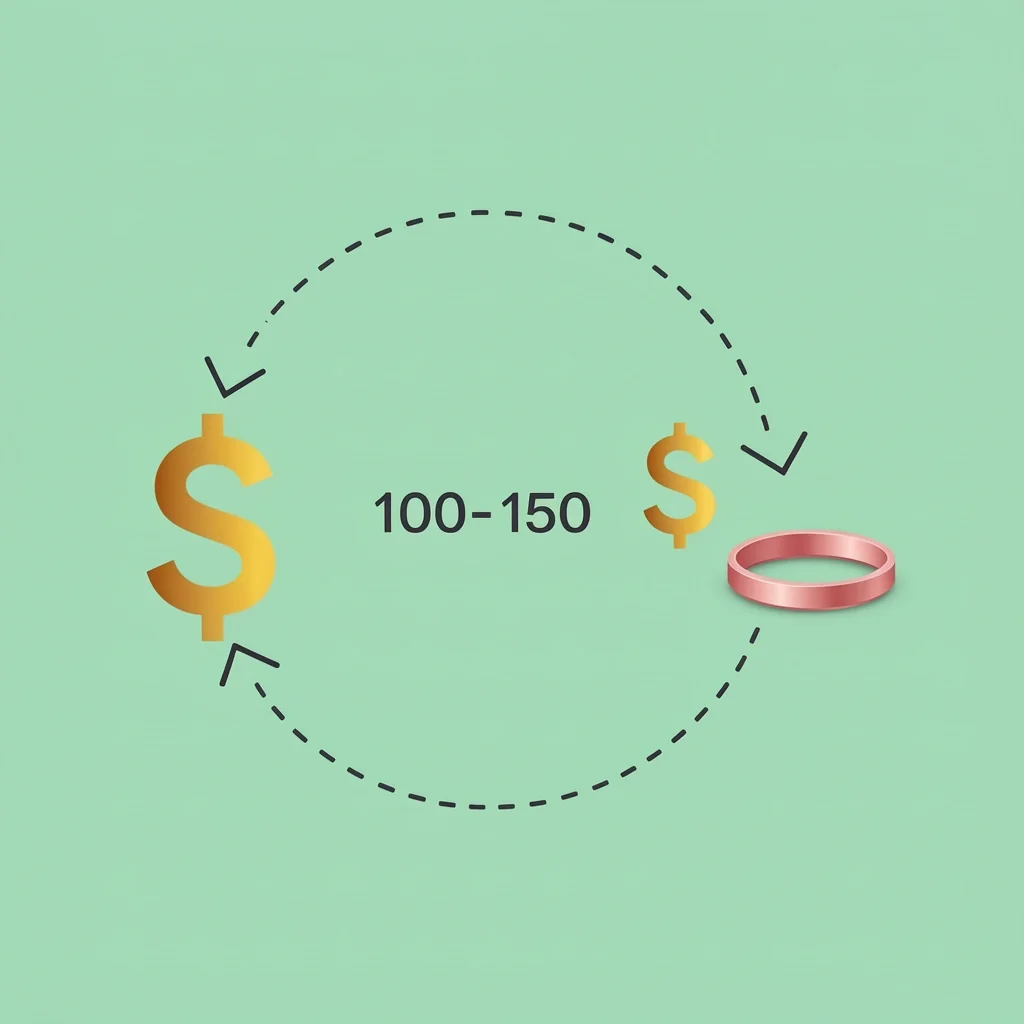
The average cash wedding gift in the United States is between $100 and $150 per guest. That’s a solid starting point, but it’s not a rule you have to follow blindly.
Here’s what I’ve learned: the “cover your plate” guideline—giving enough to pay for your meal—is a rough estimate, not a binding tradition. Wedding costs vary wildly. Instead of fixating on a single number, consider a few key factors that will help you settle on an amount that feels right to you.
Six Factors That Change Your Amount
Use these six variables to adjust your gift up or down. Think of them as a checklist before you decide.
| Factor | How It Affects Your Gift |
|---|---|
| Your relationship with the couple | Close friends or family: give more ($150–$250). Coworker or distant relative: give less ($50–$100). |
| Your role in the wedding | Bridesmaids and groomsmen already spent on attire and parties. It’s fine to give a smaller cash gift ($50–$100). |
| Plus‑ones | Bringing a guest? Increase the gift by $50–$75 to cover their share. |
| Destination wedding | Your presence is part of the present. You can give less ($50–$100) if travel costs are high. |
| Cultural traditions | Some cultures expect larger cash gifts (e.g., Chinese red envelopes often have a lucky number). Research if needed. |
| Your personal budget | Never stretch yourself. It’s okay to give $25 or $50 if that’s what you can afford. Pair it with a sincere note. |
I always run through these six points before writing a check. It takes two minutes and removes all the guesswork.
How to Calculate Your Exact Gift Amount

Generic ranges are fine, but I prefer a simple formula that turns your personal situation into a specific number. Here’s a mini‑worksheet you can use.
- Start with a base amount based on your budget. If you’re tight on cash, start at $50. If you’re comfortable, start at $100. If you can be generous, start at $150.
- Add $25 if the couple is a close friend or sibling.
- Add $25 if you are bringing a plus‑one (unless the plus‑one gives a separate gift).
- Subtract $25 if you are in the wedding party (since you already spent money on the wedding).
- Subtract $25 if the wedding is a destination and you paid for travel.
- Add $10–$20 if the wedding is in a high‑cost city like New York or San Francisco.
Example: A close friend invites you to a local wedding. You’re not in the party and you’re comfortable spending. Base $100 + $25 (close friend) = $125. That’s your number. Adjust up or down based on your own circumstances. No two gifts need to be the same.
Cash, Check, or Digital? Pros and Cons
Once you know the amount, you need to choose a method. Here’s what I’ve found works best.
| Method | Pros | Cons |
|---|---|---|
| Cash | Immediately usable, no waiting for a check to clear. | Risky to carry, easy to lose, no paper trail. |
| Check | Secure, can be replaced if lost, easy to track. | Must be deposited, may take a few days to clear. |
| Digital transfer (Venmo, Zelle, etc.) | Instant, no physical handling, great for last‑minute gifts. | Can feel less formal; some couples may not notice the transaction. |
| Wedding website cash fund (Honeyfund, Zola) | Fits the couple’s registry, easy to contribute before the wedding. | Often includes transaction fees (2–3%). The couple may not get the full amount. |
My rule of thumb: if I’m attending, I bring a check in a nice card. It’s secure and feels intentional. If I can’t attend, I use the couple’s online fund and include a heartfelt message.
Creative Ways to Present Money That Feel Personal

Plain bills in a card are fine, but I’ve seen—and used—presentations that turn the gift into a memorable moment. Here are a few ideas that go beyond the standard money origami.
- Pair it with a bottle of wine. Attach cash to the bottle with a ribbon and a note: “A little something to toast your new life together.”
- Hide it inside a book they love. Slip cash between pages of a novel they both enjoy. Write a note saying the money is for a “chapter” of their journey.
- Build a mini photo album. Place cash behind printed photos of you and the couple. Write captions that lead them to the money.
- Use an envelope that tells a story. Instead of a generic card, write a short letter explaining why you chose cash: “I know you’re saving for a house, so I wanted to help make that dream a little closer.”
The key is the note. Tell them you hope they use the money for something they’ll remember—a first dinner in their new home, a night out after a long week, or a piece of their honeymoon. That turns the cash from “here’s some money” into “I see you and I support your future.”
Wedding Gift of Money Etiquette: Do’s and Don’ts
Over the years, I’ve made a few mistakes and learned from them. Here’s a cheat sheet.
- Do give crisp, new bills if you’re using cash. Wrinkled, old notes look careless.
- Don’t give cash without a card or note. It feels like an afterthought.
- Do make the check out to both spouses (e.g., “Jane and John Smith”). A check made to just one person can be awkward.
- Don’t expect an immediate thank‑you. Newlyweds are overwhelmed. Give it a few weeks.
- Do follow cultural customs. For Chinese weddings, use a red envelope and avoid amounts with the number 4 (sounds like death). For Polish weddings, expect a money dance.
What to Do When You Can’t Afford the Average

If $100 is a stretch, don’t panic. I’ve been there—grad school, moving expenses, tight budgets. Here’s how to give gracefully without feeling cheap.
- Join a group gift. Contribute $20 or $30 to a pooled fund with other guests. The couple sees a larger total, and you’re part of something meaningful.
- Give a smaller amount with a sincere note. Say, “I wanted to help you start your life together, even in a small way. I’m so happy for you both.” That honesty is worth more than any dollar amount.
- Contribute to an online fund before the wedding. Spread out the cost by giving $25 now and another $25 later if you can.
- Offer a non‑cash gift that costs little. A framed photo of you with the couple, a hand‑written recipe book, or a night of babysitting if they have kids. These can be more personal than cash.
After You Give the Gift: What Happens Next?
You handed the envelope or hit “send.” Now what? Most couples send thank‑you notes within three months. If yours doesn’t, don’t take it personally—life gets in the way.
But there is one thing to keep in mind: if you wrote a check and it hasn’t been cashed after six weeks, it’s okay to politely ask. Something may have been lost. A simple text works: “Hey, I’m just checking that my wedding gift arrived okay. I want to make sure you got it!” That’s considerate, not pushy.
If you gave through a digital fund, you’ll usually get a confirmation or thank‑you. No need to follow up unless you see an issue with the transaction.
Frequently Asked Questions
I’m a bridesmaid – I’ve already spent a lot. Can I give less than the average?
Absolutely. You’ve already invested in the wedding with attire, parties, and time. A cash gift of $50–$75 is perfectly fine. Pair it with a kind note about how honored you are to stand by their side.
Should I give cash if the couple explicitly asked for registry gifts only?
If they registered for specific items, respect that list. Cash can feel like you ignored their request. If you really want to give money, consider a gift card from a store they registered at.
If you’re unsure which stores to choose, our guide to the best wedding registry stores can help you make the right decision.
How do I write a note that makes cash feel thoughtful?
Use a template like this: “Dear [Names], I know you have big plans for your future together. I wanted to give you the freedom to use this for whatever matters most—whether it’s your honeymoon, a home project, or just a night out. Congratulations!”
Is it rude to give a check made out to only one spouse?
Yes. Always make it out to both partners. If you don’t know the full name of the second spouse, use “and Guest” or ask politely. A check to just the bride or groom can feel excluding.
What’s the etiquette for giving cash at a wedding where the couple is from a different culture?
Do your homework. For Chinese culture, give in a red envelope (ang pao) and avoid odd or unlucky numbers. For Indian weddings, cash is common; put it in a decorative envelope. For Greek or Polish weddings, expect a money dance where you pin cash on the bride or groom.
If I’m giving money through a wedding website fund, do I still bring a card?
Yes. If you’re attending the wedding, bring a card with a brief note. It shows you thought about them even after the online transaction. The card can say, “I contributed to your honeymoon fund—so excited for you both!”